
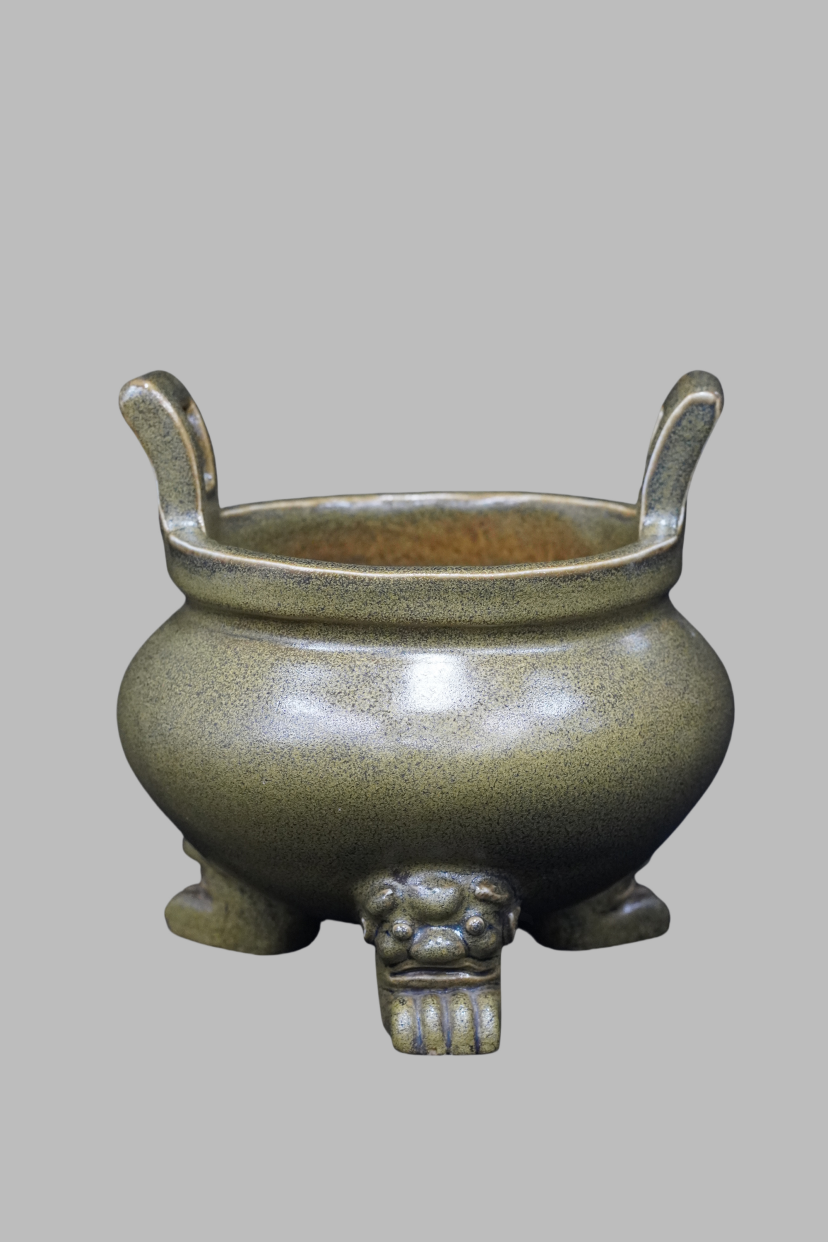

清代时期的茶叶末釉双耳三足炉,是清代官窑单色釉瓷中"仿古铜釉+实用器型”的经典品类。清代单色釉官窑精品,兼具“仿古工艺+文房/祭祀属性”,收藏价值较高,作为“茶叶末釉三足炉”,是清代制瓷工艺与仿古审美结合的实物见证。
Tea dust glazed double-eared tripod censer of the Qing Dynasty is a classic category of monochromatic glazed porcelain from the Qing imperial kilns, featuring "ancient bronze-imitating glaze + practical vessel shape."
As an exquisite work of monochromatic glazed porcelain from the Qing imperial kilns, it combines "archaistic craftsmanship + literary / sacrificial attributes" and holds high collection value.
As a "tea dust glazed tripod censer," it is a physical witness to the integration of Qing porcelain-making craftsmanship and archaistic aesthetics.
无彩绘纹饰:以茶叶末釉本身的古朴质感为“纹”,暗合“古雅沉稳”的文人审美。
器型装饰:双耳为“戟耳”(仿兵器戟的造型,寓意“威严庄重”),三足为“狮首足”(狮是瑞兽,寓意“镇宅辟邪”),既强化实用功能,又暗含吉祥寓意。
No painted decorations: the primitive and simple texture of the tea dust glaze itself serves as the "decoration," implicitly conforming to the literati's aesthetic of "antique elegance and calmness."
Shape decoration: the double handles are "halberd-shaped handles" (imitating the shape of the weapon halberd, symbolizing "dignity and solemnity"), and the three feet are "lion-head feet" (the lion is an auspicious beast, implying "protecting the house and warding off evil spirits"). These not only enhance the practical function but also contain implicit auspicious meanings.