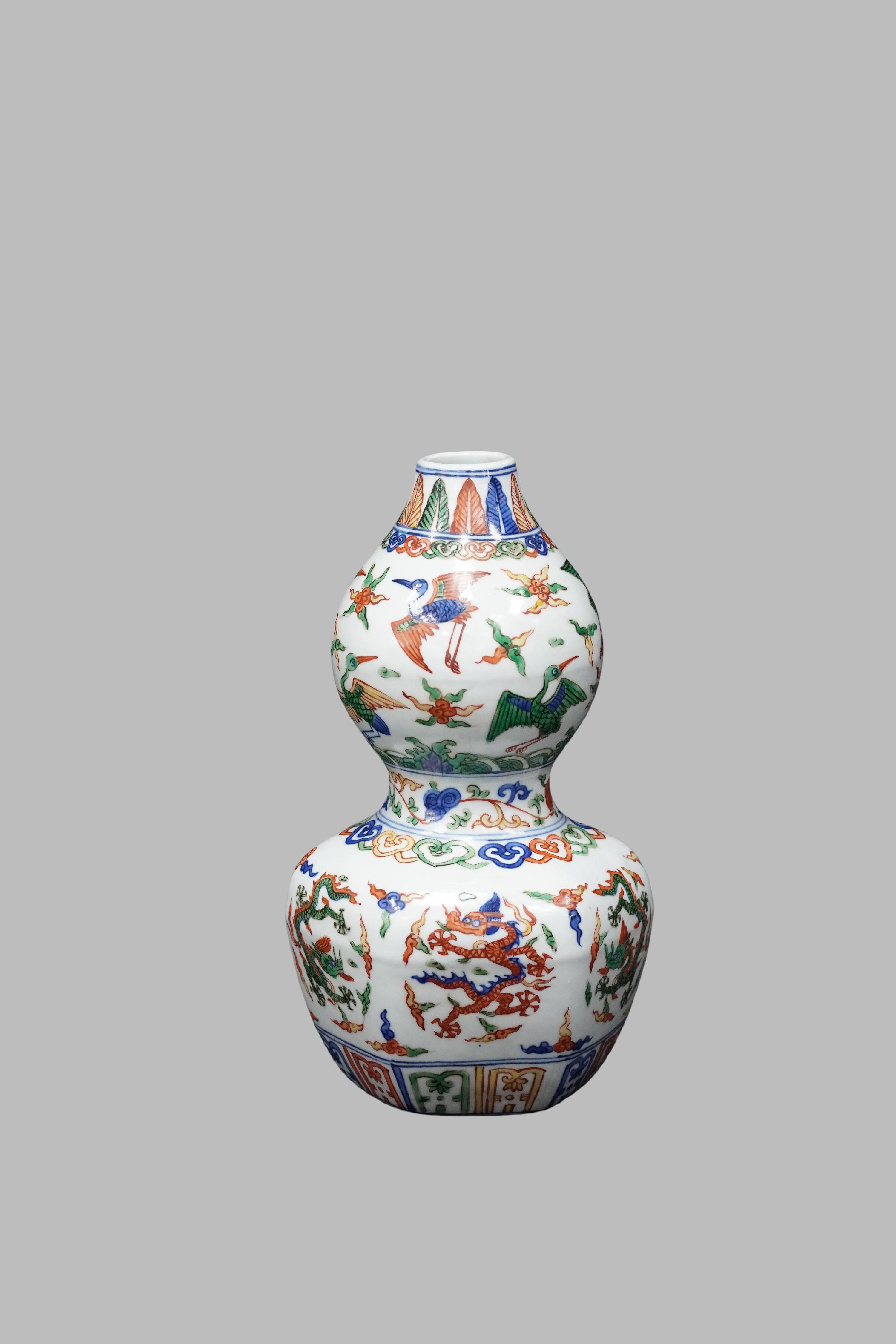
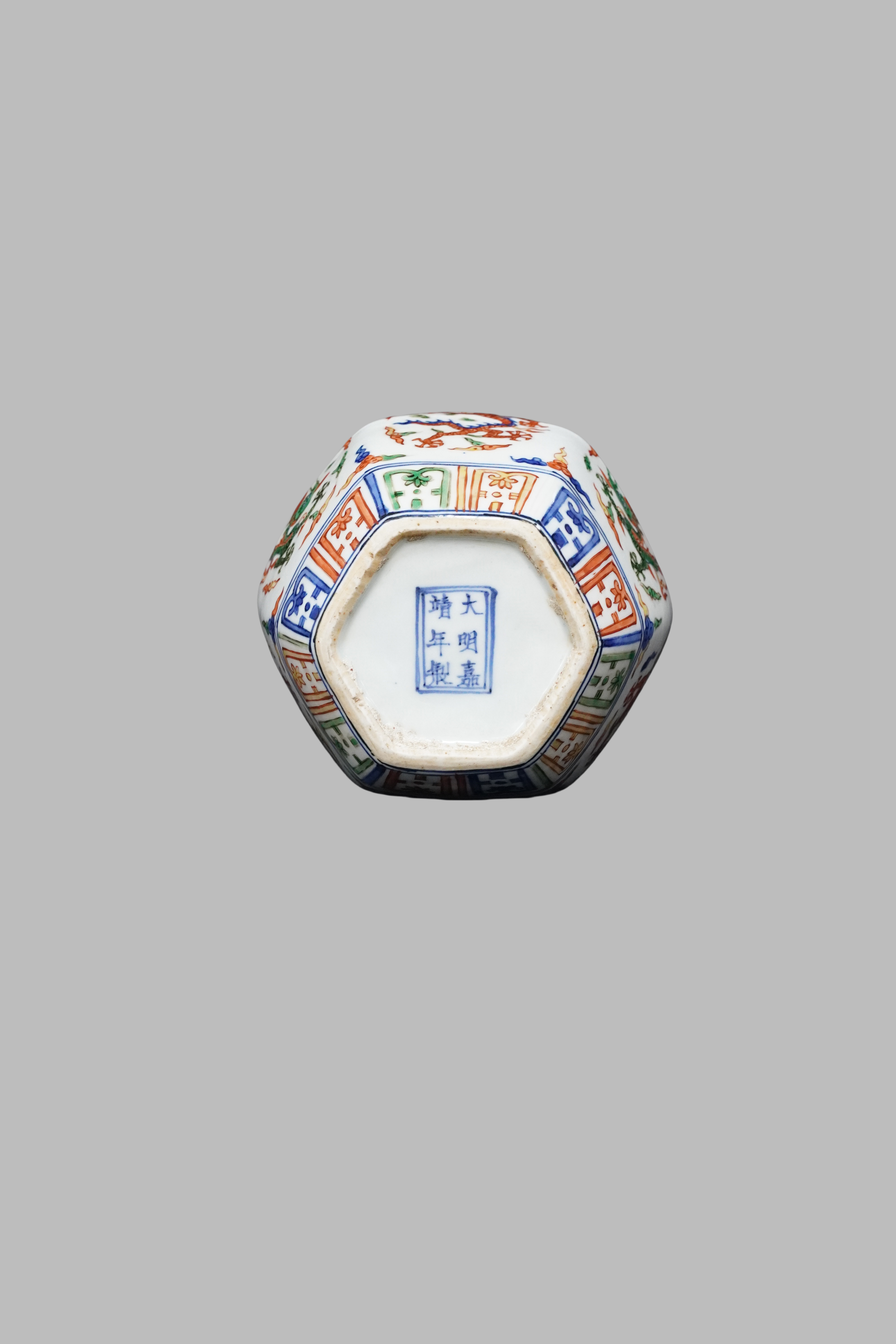
明嘉靖时期的青花五彩龙凤鹤纹葫芦瓶,采用"青花发色蓝中泛紫(嘉靖特有的回青料)+五彩浓艳(矾红浓重、绿彩翠亮)”的组合,是嘉靖彩瓷标志性特征,葫芦瓶因谐音“福禄”,且契合嘉靖皇帝崇道的审美,是当时宫廷主流器型之一。
The masterpiece features the combination of "blue-and-white with a purple tint (characteristic of Jiajing's exclusive Huiqing pigment) + vibrant polychrome (intense iron red and bright green glazes)," an iconic trait of Jiajing polychrome porcelain. The gourd vase, homophonic with "blessing and emoluments" (fulu) in Chinese, aligned with Emperor Jiajing's Taoist aesthetic preferences, becoming one of the mainstream court vessel forms of the era.
云鹤纹鹤是道教“长寿仙禽”,搭配祥云是嘉靖朝典型的“吉祥长寿”寓意,也体现了当时宫廷崇道的文化背景。龙凤纹龙为皇权象征,凤代表祥瑞,龙凤组合是嘉靖官窑御用纹饰,寓意 "皇权稳固、龙凤呈祥。
The crane in the cloud-and-crane motif is regarded as the "immortal bird of longevity" in Taoism. Paired with auspicious clouds, it conveys the typical meaning of "auspiciousness and longevity" during the Jiajing reign, also reflecting the Taoist-worshipping cultural background of the imperial court at that time.
The dragon in the dragon-phoenix motif symbolizes imperial power, while the phoenix represents auspiciousness. As an exclusive decorative pattern of the imperial kilns during the Jiajing reign, the dragon-phoenix combination embodies the meanings of "stable imperial rule and prosperity brought by the dragon and phoenix."