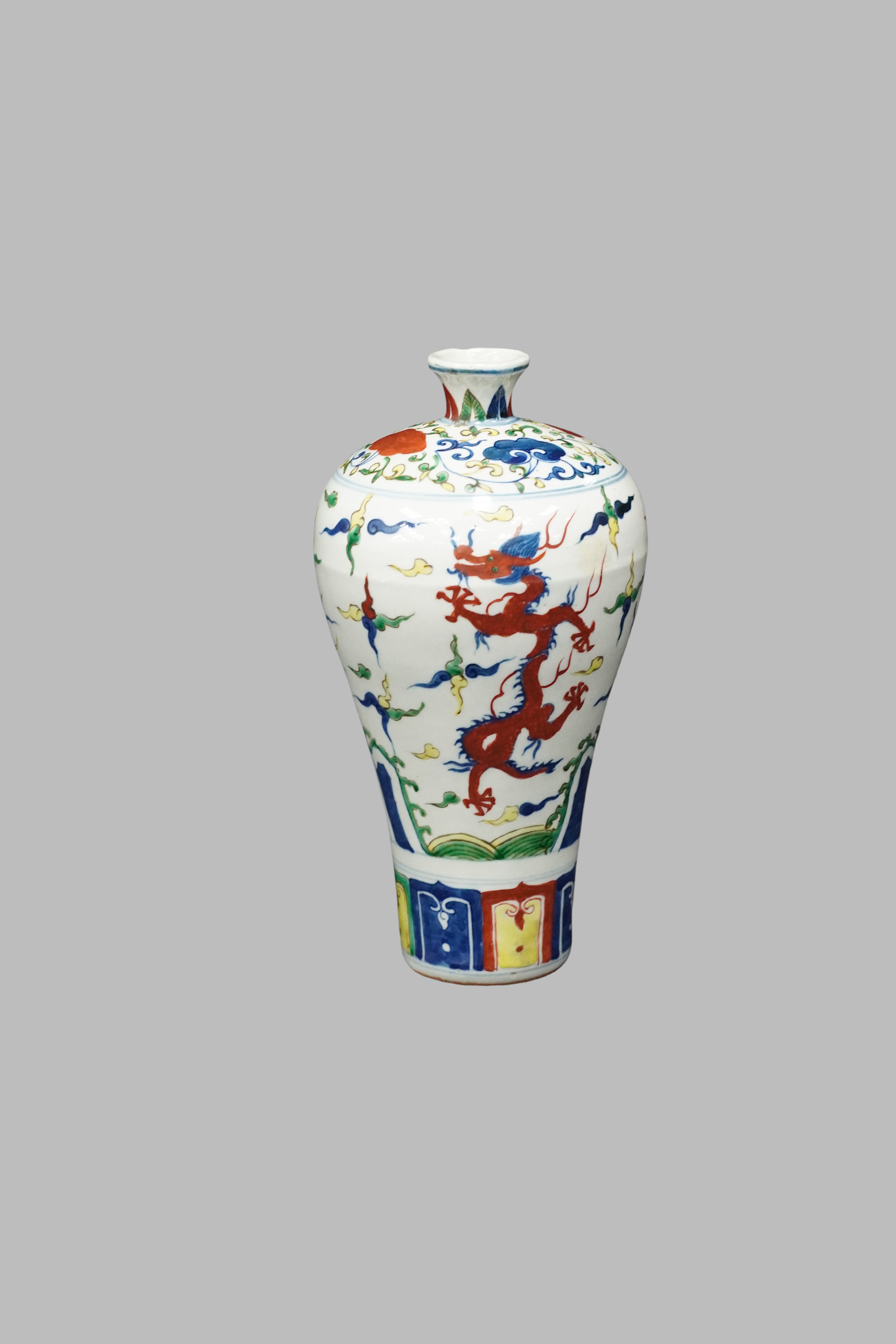
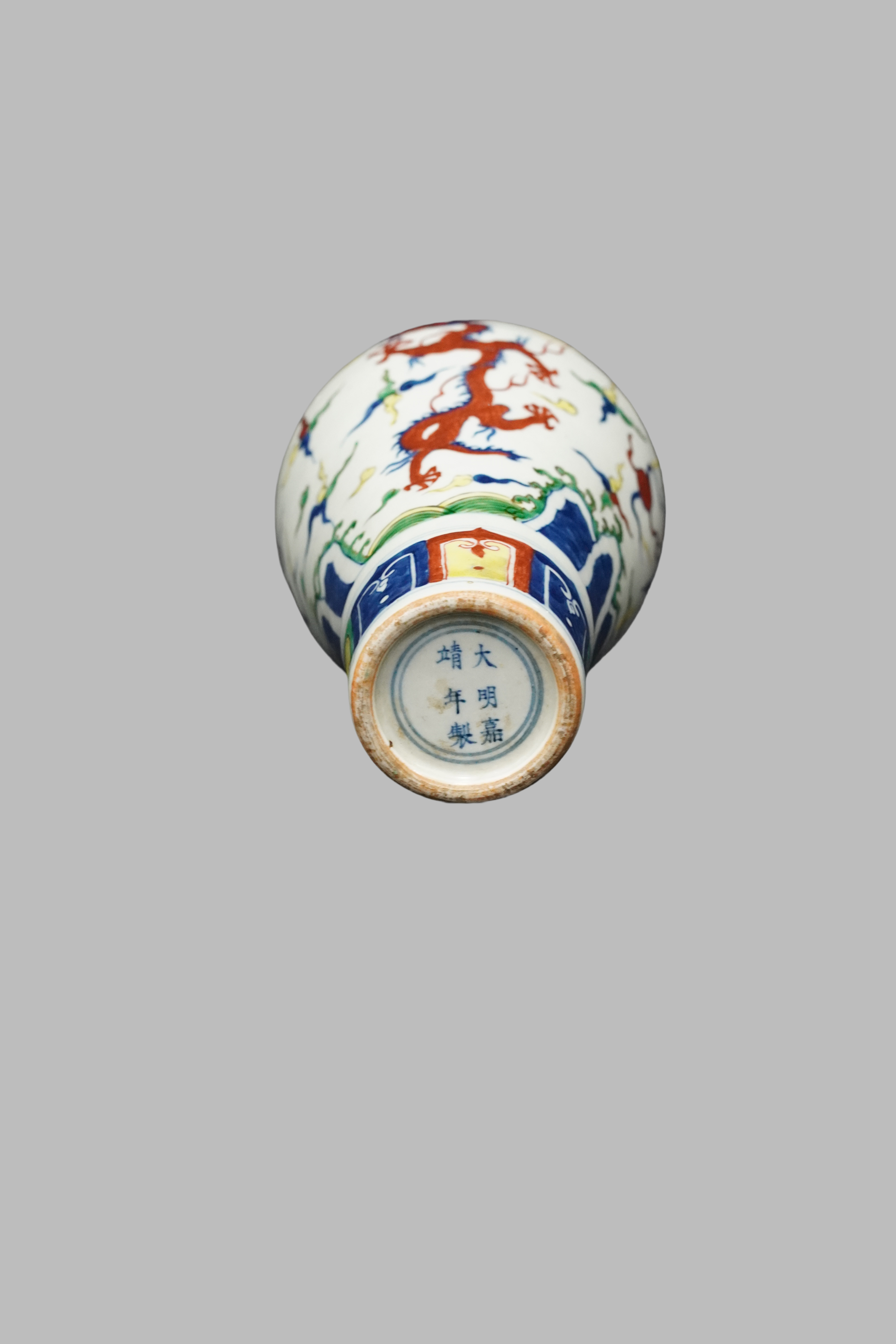
明嘉靖时期的青花五彩龙纹梅瓶,是万历五彩工艺的标杆,回青料青花与五彩搭配、倭角成型等工艺,展现了明代晚期制瓷的最高水平;历史价值上,龙纹、官窑款识印证了宫廷用瓷制度,为研究万历朝手工业管理、皇权象征体系提供实物;收藏价值上,完整真品存世量少,尤其带镂空、精细绘画工艺的品类,是高端古董瓷收藏市场的核心藏品。
Serving as a benchmark of Wanli wucai porcelain craftsmanship, it showcases the highest level of porcelain-making in the late Ming Dynasty through techniques such as the combination of Huiqing pigment underglaze blue with polychrome, and the concave-corner forming process.
Historically, the dragon motifs and imperial kiln marks confirm the imperial porcelain usage system, providing physical evidence for the study of handicraft management and the imperial power symbolism system during the Wanli reign.
In terms of collection value, intact authentic pieces are scarce in existence — especially those with openwork and exquisite painting craftsmanship — making them core collections in the high-end antique porcelain market.
青花缠枝灵芝+云纹肩部以青花勾勒缠枝灵芝纹,搭配绿、黄彩点缀的祥云纹--灵芝是嘉靖朝(皇帝崇道)的标志性纹饰,寓意“长寿吉祥”,祥云纹线条卷曲灵动,是晚明辅助纹的典型样式。
青花海水纹 +杂宝纹龙纹周围的青花海水纹(淡描青花,表现水浪层次)、杂宝纹(小尺寸的火焰、宝珠等),既衬托龙纹的"威严”,也强化了“吉祥富贵”的寓意。
Underglaze blue interlocking lingzhi and cloud motifs: the shoulder of the vessel is painted with underglaze blue interlocking lingzhi patterns, complemented by auspicious cloud motifs accented with green and yellow glazes. As an iconic decorative element of the Jiajing reign (a period when the emperor revered Taoism), lingzhi symbolizes "longevity and auspiciousness." The auspicious cloud motifs, featuring curly and vivid lines, represent a typical auxiliary pattern style of the late Ming Dynasty.
Blue-and-white wave motifs + miscellaneous treasure motifs: the blue-and-white wave motifs surrounding the dragon (painted in light underglaze blue to depict layered waves) and miscellaneous treasure motifs (small-sized flames, precious pearls, etc.) not only set off the "majesty" of the dragon pattern but also reinforce the implication of "auspiciousness and prosperity."