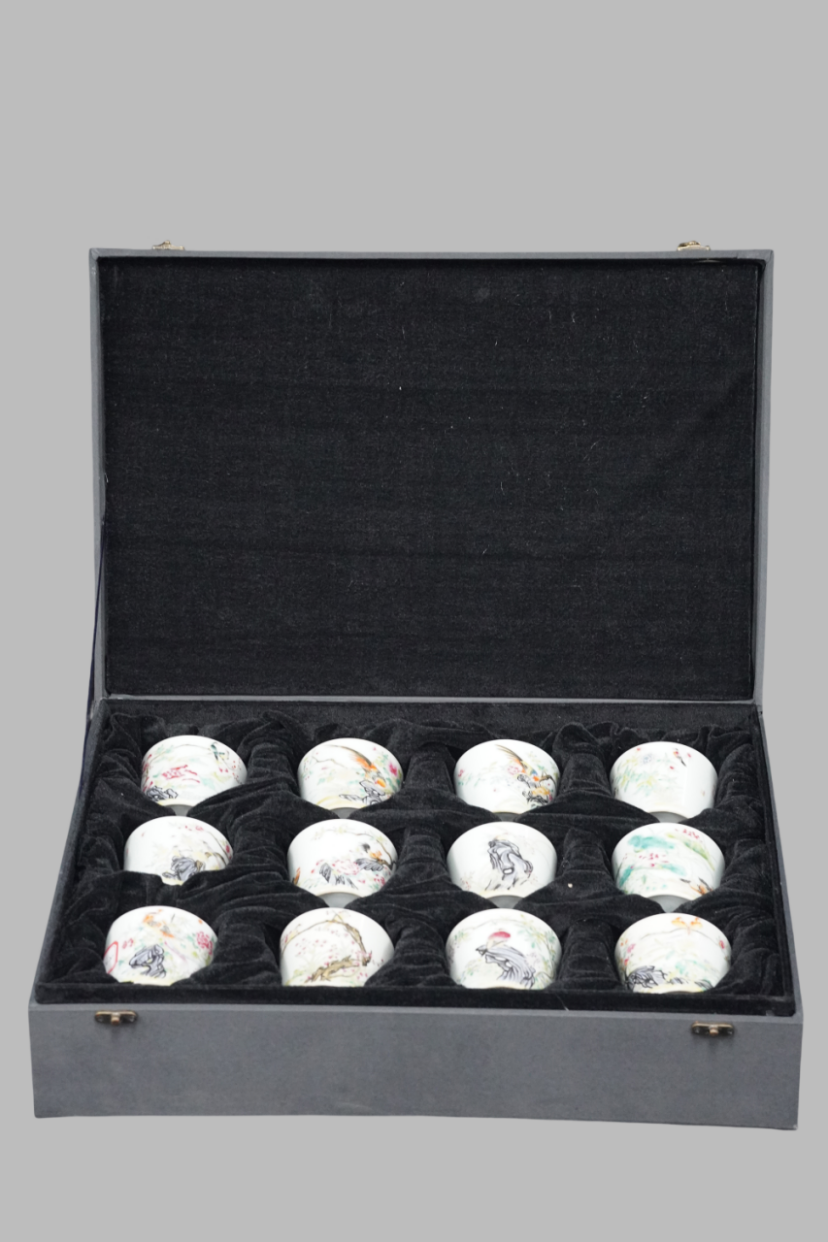

清代雍正时期清雍正珐琅彩十二花神杯,雍正朝是清代瓷器工艺的巅峰时期之一,尤其以单色釉、薄胎瓷的烧造水平著称。这类器物因“胎薄如纸、釉润如玉”的特点,加上雍正帝对瓷器审美要求极高,存世精品的收藏价值、艺术价值都很突出。外部是纯净的单色釉(多为白釉或青白釉),简洁素雅;内部采用“暗刻/内雕”工艺,纹饰为“松鹤延年”(松树+ 仙鹤),寓意长寿吉祥,是清代官窑常见的吉祥纹饰之一。
The Yongzheng reign was one of the pinnacles of porcelain craftsmanship in the Qing Dynasty, particularly renowned for its exquisite production of monochromatic glazes and thin-bodied porcelain. Characterized by "a body as thin as paper and a glaze as smooth as jade," these artifacts, coupled with Emperor Yongzheng's rigorous aesthetic standards for porcelain, boast exceptional collection and artistic value among surviving masterpieces.
The exterior features a pure monochromatic glaze (mostly white glaze or bluish-white glaze), presenting a concise and elegant appearance. The interior adopts an "incised / carved" technique, adorned with the "pine and crane for longevity" motif (pine trees + cranes), a common auspicious pattern in Qing imperial kilns symbolizing longevity and good fortune.
外部是纯净的单色釉(多为白釉或青白釉),简洁素雅;内部采用“暗刻/内雕”工艺,纹饰为“松鹤延年”(松树+仙鹤),寓意长寿吉祥,是清代官窑常见的吉祥纹饰之一。
The exterior features a pure monochromatic glaze (mostly white glaze or bluish-white glaze), presenting a concise and elegant style.
The interior adopts the "incised / carved" technique, decorated with the "pine and crane for longevity" motif (pine trees + cranes), which symbolizes longevity and auspiciousness and is one of the common auspicious patterns in Qing imperial kilns.