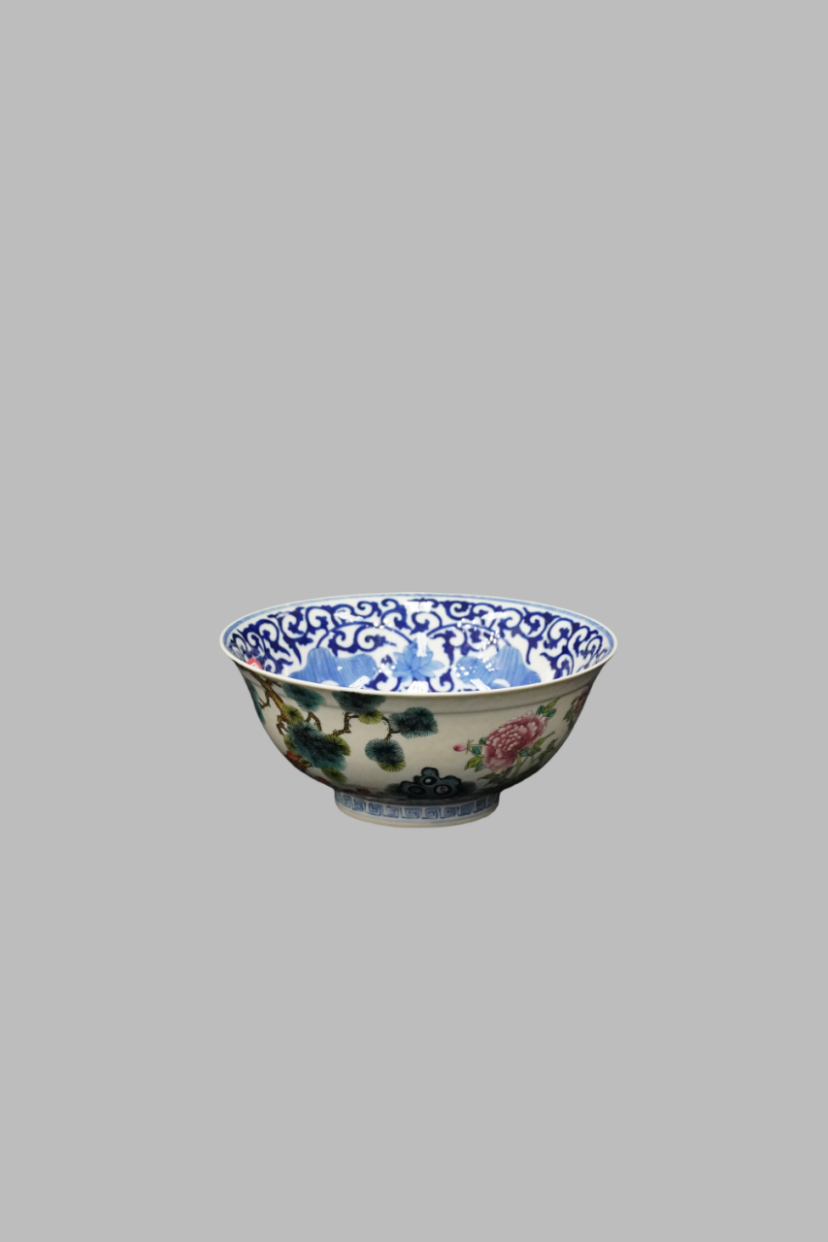
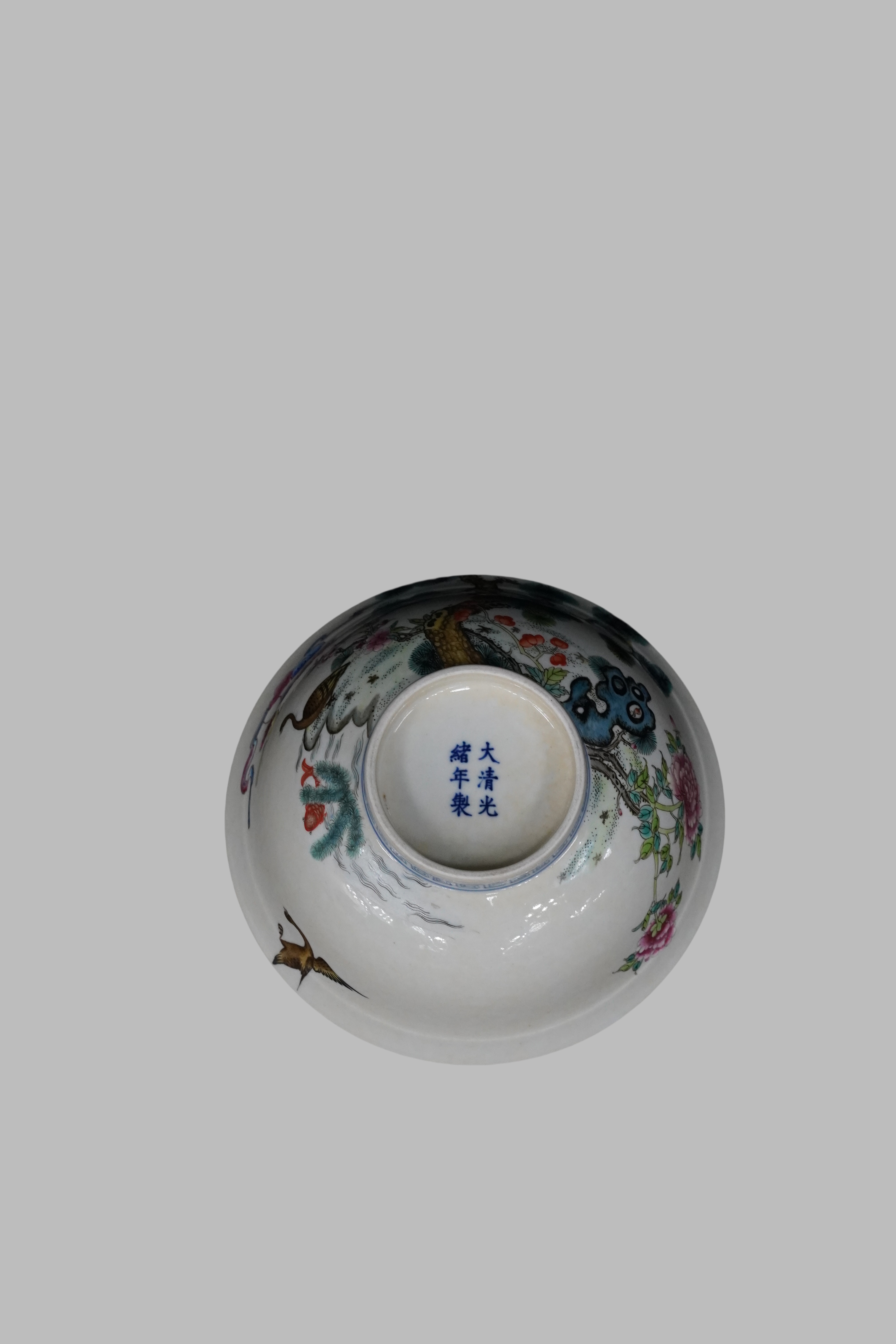
清光绪彩松鹤祥云碗是 “青花加彩” 工艺的鼎盛期,御窑厂将青花的素雅与粉彩的艳丽结合,工艺细腻、色彩层次丰富;青花与粉彩的工艺结合,体现了清代中期 "雅俗共赏” 的审美,青花的素雅与粉彩的艳丽形成层次对比,是清代彩瓷艺术的代表之一。
The polychrome bowl with pine, crane and auspicious cloud patterns, Guangxu period of the Qing Dynasty, represents the heyday of the "blue and white with added colors" craftsmanship. The imperial kiln combined the elegance of blue and white with the richness of powdered colors, featuring exquisite craftsmanship and rich color layering.
The integration of blue and white and powdered color techniques reflects the aesthetic pursuit of "appealing to both refined and popular tastes" in the mid-Qing Dynasty. The simplicity of blue and white contrasts with the vividness of powdered colors, making it one of the representatives of Qing Dynasty colored porcelain art.
牡丹:碗身的红色牡丹是“富贵”的象征,搭配绿叶,寓意“花开富贵”
松枝:青花绘制的松枝代表“长寿”,是清代瓷器常见的吉祥元素。
花鸟:辅助的花鸟纹(如碗侧的禽鸟)寓意“生机盎然、吉祥如意”
Peony: the red peonies on the bowl's body symbolize "prosperity and nobility." Paired with green leaves, they imply "prosperity blooms with flowers" (a traditional auspicious meaning of wealth and fortune accompanying success).
Pine branches: the pine branches painted in blue and white represent "longevity" and are a common auspicious element on Qing Dynasty porcelain.
Birds and flowers: supplementary bird-and-flower patterns (such as the birds on the bowl's side) imply "vitality and auspiciousness."