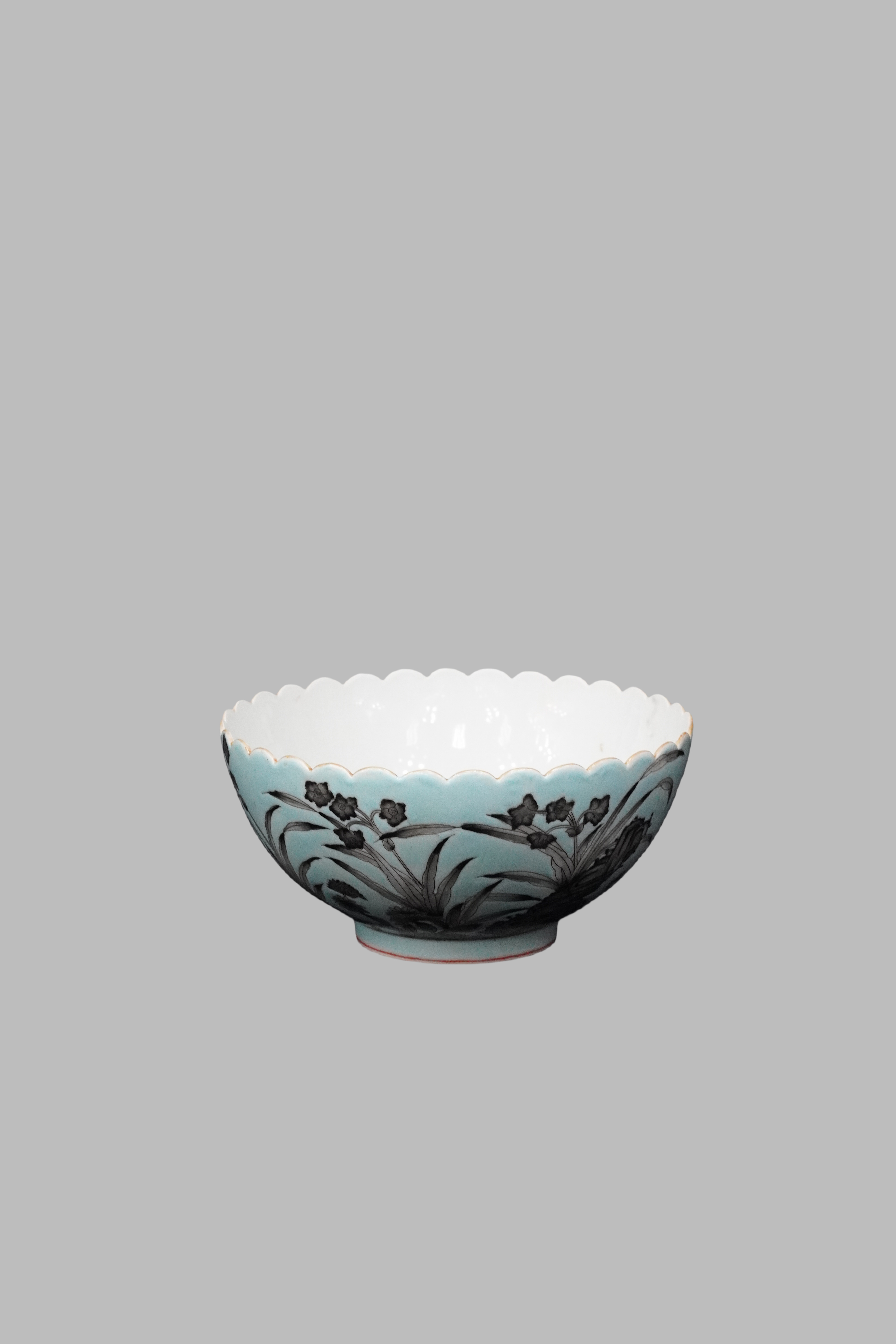
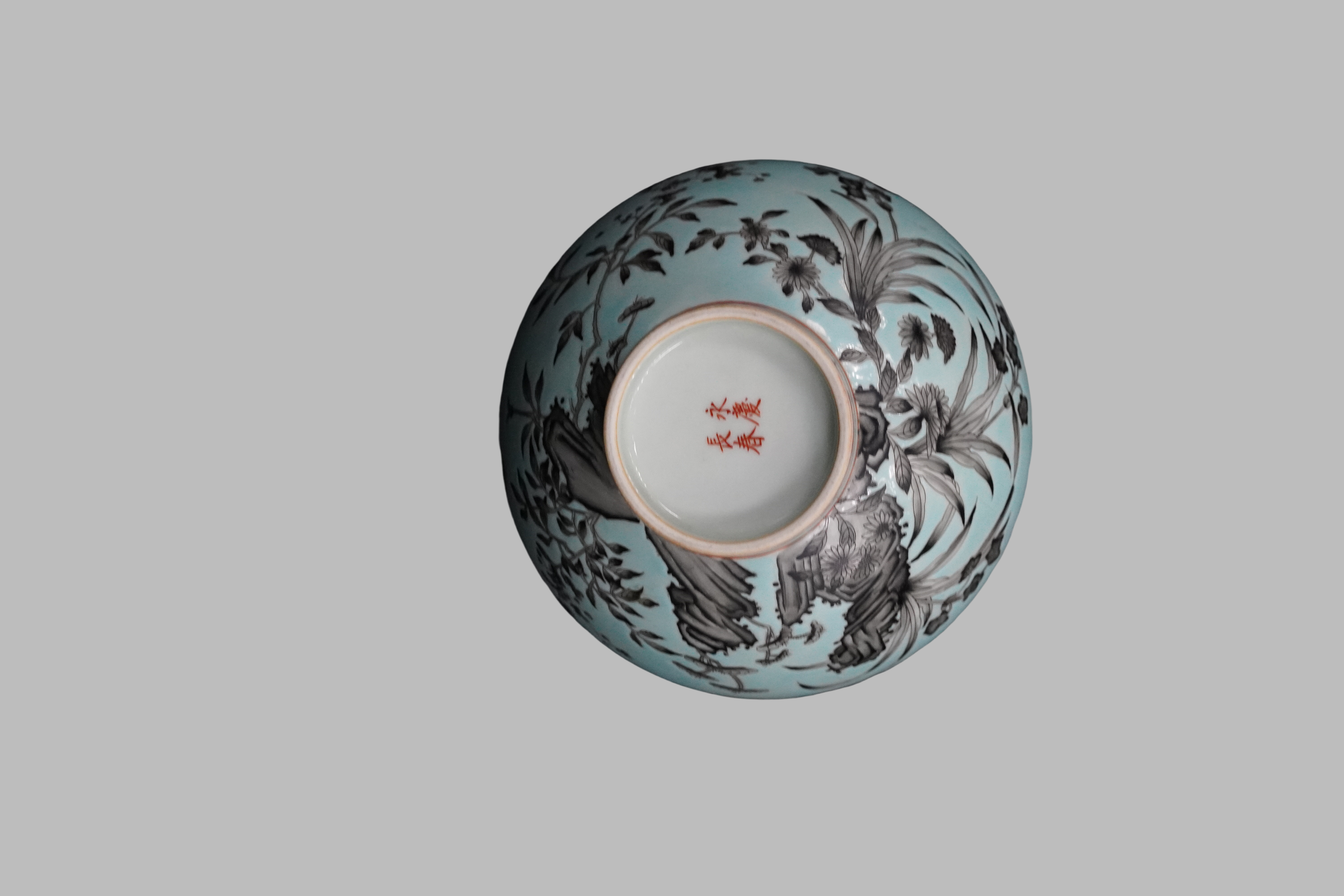
这件碗是天蓝釉地+墨彩花卉+花口造型组合,是清代中晚期的典型风格:釉色:"天蓝釉”是清代康熙朝创烧、乾隆朝流行的低温釉,色调淡雅均匀。彩料:“墨彩”是用含钴、铁的矿物颜料在釉面绘制,经低温烧制而成,清代中期后民窑也广泛使用。造型:花口(菊瓣口)是清代中晚期瓷碗常见的装饰性造型,配合“外釉内白”的设计。
This bowl features a sky-blue glaze ground combined with ink wash floral decorations and a lobed (chrysanthemum-petal) rim, embodying the typical style of the mid-to-late Qing Dynasty.The "sky-blue glaze" was originally developed during the Kangxi reign and grew prevalent in the Qianlong reign of the Qing Dynasty. As a low-temperature glaze, it boasts an elegant and uniform hue."Ink wash color" refers to mineral-based pigments containing cobalt and iron, applied onto the glaze surface and fired at a low temperature. After the mid-Qing Dynasty, this technique was also widely adopted by folk kilns.
The lobed (chrysanthemum-petal) rim is a common decorative shape for porcelain bowls in the mid-to-late Qing Dynasty, often paired with the "glazed exterior and white interior" design.
主题:纹饰是兰花+水仙(从叶片形态、花苞判断),属于“文人花卉”,象征“清雅、高洁”,是清代文人士大夫审美在瓷器上的体现.
绘制工艺:先施天蓝釉并烧制,再在釉面用墨彩勾勒花卉轮廓、填色,最后低温二次烧制;线条细腻、墨色有浓淡层次(类似国画“墨分五色”),属于“花口描金”(边缘有细金彩)是清代中晚期常见的点缀手法,提升“细路”民窑的绘制水平辅助装饰:碗口的器物精致度。
Theme: the motifs depict orchids and daffodils (identified by their leaf shapes and flower buds). Categorized as "scholarly flowers" that symbolize "elegance and integrity," they reflect the aesthetic tastes of scholar-officials in the Qing Dynasty as expressed through porcelain.
Painting technique: first, the sky-blue glaze was applied and fired, followed by outlining the floral motifs and filling in colors with ink wash pigment on the glazed surface, and finally a second low-temperature firing. The lines are delicate, with gradations of ink shade (analogous to the traditional Chinese painting technique of "five tones of ink"), representing the painting level of high-quality folk kilns ("xilu minyao").
Auxiliary decoration: the "gilded lobed rim" (with fine gold pigment along the edge) is a common embellishment method in the mid-to-late Qing Dynasty, enhancing the exquisite appearance of the vessel.