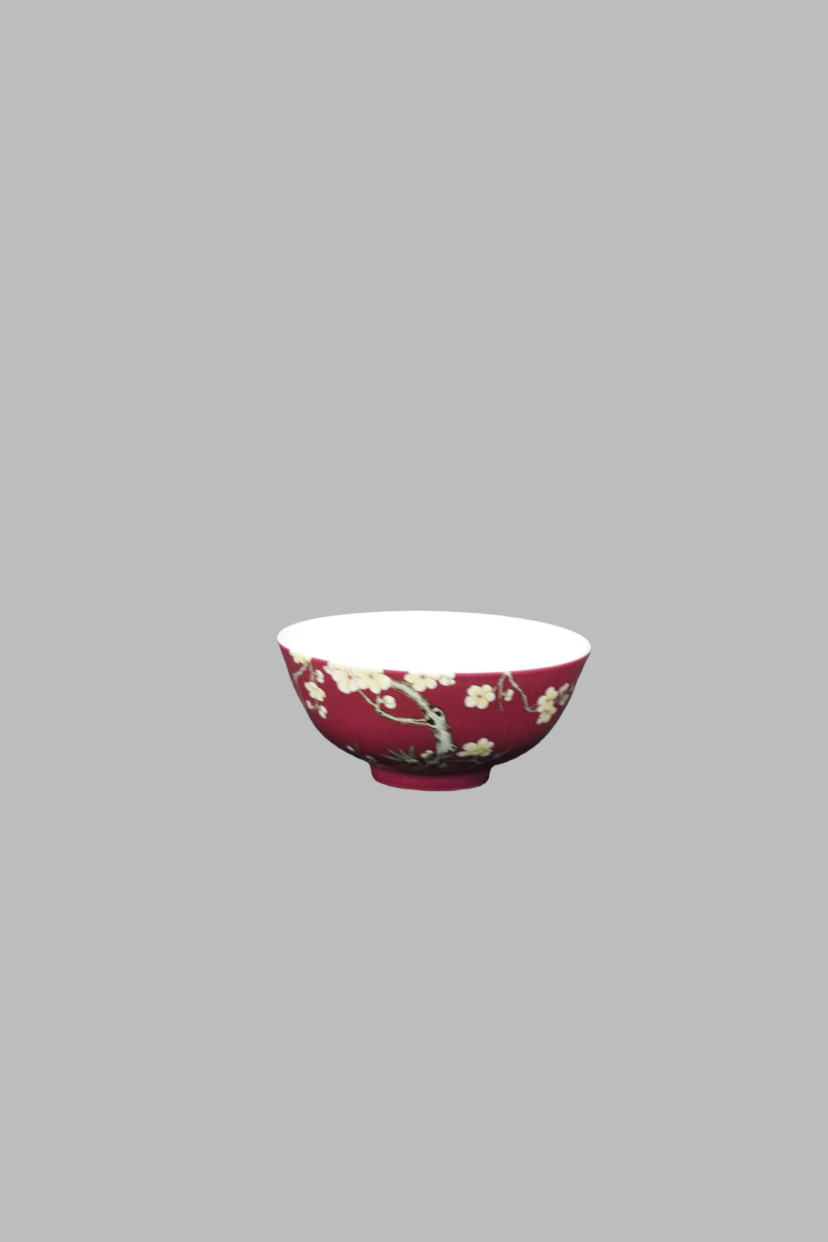
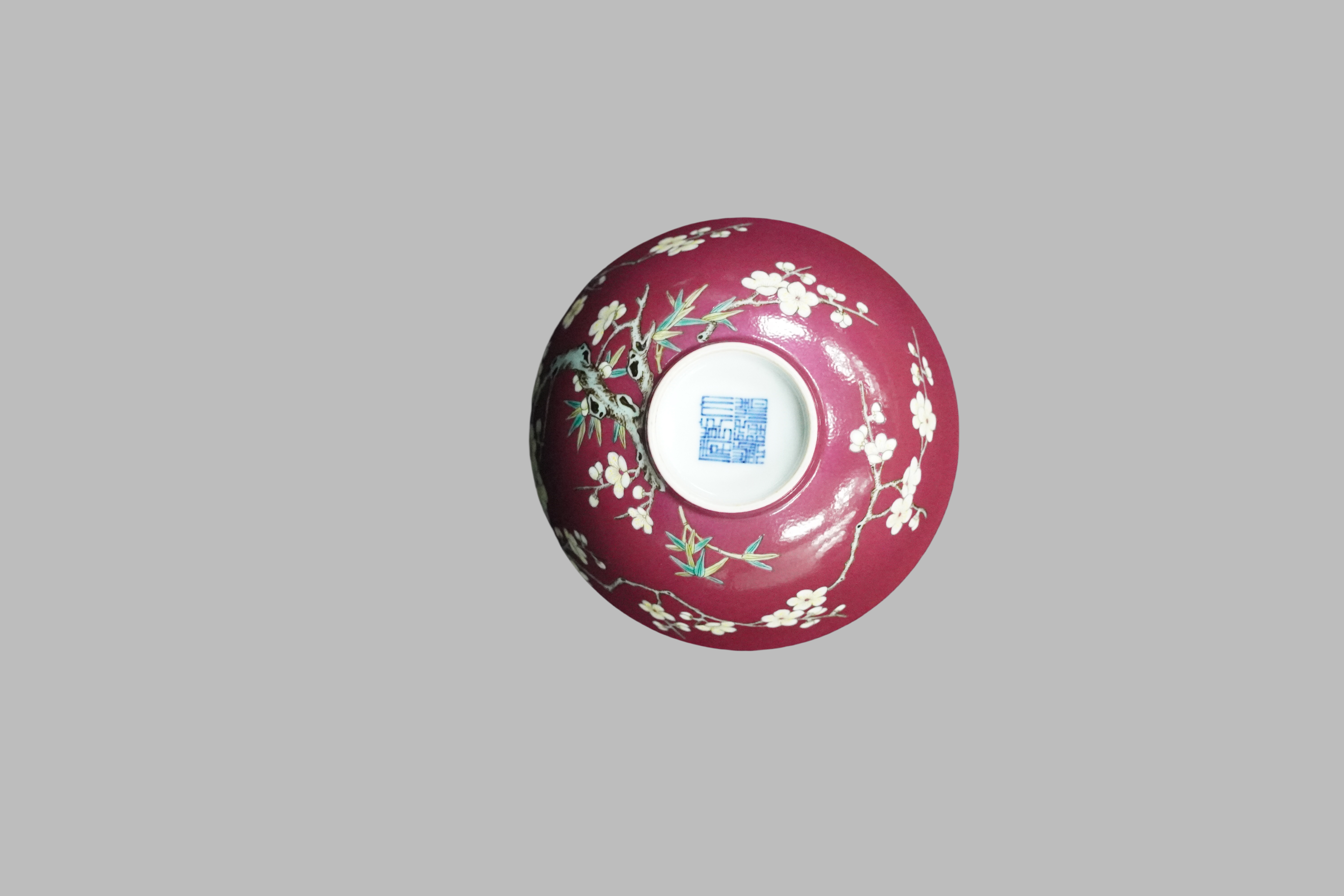
这件是清乾隆胭脂红地留白梅花纹碗,是乾隆朝单色釉与留白装饰结合的经典器物,敞口深腹圈足小碗,是乾隆朝宫廷文房/茶用器;胎体为“糯米胎”,细腻轻薄(乾隆小型器胎质尤为精致);釉面是“胭脂红釉”-发色浓艳莹润(乾隆胭脂红釉工艺成熟,色调均匀)。乾隆单色釉装饰工艺的标本:“胭脂红地留白” 是乾隆朝对单色釉装饰的创新,此碗是该工艺的典型代表,见证了清代单色釉的艺术突破。
Ground bowl with reserved white plum blossom patterns from the Qianlong period of the Qing Dynasty, a classic artifact combining monochromatic glaze and reserved white decoration in the Qianlong era. With an open mouth, deep belly, and ring foot, this small bowl served as both a stationery and tea vessel in the Qianlong imperial court.
Its body is crafted from "glutinous rice paste" porcelain, which is delicate and thin (the body quality of small-sized wares from the Qianlong reign was particularly exquisite). The glaze surface features carmine red glaze — boasting a rich, vibrant, and smooth color (the carmine red glaze craftsmanship was fully mature in the Qianlong period, delivering uniform hues).
It stands as a specimen of Qianlong's monochromatic glaze decoration techniques: the "carmine red ground with reserved white" was an innovative approach to monochromatic glaze ornamentation in the Qianlong era. This bowl is a typical representative of such craftsmanship and bears witness to the artistic breakthroughs of monochromatic glazes in the Qing Dynasty.
主题:碗身绘梅花纹,是清代流行的“文人雅趣”题材。寓意:梅花象征"坚韧高洁、迎春报喜”,胭脂红地代表“富贵华丽”,整体传递“品格高洁、吉祥顺遂”的祈愿。风格:留白梅花线条简洁雅致,与浓艳的胭脂红地形成鲜明对比,符合乾隆朝“浓淡相衬、雅致华丽”的审美特点。
Theme: the bowl's body is decorated with plum blossom patterns, a popular theme of "literati elegance" in the Qing Dynasty.
Meaning: plum blossoms symbolize "resilience and moral integrity, as well as heralding spring and good news," while the carmine red glaze base represents "prosperity and magnificence." Overall, it conveys wishes for "noble character, good fortune, and smooth progress."
Style: the reserved white plum blossoms feature concise and elegant lines, creating a sharp contrast with the rich and vibrant carmine red ground. This conforms to the aesthetic characteristics of the Qianlong era — "contrast between richness and subtlety, and a fusion of elegance and grandeur."