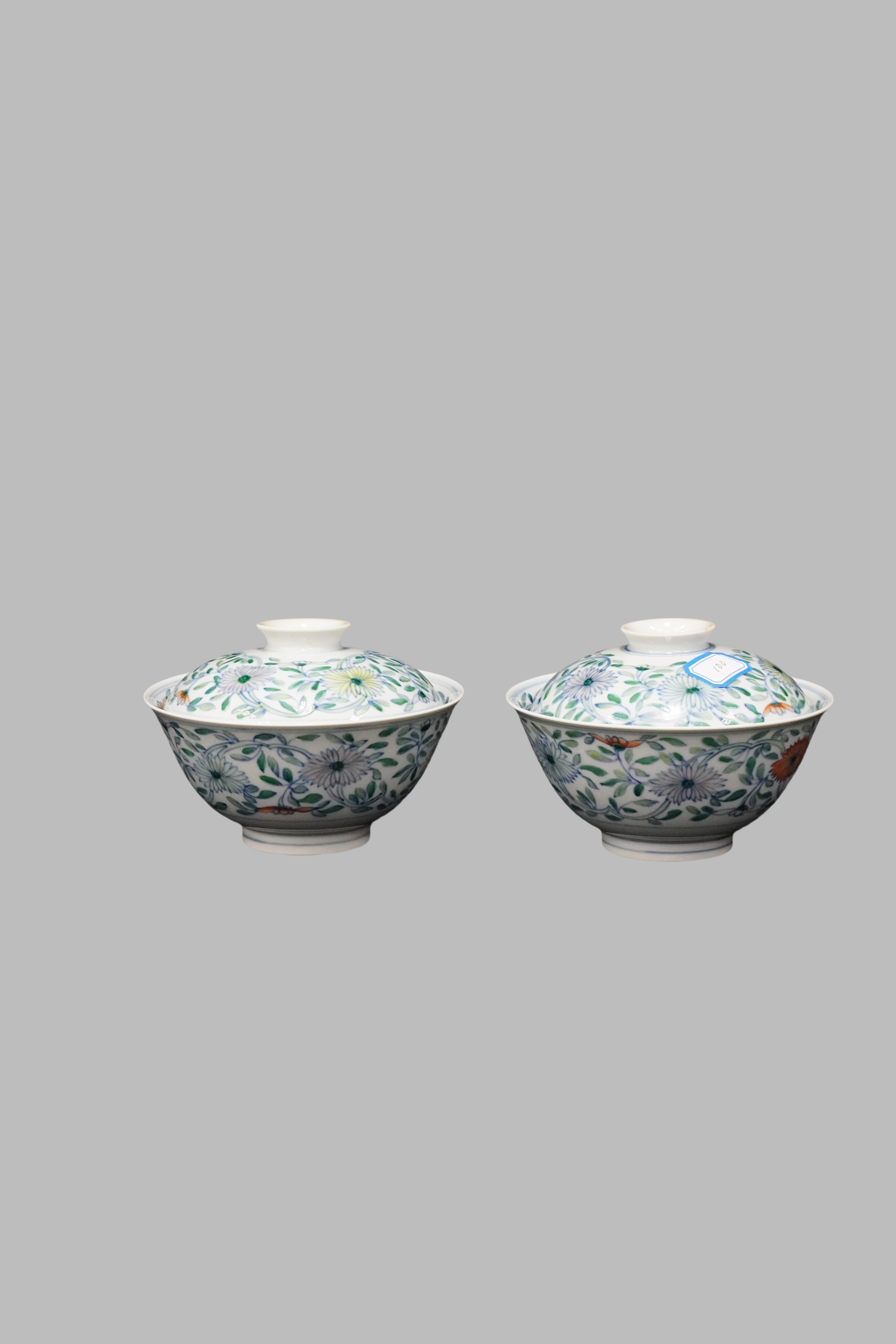
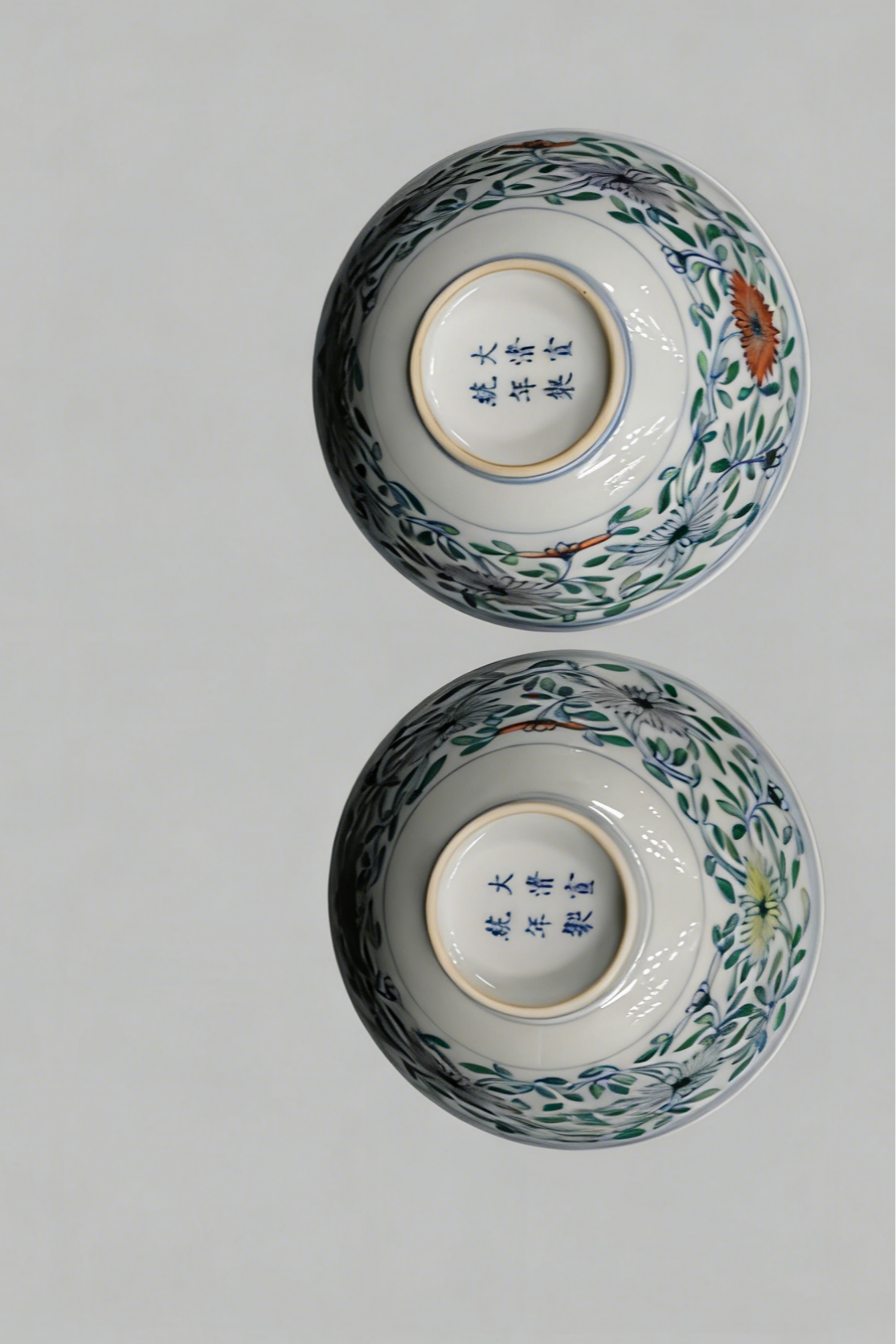
这件瓷器是缠枝菊纹盖碗(一对),器型:标准的(盖为天、碗为人、“三才盖碗”底为地),是清代至民国主流的茶具器型,碗身敞口、深腹、圈足,盖与碗口严合。工艺:采用青花加彩(或五彩)工艺,以青花勾勒菊花轮廓,再填绘绿、黄、红等色彩,属于“细路民窑” 工艺(胎质洁白、釉面莹润,线条流畅)。
Its shape follows the standard "three-talents lidded bowl" design (the lid representing heaven, the bowl representing humans, and the base representing earth) — a mainstream tea utensil shape from the Qing Dynasty to the Republic of China. The bowl features an open mouth, deep belly, and ring foot, with the lid fitting tightly onto the bowl rim.The craftsmanship adopts the underglaze blue with overglaze colors (or wucai) technique. The chrysanthemum outlines are delineated in underglaze blue, followed by filling in colors such as green, yellow, and red. It belongs to the "high-quality folk kiln" (xilu minyao) craftsmanship, characterized by pure white body, lustrous glaze, and smooth lines.
主题:以菊花为核心,搭配缠枝藤蔓"缠枝纹” 是中国传统纹饰,寓意“连绵不绝”);
文化寓意:菊花是“花中四君子”之一,象征长寿、高洁、隐逸,缠枝菊纹进一步延伸出“福寿绵长”的吉祥含义;
风格:属于晚清民国的“世俗吉祥纹”-画面饱满、色彩清新,既保留了传统纹饰的
寓意,又符合当时民间的实用审美(茶具常用此类清雅纹饰)
Theme: centered on chrysanthemums and paired with interlocking scroll patterns.
Tendrils ("interlocking scroll pattern" is a traditional Chinese motif symbolizing "endlessness and continuity").
Cultural connotations: as one of the "four gentlemen of flowers," chrysanthemums symbolize longevity, integrity, and seclusion. The interlocking chrysanthemum pattern further extends the auspicious meaning of "enduring blessings and longevity."
Style: it belongs to the "secular auspicious motifs" of the late Qing Dynasty and the Republic of China — featuring a full composition and fresh colors. It not only retains the connotations of traditional motifs but also conforms to the practical aesthetic of folk society at that time (such elegant and pure motifs were commonly used on tea utensils).