
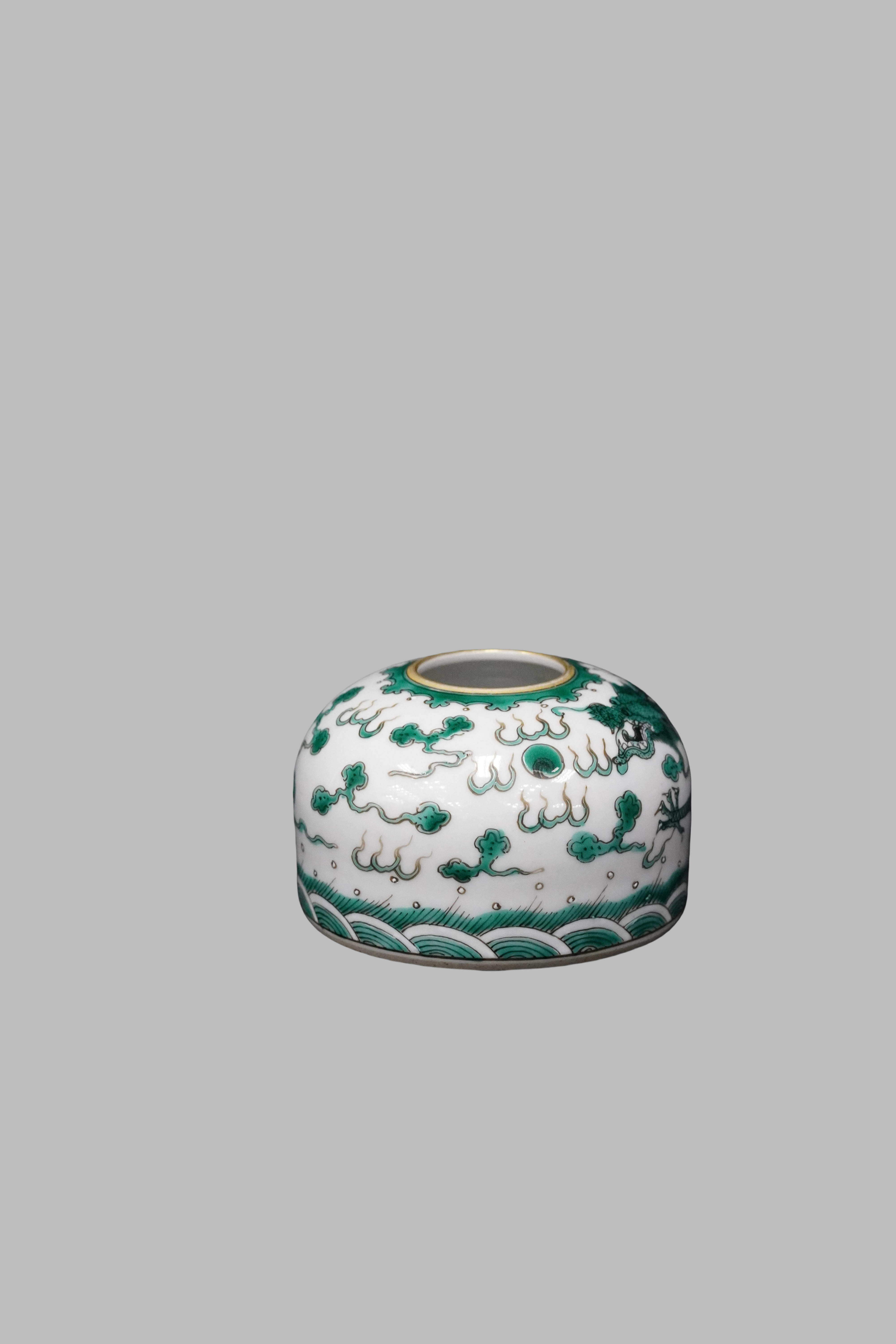
这件瓷器是绿彩云龙纹水盂文房器),是清代文房文化的实物见证。水盂是文房“四宝” 之外的核心器具,反映了清代文人的书房生活与审美偏好;是清代民窑彩瓷工艺的代表:白釉绿彩工艺在清代中晚期民窑中广泛应用,这件器物的纹饰绘制、釉色搭配,体现了当时民窑的工艺水准;是清代吉祥文化的载体:云龙纹是清代社会“尚龙崇祥”风气的体现,反映了民间对富贵、安定的向往。
This porcelain serves as a tangible witness to the scholar's studio culture of the Qing Dynasty.
As a core utensil alongside the "four treasures of the study," the water pot reflects the study life and aesthetic preferences of Qing literati. It represents the colored porcelain craftsmanship of Qing folk kilns: the white glaze with green color technique was widely adopted in folk kilns during the mid-to-late Qing Dynasty, and the motif painting and glaze color matching of this piece embody the craftsmanship level of folk kilns at that time.
Additionally, it is a carrier of Qing auspicious culture. The dragon and cloud pattern reflects the social trend of "venerating dragons and valuing auspiciousness" in the Qing Dynasty, embodying the people's yearning for prosperity and stability.
主题:龙纹(五爪龙,清代中晚期民窑常仿官窑龙纹风格)搭配祥云、海水纹,是“云龙在天、海晏河清”的组合;
寓意:龙是皇权与祥瑞的象征,搭配祥云寓意“吉祥高升”,海水纹寓意 “江山永固”,整体传递“富贵吉祥、国泰民安”的美好祈愿;
风格:绿彩龙纹线条流畅,龙身矫健,祥云呈"如意云”样式,是清代中晚期民窑“仿官窑纹饰”的典型风格(既保留宫廷威严,又符合民间审美)
Theme: the dragon motif (five-clawed dragon, a style often imitated by folk kilns after the mid-Qing Dynasty to resemble imperial kiln dragon designs) is paired with auspicious clouds and sea wave patterns, forming a composition of "dragons soaring in the sky above calm seas."
Meanings: the dragon symbolizes imperial power and auspiciousness. Combined with auspicious clouds, it conveys "propitious advancement and prosperity"; sea wave patterns signify "perpetual stability of the realm." Collectively, the motifs embody the heartfelt wishes for "wealth, auspiciousness, national peace, and people's tranquility."
Style: the green-glazed dragon motifs feature smooth lines and vigorous dragon bodies, with the auspicious clouds in the "ruyi cloud" style. This is a typical example of the "imperial kiln motif imitation" style of folk kilns in the mid-to-late Qing Dynasty — retaining the dignity of the imperial court while conforming to folk aesthetic tastes.