这件是清咸丰粉彩花鸟纹碗(一对),清咸丰时期(1851-1861 年),属于清代晚期,是晚清民用粉彩瓷的实物:反映了咸丰时期民间日用瓷的工艺与审美(虽战乱影响制瓷业,但民窑细路器仍延续了传统风格);是晚清吉祥纹饰的载体:“喜鹊登梅”等纹饰体现了战乱背景下,民间对“喜庆安宁” 的精神向往。
This is a pair of Qing Xianfeng period famille rose bowls with flower and bird motifs. Dating to the Xianfeng reign of the Qing Dynasty (1851–1861), a period classified as the late Qing Dynasty, these bowls are tangible examples of civilian-used famille rose porcelain from the late Qing: they reflect the craftsmanship and aesthetic tastes of folk daily-use porcelain during the Xianfeng period (despite the porcelain-making industry being disrupted by wars, high-quality folk kiln wares still preserved traditional styles).They also serve as carriers of late Qing auspicious motifs: designs such as "magpies perching on plum blossoms" embody the common people's spiritual yearning for "joy and tranquility" amid the backdrop of war.
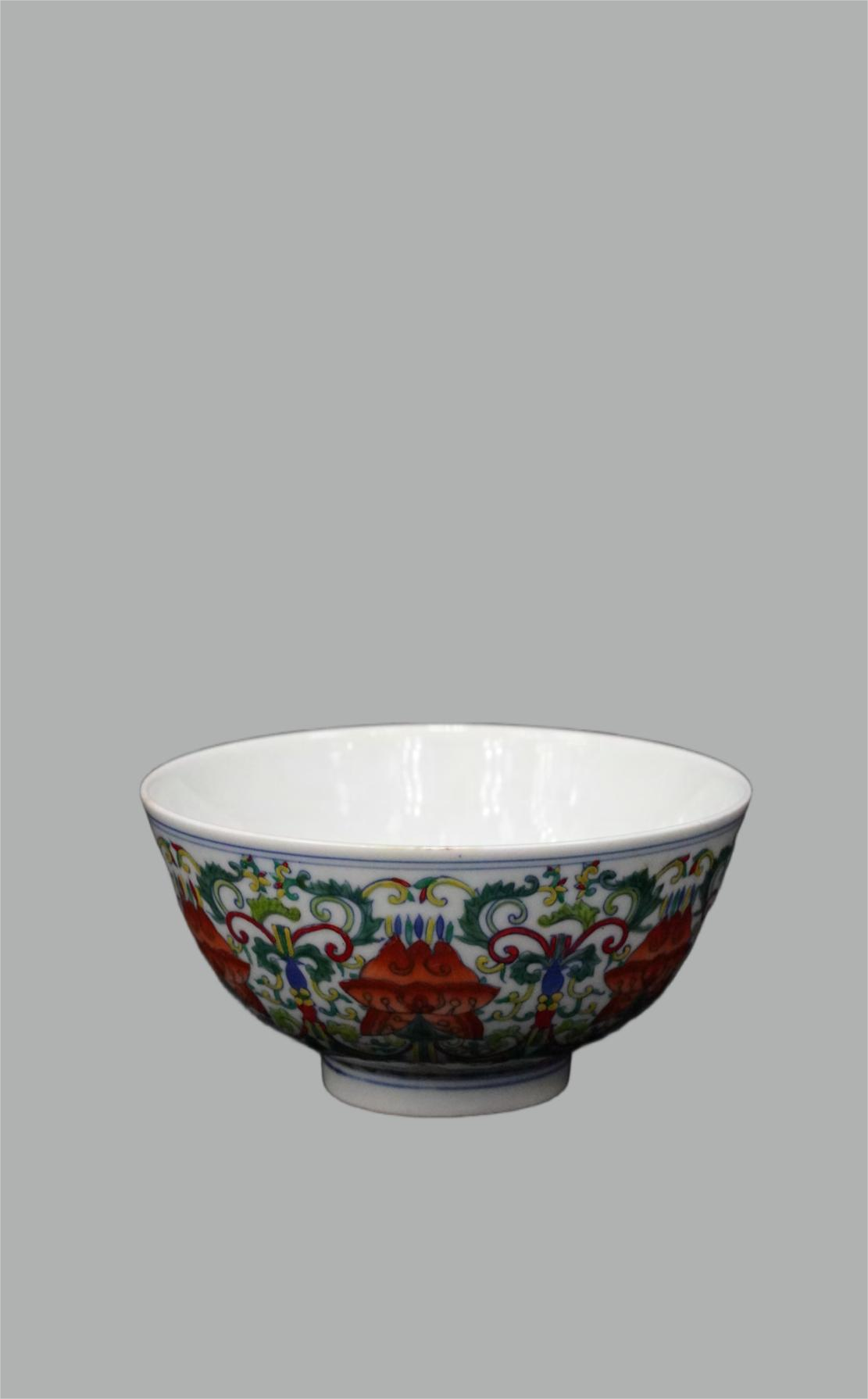
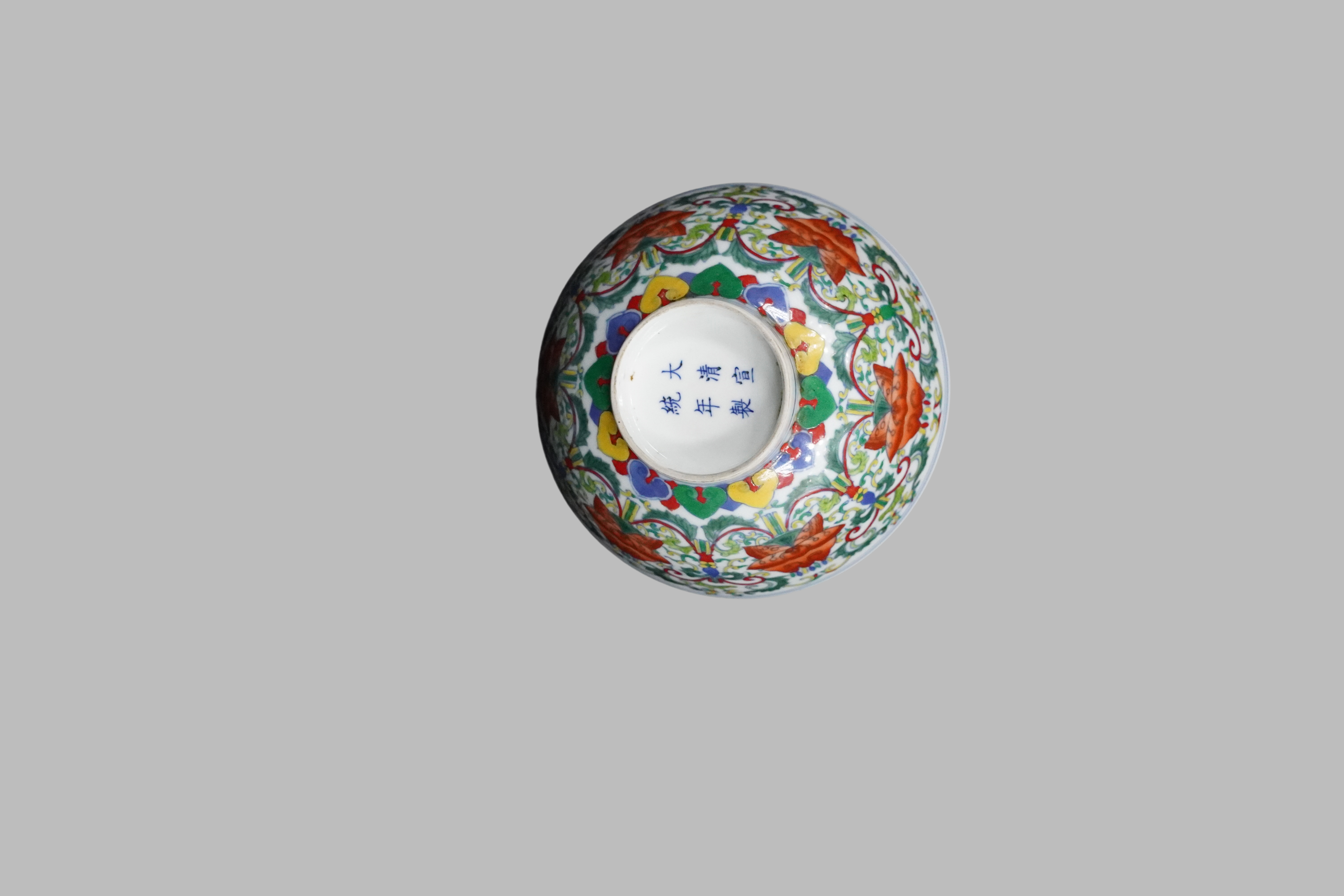
主题:碗身绘缠枝宝相花纹(宝相花融合莲花、牡丹元素,是清代宫廷传统吉祥纹)。
寓意:宝相花象征“圣洁吉祥”,缠枝纹寓意“连绵永续”,组合后代表“富贵长久、国泰民安”(宣统朝虽时局动荡,但纹饰仍延续了清代的吉祥文化)。
风格:宣统宝相花纹精细规整,线条流畅、色彩搭配和谐,既保留了清代宫廷纹饰的华丽,又带有晚清的清雅质感。
Theme: the bowl is decorated with interlocking precious lotus patterns (baoxianghua), a traditional auspicious motif of the Qing imperial court that integrates elements of lotus and peony flowers.
Meanings: the precious lotus (baoxianghua) symbolizes "holiness and auspiciousness," while the interlocking scroll pattern embodies "endlessness and continuity." Combined, they represent "perpetual prosperity and national peace" — despite the turbulent political situation of the Xuantong reign, the motif still upheld the auspicious cultural traditions of the Qing Dynasty.
Style: the Xuantong-period precious lotus (baoxianghua) patterns are exquisitely detailed and neatly arranged, with smooth lines and harmonious color combinations. They not only retain the magnificence of Qing imperial court motifs but also embody the elegant and refined texture of the late Qing Dynasty.