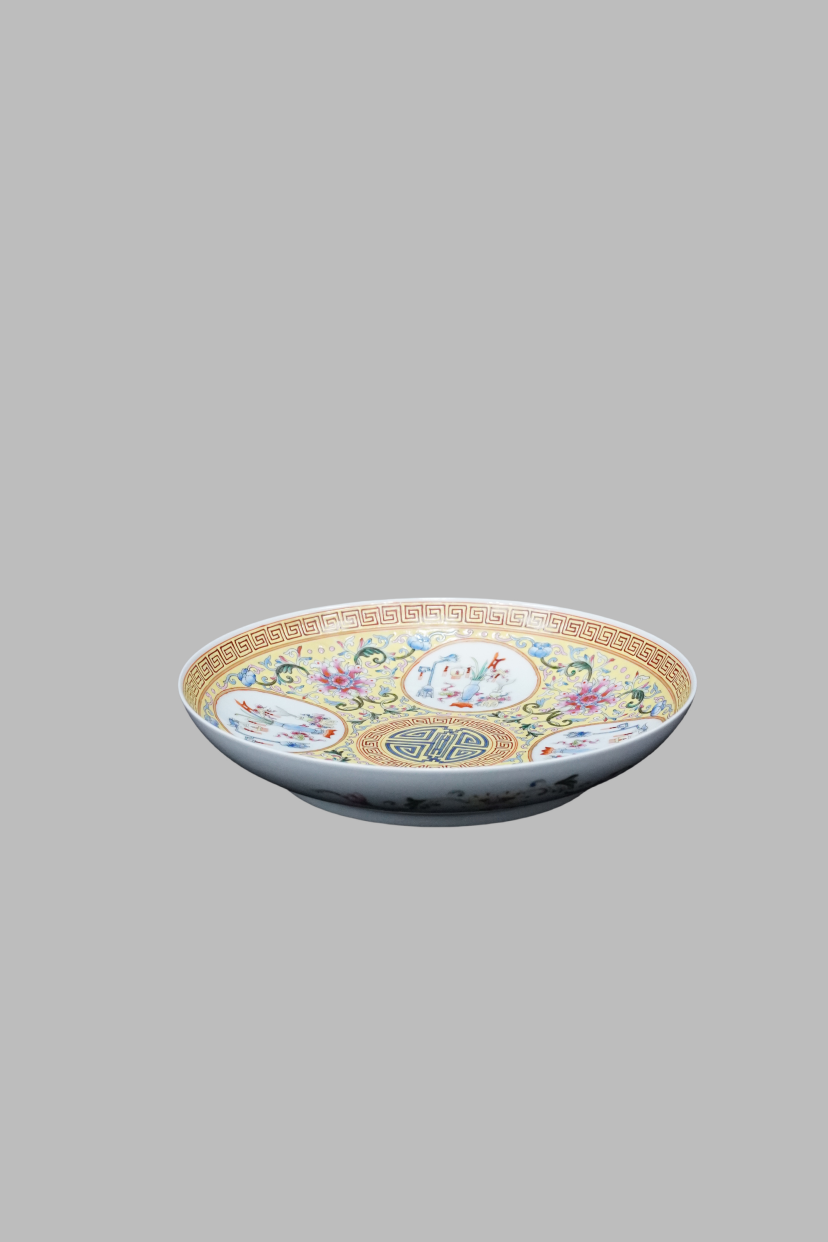
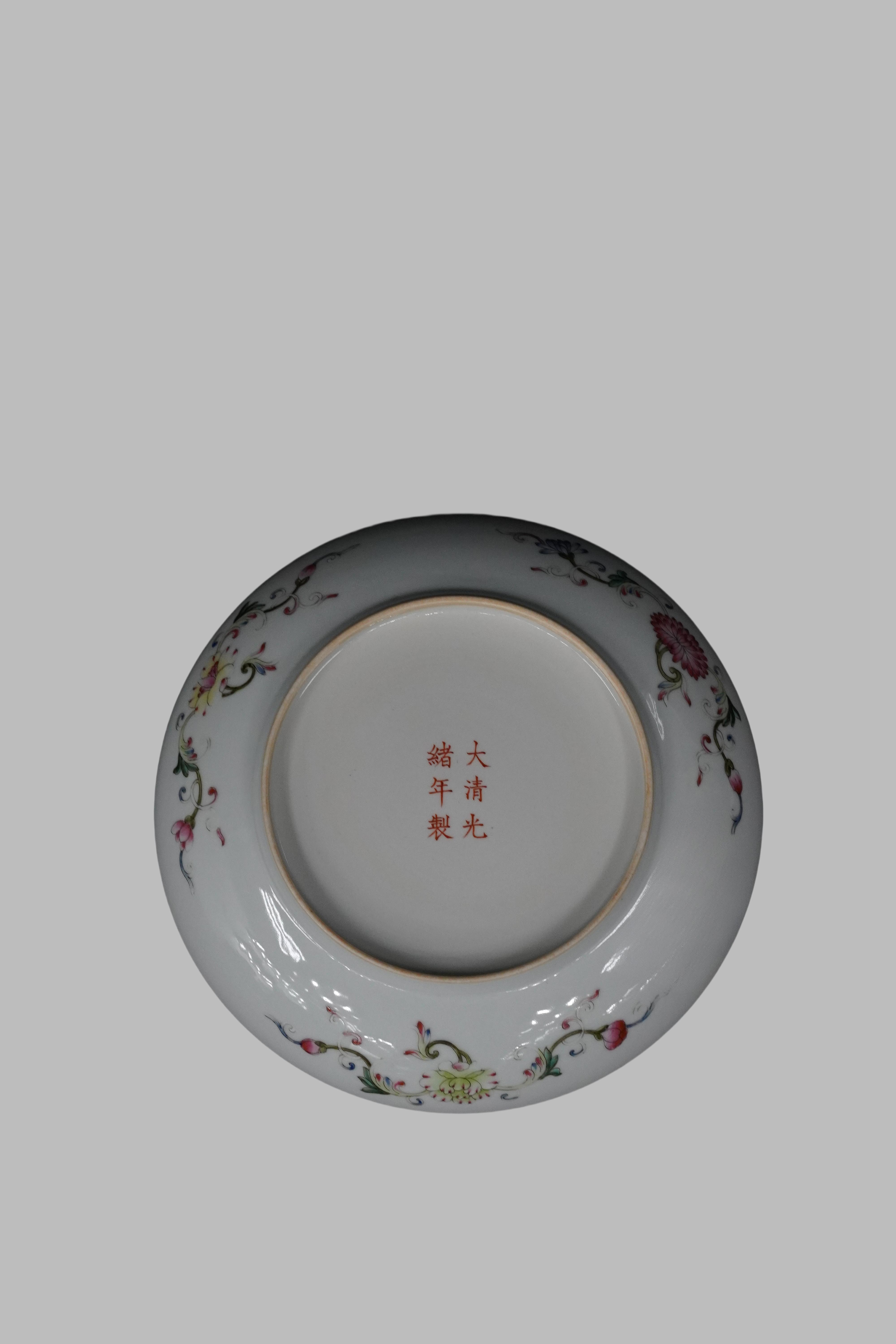
这件瓷器是清光绪粉彩开光福寿纹盘,清光绪时期(1875-1908年),属于晚清"同光中兴”阶段,器型:浅腹敞口盘,造型规整,胎体洁白细腻(光绪瓷胎釉质量回升,接近清中期水准,有"晚清官窑精品”之称)。是晚清"同光中兴”瓷艺的代表:反映了光绪朝制瓷业复苏的水准,体现了晚清对清中期官窑工艺的传承。是晚清吉祥文化的载体:“福寿、多子”等纹饰,体现了当时社会对"安定富贵、家族兴旺”的精神向往,是晚清民俗文化的实物例证。
This porcelain piece is a Qing Guangxu period famille rose dish with reserve panels decorated in blessing and longevity motifs. Dating to the Guangxu reign of the Qing Dynasty (1875–1908), a period belonging to the "Tongzhi-Guangxu Restoration" in the late Qing, it features the following characteristics:Shape: it is a shallow-bowled, open-mouthed dish with a regular form and a pure white, fine-grained body. The quality of Guangxu porcelain's body and glaze rebounded, approaching the standards of the mid-Qing Dynasty, earning it the reputation of "high-quality late Qing imperial kiln ware."Significance: representative of ceramic art in the "Tongzhi-Guangxu Restoration": it reflects the recovery of porcelain-making craftsmanship during the Guangxu reign and embodies the inheritance of mid-Qing imperial kiln techniques in the late Qing.Carrier of late Qing auspicious culture: motifs such as "blessing, longevity, and multiple sons" reflect the social yearning for "stable prosperity and family prosperity" in that era, serving as tangible evidence of late Qing folk culture.
开光内:绘人物/吉祥纹(图中可见“童子”“福寿”元素),象征“多子多福”
开光外:缠枝花卉(如牡丹/莲花),寓意“富贵吉祥”。
盘心:“囍”“寿”纹,直接传递“喜庆、长寿”的寓意;
Within the reserve panels: decorated with figure and auspicious motifs (featuring elements such as boys and "fu-shou" [blessing and longevity] characters), symbolizing "blessings of multiple children and abundant good fortune."
Outside the reserve panels: adorned with interlocking floral motifs (e.g., peonies / lotus flowers), embodying "prosperity and auspiciousness."
Center of the dish: decorated with "double happiness" (xi) and "longevity" (shou) characters, directly conveying the meanings of "joyful celebration and longevity."