
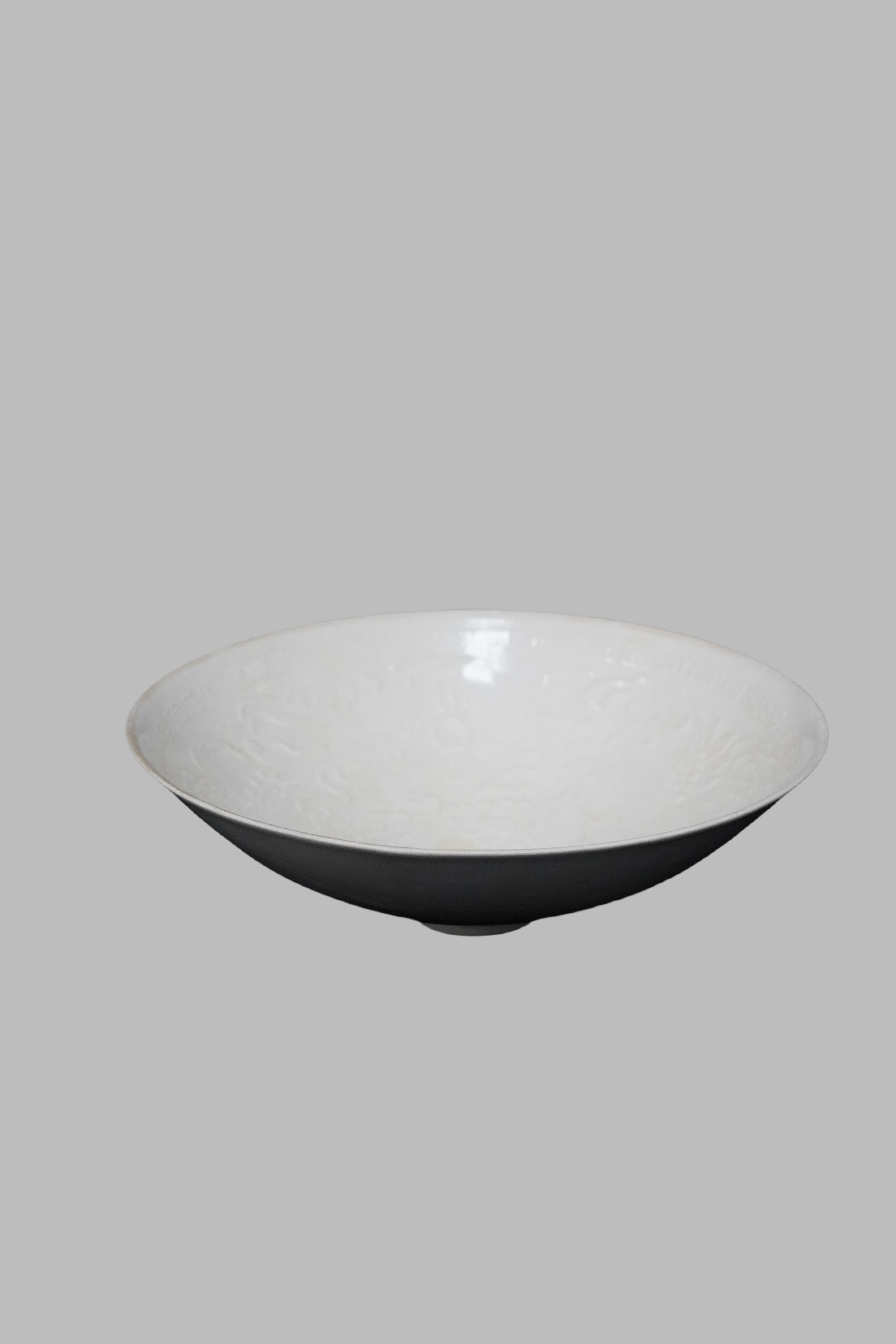
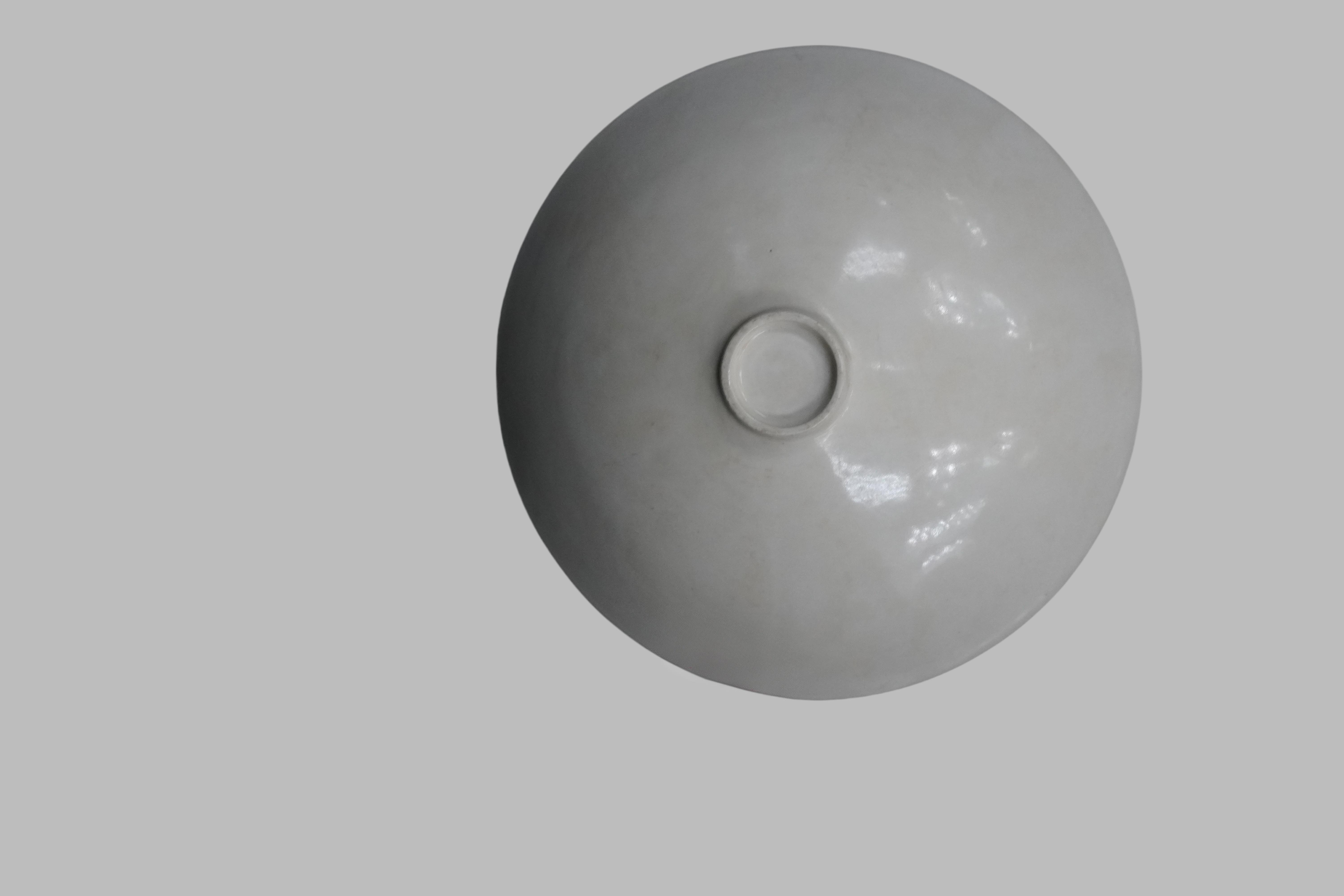
敞口、斜直腹、圈足(或小圈足),整体造型像倒置的斗笠,线条简洁舒展属于“斗笠碗” 的经典器型.
釉色:呈甜白釉(白釉莹润如凝脂,白中微闪青,是明代永乐时期标志性釉色)。
It features an open mouth, a slanting straight belly, and a ring foot (or a small ring foot). Its overall shape resembles an inverted bamboo hat ("douli" in Chinese), with simple and smooth lines — making it a classic example of the "douli bowl" (bamboo hat-shaped bowl) category.
Glaze color: it is covered in sweet white glaze: the white glaze is as smooth and lustrous as condensed fat, with a subtle cyan undertone. This is a signature glaze color of the Yongle period in the Ming Dynasty.
此碗为甜白釉暗刻纹一 纹饰刻划在胎体上,罩釉后纹饰隐约可见(需光线照射才能清晰看到,多为花卉、龙纹、缠枝纹等);甜白釉本身象征“纯净素雅、高洁无瑕”,暗刻纹饰(如缠枝莲)则暗含“连绵吉祥”,整体体现文人“极简雅致”的审美,也代表宫廷器物的素净华贵。
This bowl features sweet white glaze with hidden carved patterns — the patterns are carved on the porcelain body, and after being covered with glaze, they are faintly visible (clear visibility requires light illumination). Common motifs of such hidden carvings include flowers, dragon patterns, and interlocking branch patterns.
The sweet white glaze itself symbolizes "purity, elegance, and flawlessness." The hidden carved patterns (such as interlocking lotus patterns) implicitly convey the meaning of "continuous auspiciousness." Overall, it embodies the "minimalist and refined" aesthetic of literati and also represents the plain yet luxurious quality of imperial court artifacts.