
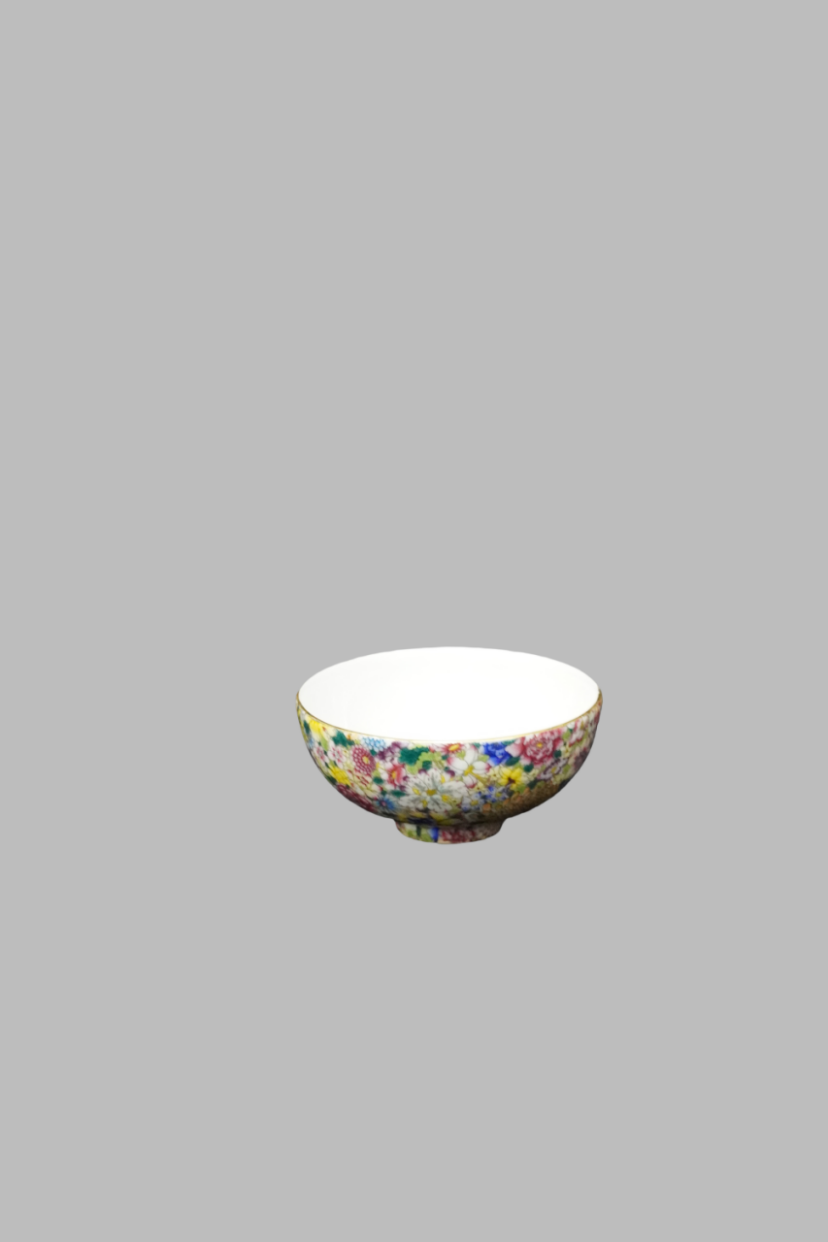
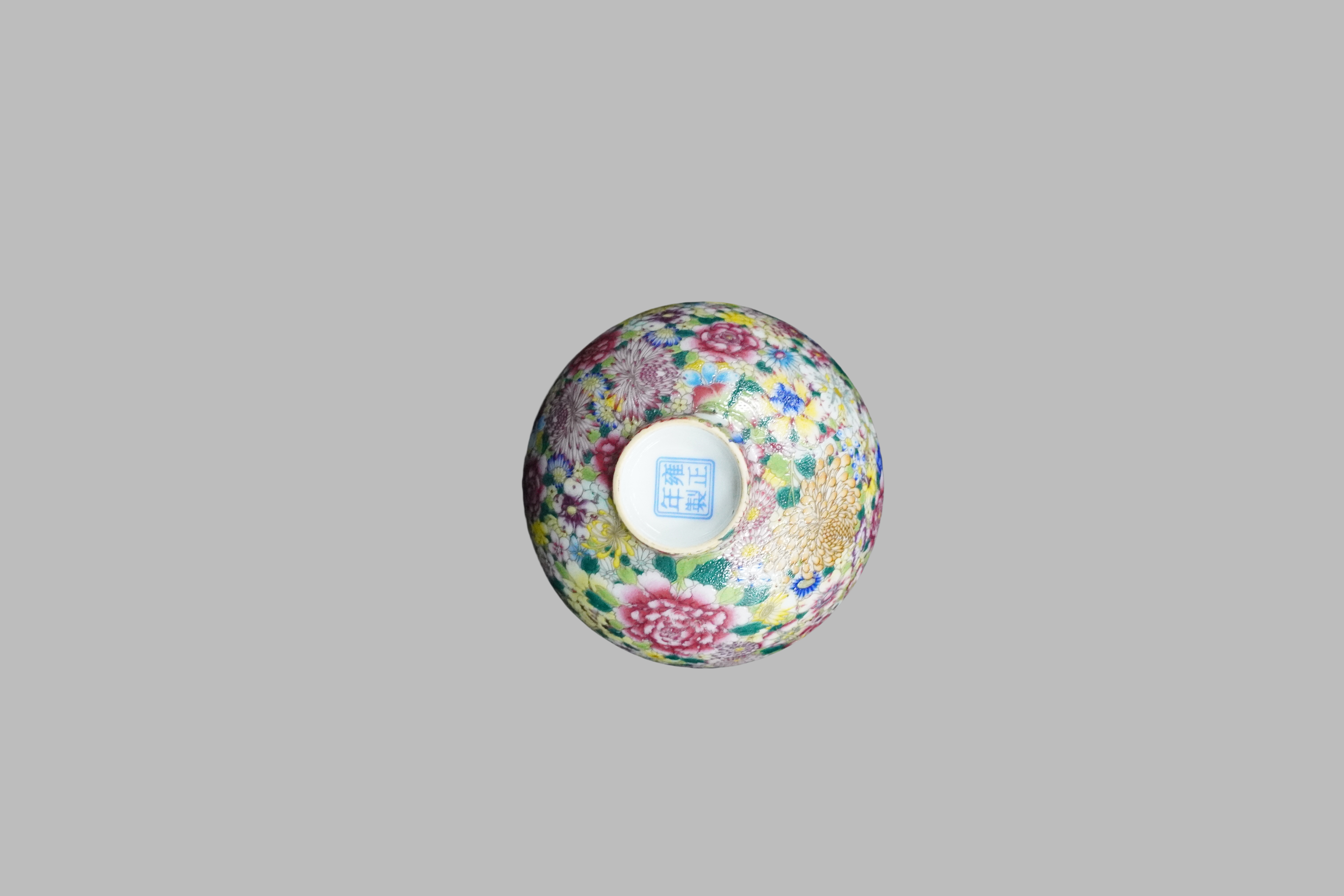
它属于浅腹小碗/小杯的经典器型,敞口、浅弧腹、圈足,整体小巧精致,是清代常见的茶杯、茶碗或案头小陈设器。
It belongs to the classic shape of a shallow-bellied small bowl / small cup. Featuring an open mouth, a shallow curved belly, and a ring foot, the overall design is small and exquisite, and it was a common tea cup, tea bowl, or small desktop decorative piece during the Qing Dynasty.
采用“百花不落地”粉彩工艺:即在器物表面满绘各种花卉(如牡丹、月季、菊花等),花卉密集覆盖全器,几乎不见地色,是清代乾隆时期兴起的奢华装饰风格;色彩艳丽饱满,花卉层次丰富,体现了粉彩“色彩浓淡可控、细节细腻”的特点。百花不落地”纹饰的核心寓意是**“百花齐放、富贵满堂”**,密集的花卉象征“繁荣昌盛、生机盎然”,同时也体现了清代宫廷/贵族对"富丽堂皇”审美风格的追求。
It adopts the "hundred flowers in full bloom" famille rose craftsmanship: that is, the entire surface of the utensil is painted with a wide variety of flowers (such as peonies, Chinese roses, chrysanthemums, etc.). The flowers densely cover the whole utensil, with almost no visible background color. This is a luxurious decorative style that emerged during the Qianlong period of the Qing Dynasty.
The colors are bright and vivid, and the flowers have rich layers — embodying the characteristics of famille rose, such as "controllable color shades and delicate details."
The core symbolism of the "hundred flowers in full bloom" pattern lies in "a hundred flowers blooming together and prosperity filling the hall." The dense arrangement of flowers symbolizes "prosperity and vitality," while also reflecting the pursuit of a "magnificent and grand" aesthetic style among the Qing Dynasty imperial court and nobility.