
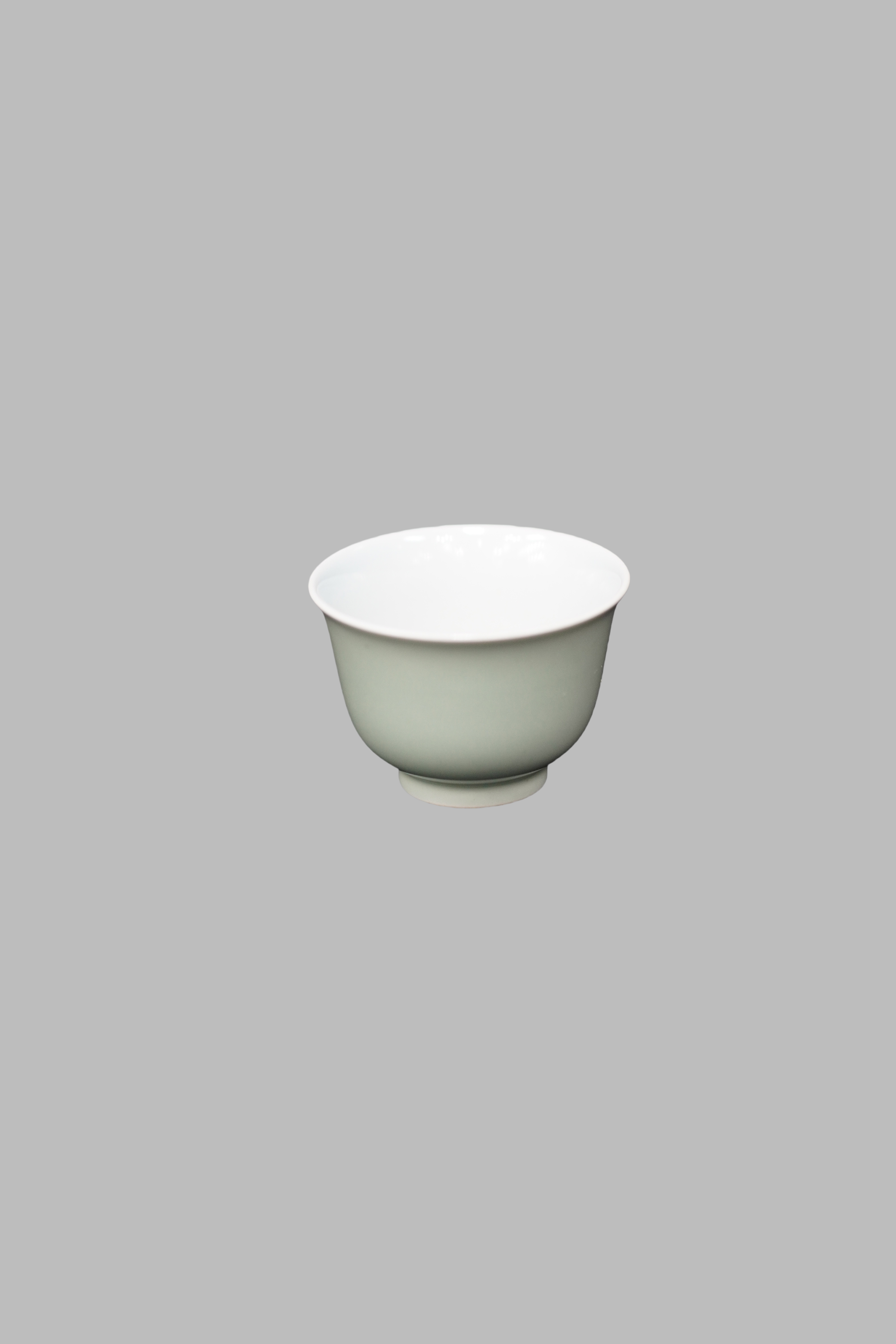
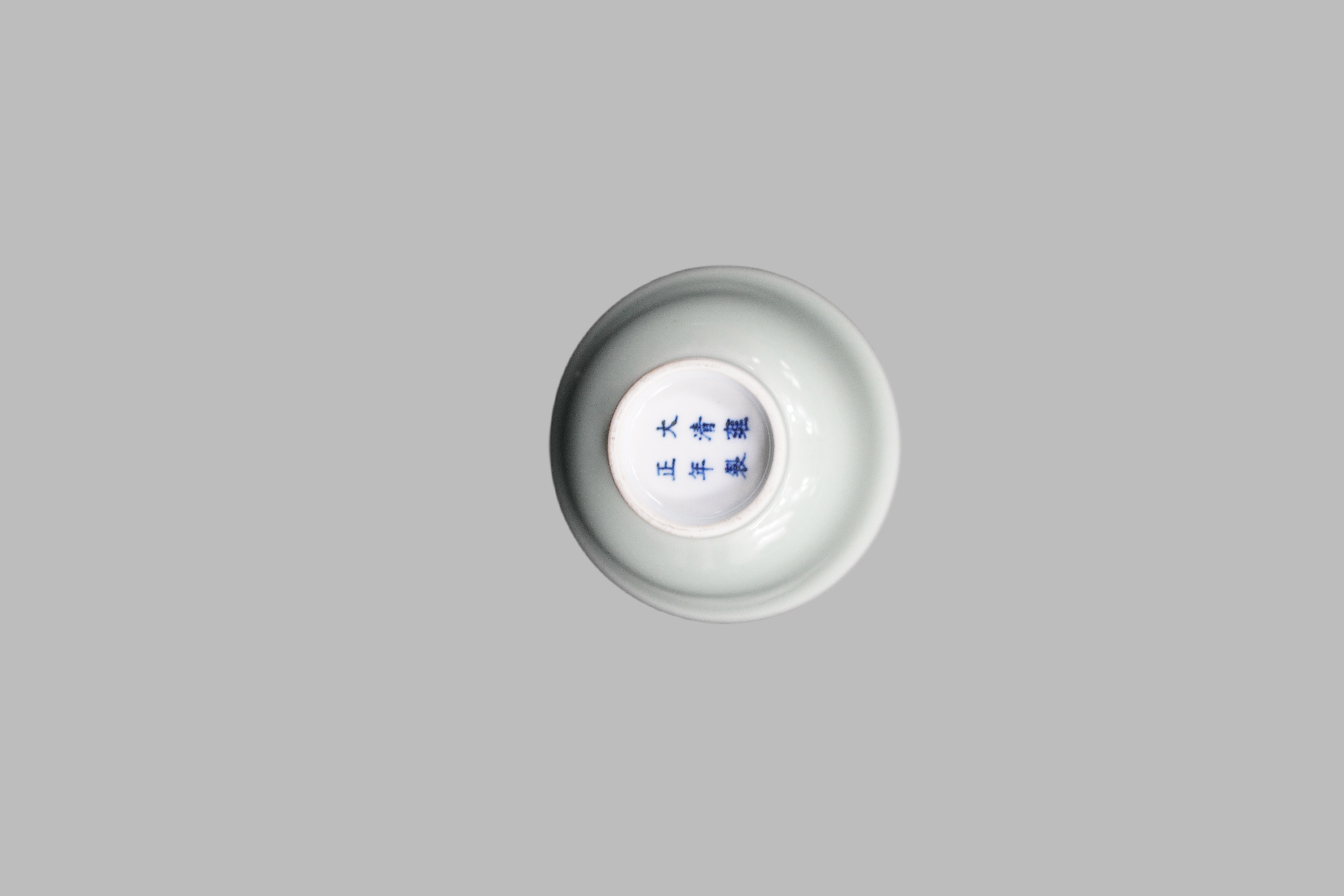
它属于"仰钟杯/直口小杯”的经典器型,敞口、浅弧腹、圈足,整体线条简洁圆润,是明清时期常见的茶杯、酒盏或文房水盂(小尺寸)釉面莹润光洁,胎体轻薄细腻,符合清代单色釉器“素净雅致”的风格;单色釉小杯的成交价格差异极大(核心看年代、釉色、款识)。
It belongs to the classic shape of "yangzhong cup (upside-down bell cup) / straight-mouthed small cup", featuring an open mouth, a shallow curved belly, and a ring foot. With overall simple and rounded lines, it was a common tea cup, wine cup, or small-sized scholar's desk water vessel (for holding water) during the Ming and Qing Dynasties.The glaze surface is smooth and lustrous, and the porcelain body is thin and delicate — conforming to the "plain and elegant" style of monochromatic glaze wares.The transaction prices of monochromatic glaze small cups vary greatly, with the core factors being age, glaze color, and reign marks. A typical recent case: Ming Jiajing period.
此杯为素面单色釉器,无额外彩绘或刻划纹饰,仅以釉色本身为装饰。“极简之美”,豆青釉/甜白单色釉器的核心寓意是"素雅高洁”,体现文人审美中的釉的淡青、莹白质感也暗含“清新雅致、纯净无华”的意境。
This cup is a plain monochromatic glaze utensil, with no additional painted or carved decorative patterns. It relies solely on the glaze color itself for decoration.
The core symbolism of monochromatic glaze ware lies in "elegance, simplicity, and nobility," which embodies the "beauty of minimalism" in the aesthetic values of literati.
The soft cyan hue of bean green glaze and the translucent white texture of sweet white glaze further imply an artistic conception of "freshness, grace, and unadorned purity."