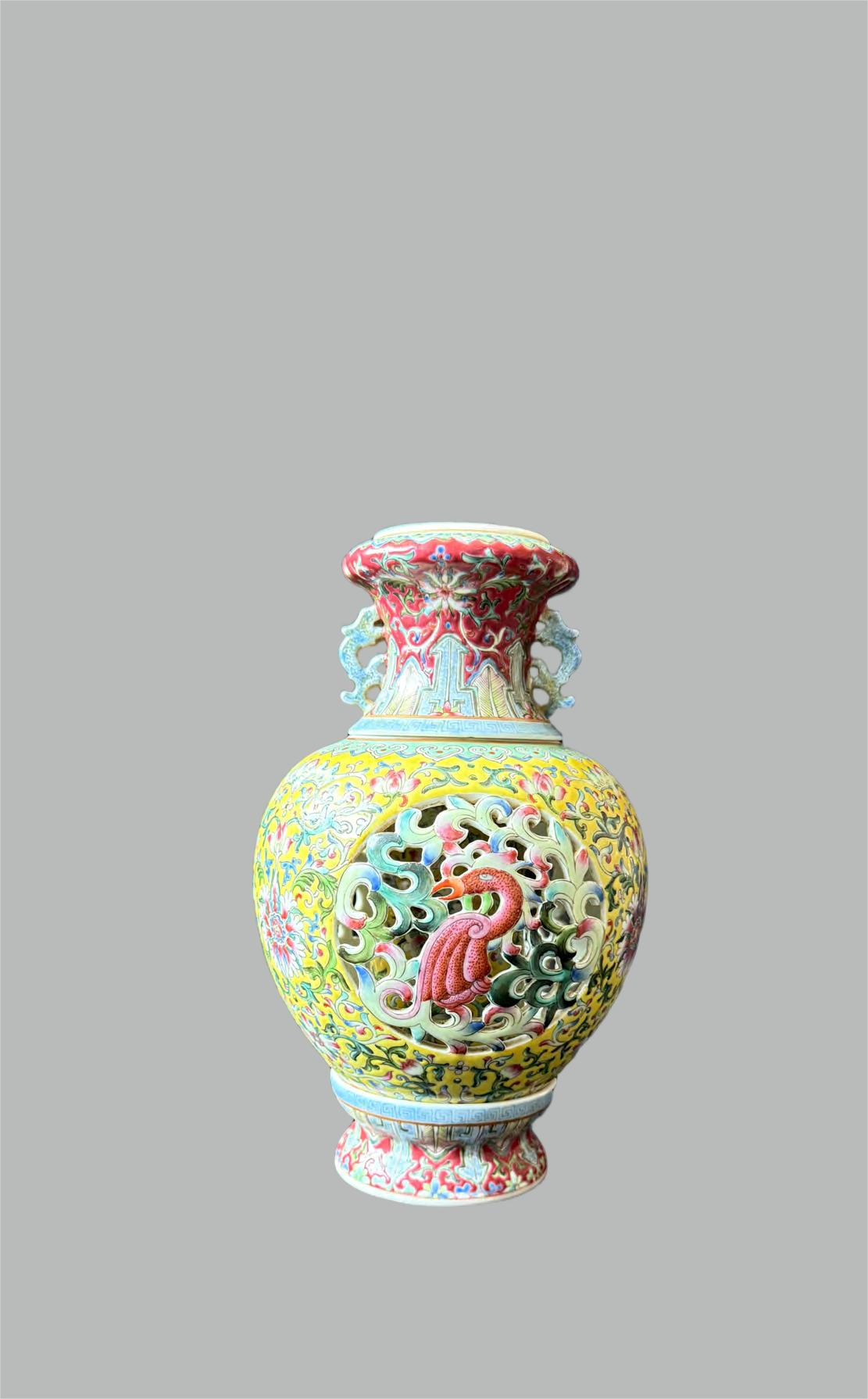
它是转心瓶的经典样式(转心瓶是清代粉彩工艺的巅峰器型之一),撇口、束颈、双如意耳、鼓腹、圈足外撇,核心是“转心”设计一瓶身分为“外瓶(带镂空)、内瓶(可转动)、底座”三部分,转动外瓶时,内瓶纹饰会随镂空窗变换呈现不同画面;工艺难度:需分段制坯、镂空雕刻、拼接烧制, 清代粉彩中“工艺复杂度极高”的器型。
It represents a classic style of the "revolving heart vase" (a vessel type that stands among the pinnacles of Qing Dynasty famille-rose craftsmanship), characterized by a flared mouth, a constricted neck, a pair of ruyi-shaped handles, a bulging belly, and an outward-flaring ring foot. Its core lies in the "revolving heart" design—the vase body is divided into three parts: an "outer vase" (with openwork carvings), an "inner vase" (rotatable), and a "base". When the outer vase is rotated, the patterns on the inner vase shift with the openwork windows, presenting different scenes.Craftsmanship difficulty: The production process requires segmental body-making, openwork carving, and assembled firing, making it a vessel type with "extremely high craftsmanship complexity" among Qing Dynasty famille-rose wares.
黄地粉彩缠枝花卉纹(地子为娇黄釉,满绘缠枝西番莲),腹部设镂空窗,窗内绘夔凤纹;颈部/耳饰:粉彩胭脂红地轧道纹+蓝彩如意耳,底足绘莲瓣纹;内瓶(转心部分):通常绘龙纹或其他吉祥纹饰(转动时与外瓶镂空窗形成“龙凤呼应”)采用粉彩+轧道+镂空复合工艺:粉彩发色艳丽(光绪仿乾隆的“洋彩”风格),轧道纹细密均匀,镂空雕刻线条流畅;夔凤纹是清代宫廷典型纹饰,造型舒展、线条柔婉。
Main body decoration: Famille-rose interlocking floral patterns on a yellow ground. The base is covered with delicate yellow glaze, and the entire surface is painted with interlocking passionflower patterns (a common "interlocking floral" motif in Qing Dynasty porcelain). A hollowed-out window is set on the belly, inside which Kui phoenix patterns are painted.
Neck and handle decoration: The neck features famille-rose "yazhi patterns" (fine, continuous geometric carvings) on a carmine red ground, paired with blue-glazed ruyi-shaped handles. The base of the vase is painted with lotus petal patterns, a classic auxiliary motif that enhances the sense of hierarchy.
Inner vase (revolving core): Typically decorated with dragon patterns or other auspicious motifs. When the outer vase is rotated, the motifs on the inner vase align with the hollowed-out windows of the outer vase, creating a "dragon-phoenix resonance" effect—symbolizing the harmonious coexistence of imperial authority (dragon) and auspiciousness (phoenix).
It adopts a composite craftsmanship combining famille-rose, yazhi (fine carved patterns), and openwork. The famille-rose exhibits bright and vivid colors, following the "yangcai (foreign-colored enamel)" style that the Guangxu period imitated from the Qianlong period.
The yazhi patterns are fine, dense, and uniform—characterized by delicate, continuous geometric carvings on the glaze surface, a signature decorative technique of Qing Dynasty imperial porcelain.
The openwork carvings feature smooth and fluid lines, requiring meticulous control of carving depth and force to ensure the porcelain body remains intact while creating hollowed-out decorative windows.
The Kui phoenix pattern is a typical decorative motif in Qing Dynasty imperial court porcelain. Its shape is open and spacious, with gentle and graceful lines—unlike the boldness of dragon patterns, it emphasizes elegance and auspiciousness, often used to symbolize "dignity, harmony, and good fortune" in court artifacts.