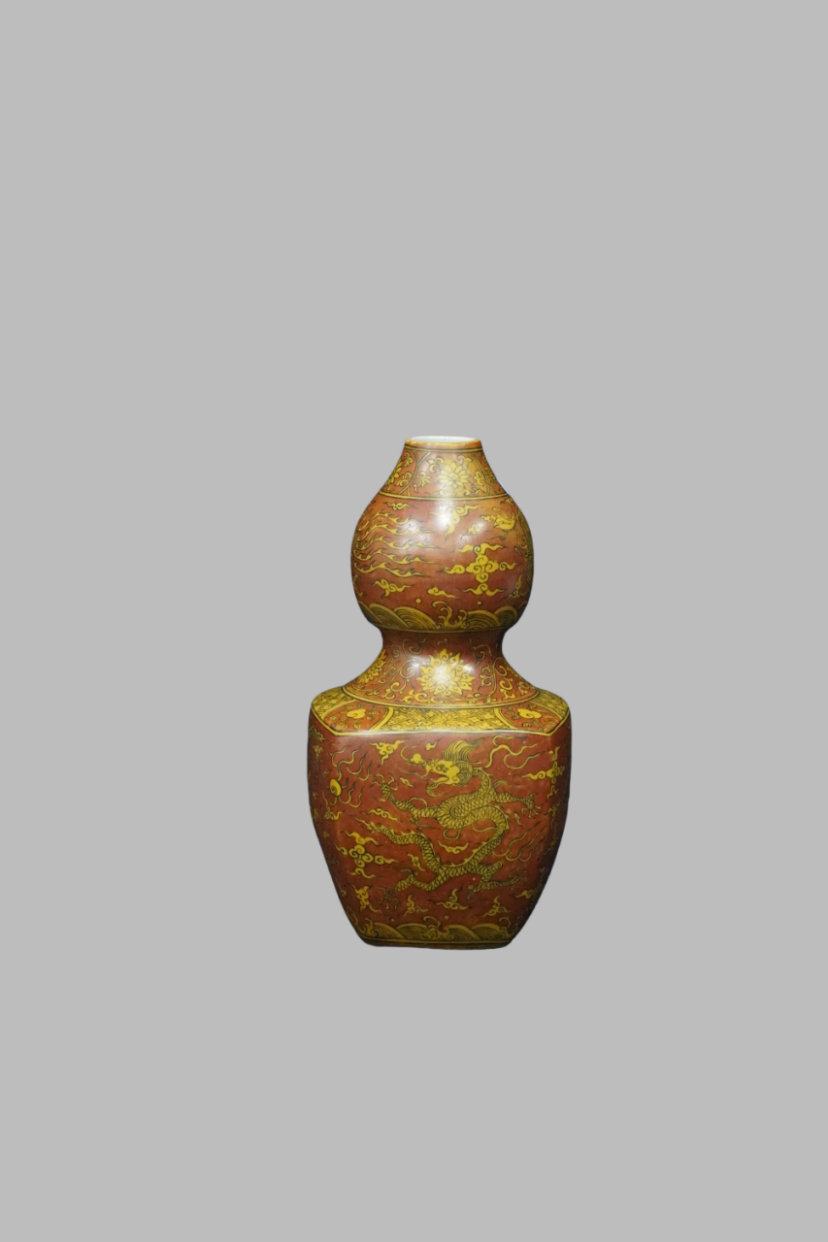
明嘉靖红地黄彩龙纹天圆地方葫芦瓶它的器型是“天圆地方”式葫芦瓶,是嘉靖朝独有的创新形制:结构:上圆(象征天)+下方(象征地)+束腰(连接天地),结合葫芦的双鼓腹形态,线条既圆润又规整,兼具自然仿生与哲学寓意。
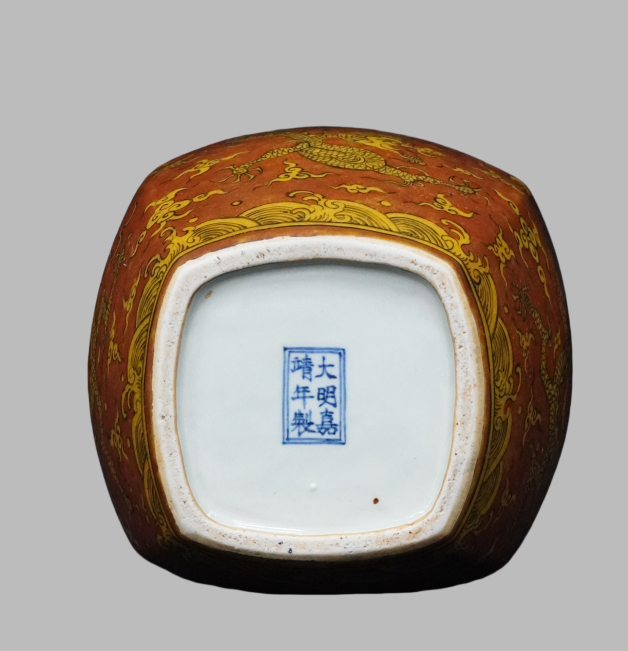
Ming Jiajing period yellow-dragon patterned gourd vase with red ground and "heaven-round-earth-square" shape. The vase adopts the "heaven-round-earth-square" gourd shape, an innovative design unique to the Jiajing reign. Its structure consists of three parts: a rounded upper section (symbolizing heaven), a squared lower section (symbolizing earth), and a slender neck connecting them (forming the gourd shape). It features lines that are both smooth and neat, integrating natural bionic design with philosophical connotations.The valuation of this collection needs to be determined based on factors such as the imperial kiln reign mark, condition, and completeness of decorative patterns.
这件器物采用“红地黄彩”工艺(嘉靖独创的“红上黄”技法),纹饰以龙纹+祥云纹为主:工艺特点:先烧黄釉暗花器,再涂矾红为地,露出黄色纹样,经三次烧制而成,色彩对比强烈(红为喜庆、黄为皇权),是嘉靖彩瓷的标志性品种;纹饰布局:上圆腹绘凤纹/祥云纹,下方形腹绘五爪龙纹(帝王专属纹饰),搭配缠枝莲纹,繁密而不失秩序,符合嘉靖朝“尚繁”的审美风尚。福禄+皇权+道教,多重文化的融合,这件器物的寓意是嘉靖朝“宗教+皇权”的双重体现:葫芦造型:谐音“福禄”,象征幸福、禄位,同时葫芦是道教“仙器”(炼丹容器),契合嘉靖帝求仙的执念;天圆地方:暗合道家“天地交泰”的哲学,寓意“皇权稳固、江山永固”;龙纹+黄彩:龙纹是皇权象征,黄彩为皇家专用色,结合红地的喜庆,整体寓意“皇权昌盛、福禄双全”。
The vase features dragon patterns and auspicious cloud patterns as the main decorative motifs, pioneered during the Jiajing reign with distinctive craftsmanship characteristics: first, a porcelain vessel with yellow-glazed hidden patterns is fired; then red pigment is applied as the base, leaving the yellow patterns exposed. The vessel undergoes three rounds of firing to complete the process. This results in a striking color contrast — red symbolizes joy and celebration, while yellow represents imperial authority. It is an iconic type of colored porcelain from the Jiajing reign.The overall decoration is dense yet well-organized, conforming to the "preference for intricacy" aesthetic trend of the Jiajing era.Integration of multiple cultures: blessings, imperial power, and Taoism. The implied meaning of this artifact embodies the dual characteristics of "religion + imperial power" in the Jiajing reign.The round upper belly is painted with phoenix patterns and auspicious cloud patterns. The square lower belly features five-clawed dragon patterns (a motif exclusive to emperors) accompanied by interlocking lotus patterns.Gourd shape: the Chinese character for "gourd" (hu) is a homophone for "blessings and official rank" (fu lu), symbolizing happiness and official positions. Meanwhile, the gourd was regarded as a "celestial artifact" in Taoism, used as a container for refining elixirs, which aligns with the Jiajing emperor's obsession with seeking immortality.Heaven-round-earth-square design: this design implicitly corresponds to the Taoist philosophy of "harmony between heaven and earth" (tiandi jiaotai), implying "stable imperial power and eternal reign over the country."Dragon patterns + yellow color: dragon patterns are a symbol of imperial power, and yellow was an exclusive color for the royal family in ancient China. Combined with the festive connotation of the red base, the overall implication is "prosperous imperial power and the abundance of both blessings and official rank."