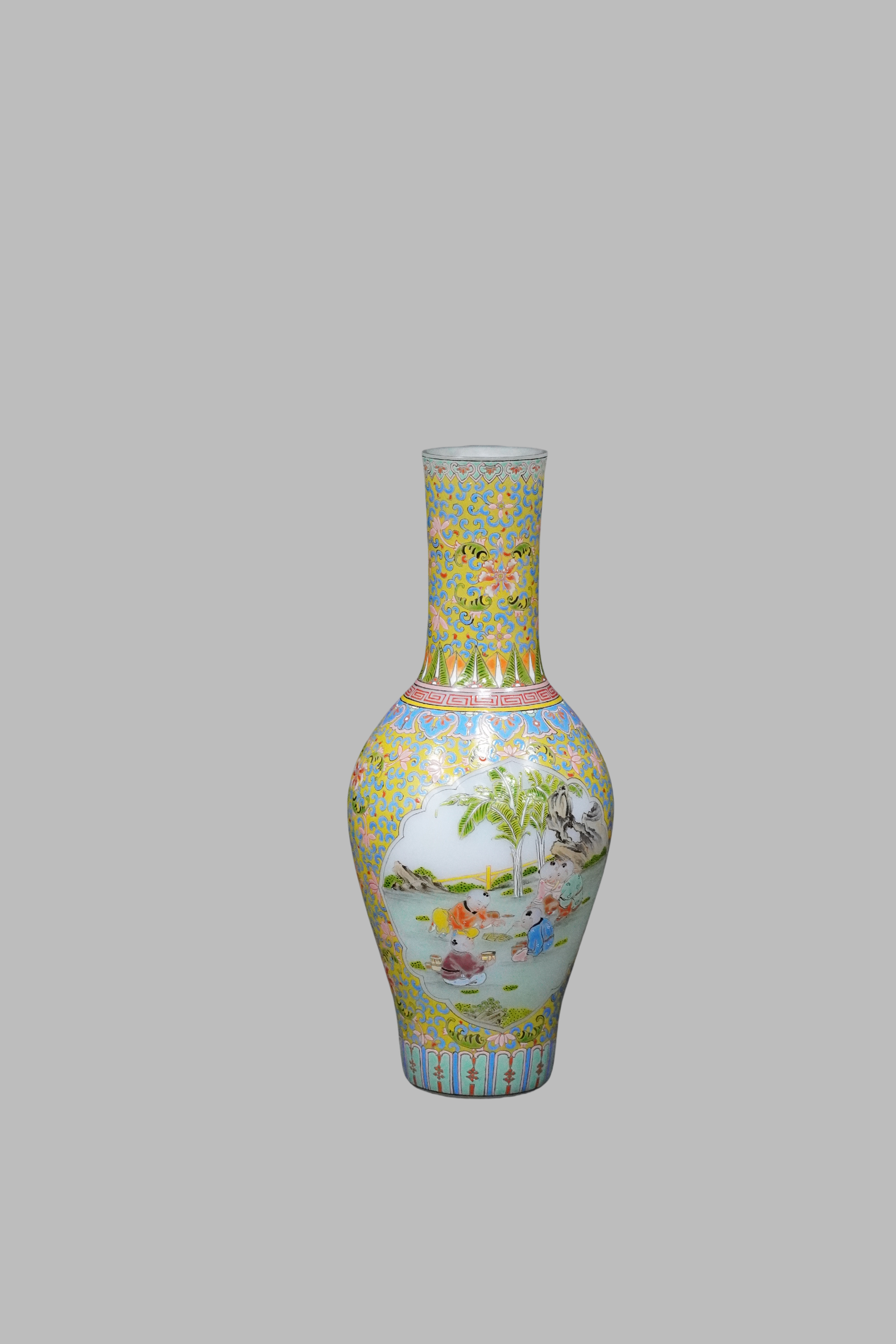
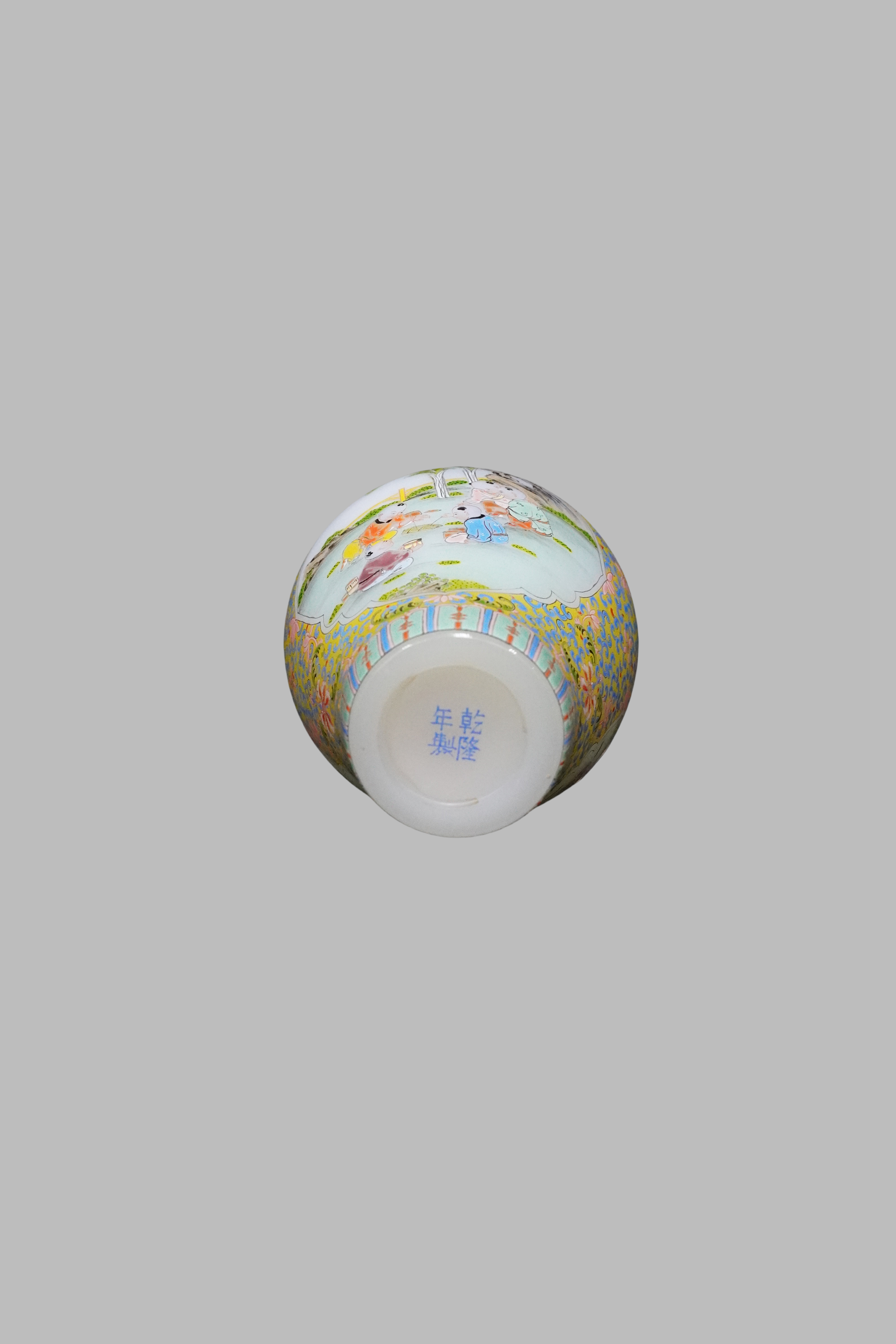
这件瓷器是清乾隆款黄地轧道粉彩开光婴戏纹长颈瓶款识为“大清乾隆年制”,风格“轧道+“锦上添花”工艺的典型代表;对应清乾隆时期(或后世仿品)。乾隆朝是清代粉彩瓷工艺的鼎盛期,尤其擅长开光”的繁复装饰风格。体现乾隆朝"繁缛华丽”的宫廷审美,是清代粉彩瓷婴戏纹是传统吉祥纹饰,结合皇家专用黄地,反映清代宫廷对 “多子多福” 等祥瑞寓意的追求。
This porcelain piece is a long-necked vase with famille rose glaze, yadao (trailed grain) decoration, reserve panels, and child-play motifs, bearing the Qianlong reign mark of the Qing Dynasty. The reign mark reads "Da Qing Qianlong Nian Zhi" (Made in the Qianlong Reign of the Great Qing Dynasty), and its style corresponds to the Qianlong period of the Qing Dynasty (or it may be a later imitation).The Qianlong era marked the heyday of famille rose porcelain craftsmanship in the Qing Dynasty, with a particular expertise in the intricate decorative style combining "yadao" and "reserve panels." This vase embodies the "exuberant and magnificent" imperial aesthetic of the Qianlong period and stands as a typical representative of the "adding flowers to brocade" technique in Qing Dynasty famille rose porcelain.Child-play motifs are traditional auspicious decorative patterns; when combined with the imperial-exclusive yellow ground, they reflect the Qing Dynasty imperial court's pursuit of auspicious implications such as "prosperity with many children."
地纹:轧道锦地+缠枝花卉纹,寓意"富贵连绵、吉祥满堂”
开光内纹饰:婴戏纹(图中可见孩童嬉戏场景),孩童神态生动,搭配山水、庭院元素,是传统吉祥纹饰,寓意“多子多福、阖家欢乐”
Patterns:
Yadao brocade-ground with interlocking floral patterns: these patterns symbolize "endless prosperity and eternal vitality." The "yadao" technique involves carving fine, dense scroll-like textures on the porcelain surface to mimic the luxurious appearance of brocade, while the interlocking floral motifs (with stems winding continuously and flowers blooming in sequence) visually reinforce the implication of unbroken fortune and sustained vitality.Patterns inside the reserve panels: Western figure motifs. The motifs depict women and children with curly hair and European-style clothing. Both the figure shapes and scenes exhibit characteristics of Rococo art — such as soft, curved lines, elegant postures, and a focus on depicting leisurely noble life. The themes are derived from Western mythology (e.g., stories of Greek and Roman gods) or the daily life of European nobility. These motifs are typical decorative elements of the Yongzheng period, reflecting the influence of Western court painters (such as Giuseppe Castiglione) on imperial porcelain craftsmanship.It adopts the famille rose enamel craftsmanship (the enamel pigments were imported from the West, featuring bright and delicate colors). The ground pattern is a yadao (trailed grain) brocade-ground pattern — composed of fine and dense interlocking floral motifs, which is known as "adding flowers to brocade" (a Chinese idiom-like term describing the act of enhancing something already exquisite, emphasizing the ornamental effect of layering fine patterns on a luxurious base).