
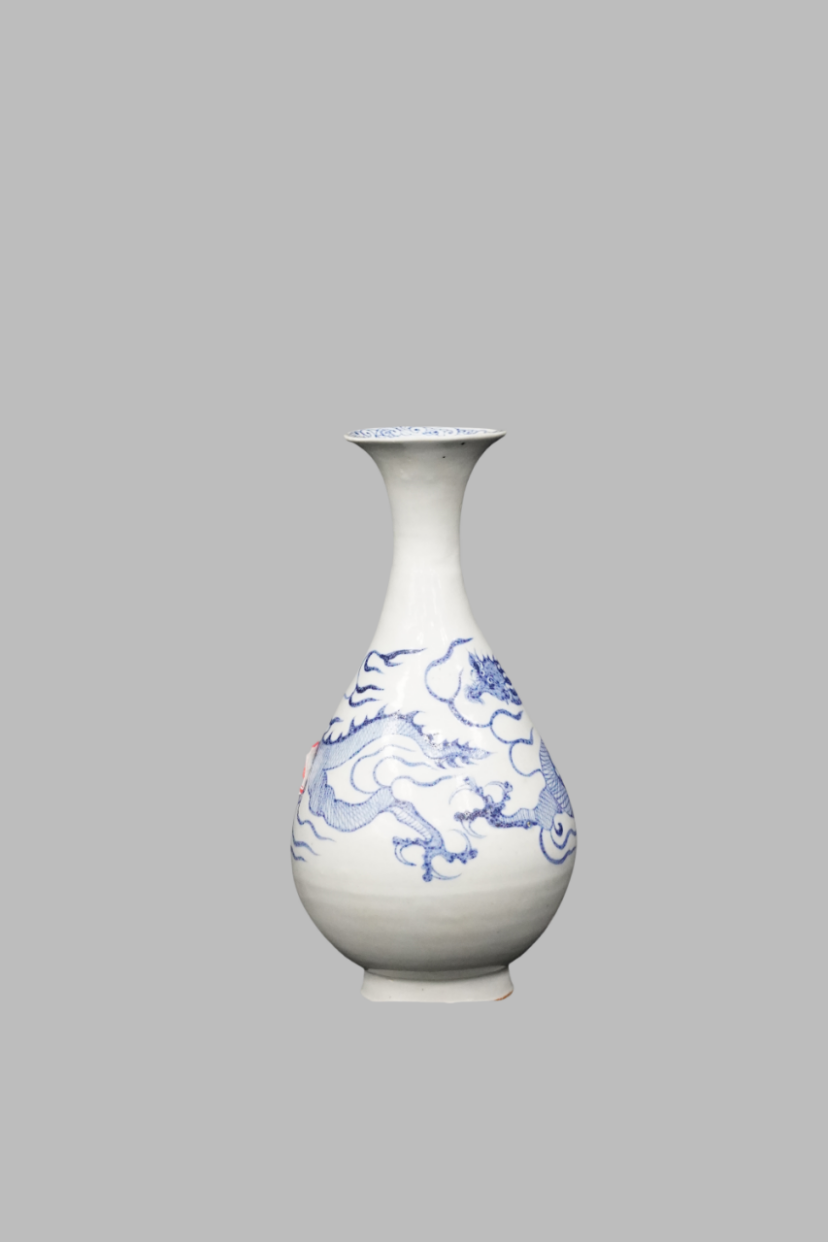
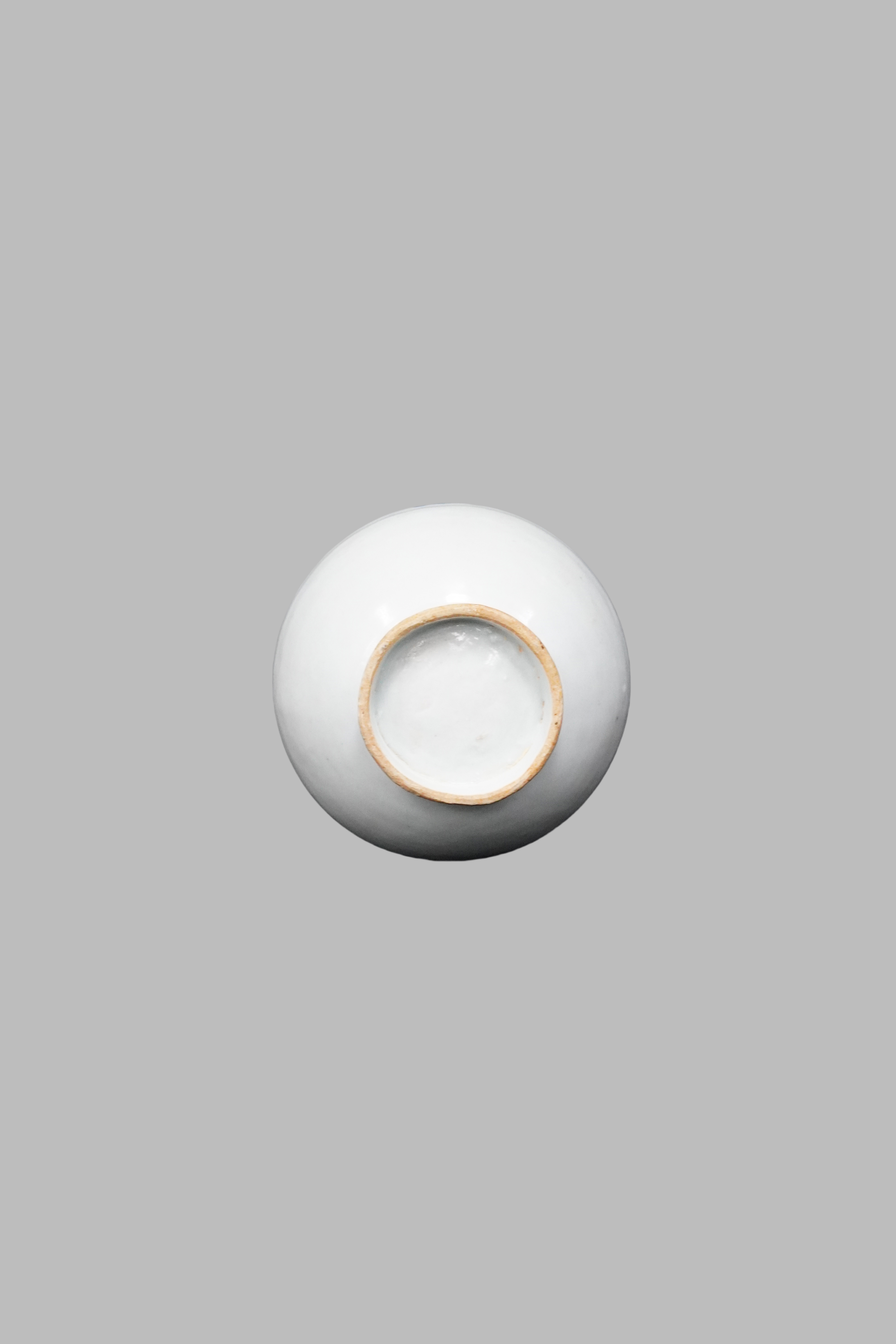
玉壶春瓶造型唐代发源、北宋定型,若为元代制品,是研究元青花工艺(如进口钴料运用)、文化融合(汉地与异域审美结合)的实物;明代制品承载官窑巅峰工艺、宫廷审美,见证彩瓷发展遵循 “撇口束颈、垂腹圈足” 经典制式,线条优美。元代用进口钴料(苏麻离青),发色浓艳带铁锈斑,胎体有时代特征;明代官窑胎质细腻坚致,釉面有"橘皮纹”等;清代(以乾隆为例)器型调整,更显雍容,工艺精湛,摹古又创新。
The shape of the yuhuchun vase originated in the Tang Dynasty and was standardized in the Northern Song Dynasty. If this vase is a product of the Yuan Dynasty, it serves as a material object for studying the craftsmanship of Yuan Dynasty blue-and-white porcelain (such as the application of imported cobalt pigments) and cultural integration (the combination of Han Chinese and exotic aesthetic styles). Yuhuchun vases made in the Ming Dynasty embody the peak craftsmanship of imperial kilns and the aesthetic tastes of the imperial court. They witness the development of colored porcelain and adhere to the classic structure of "flared mouth, constricted neck, drooping belly, and ring foot," with graceful lines.The Yuan Dynasty utilized imported cobalt pigments (known as "sumaliqing" in Chinese). The blue color fired from this pigment is rich and vivid, with iron rust spots, and the porcelain body exhibits characteristics typical of that era.The body of Ming Dynasty imperial kiln porcelain is fine, dense, and firm, with "orange peel texture" on the glaze surface, among other features.In the Qing Dynasty (taking the Qianlong period as an example), adjustments were made to the vase's shape, making it more graceful and majestic. The craftsmanship was exquisite, adhering to archaic styles while incorporating innovations.
纹饰:以龙纹为主,元代多三爪行龙,体现官民窑规范,穿梭于云纹等间;明代(如宣德)夔龙纹具宫廷属性,与彩瓷工艺结合;清代(如乾隆)穿花龙纹,龙身于缠枝花卉间,显皇权威仪与祥瑞寓意,绘制技法多样,展现不同朝代审美与工艺。
Decorative motifs: dominated by dragon patterns.
Yuan Dynasty: the dragon motifs are mainly three-clawed walking dragons, which reflect the specifications for imperial and civilian kilns. These dragons are depicted among cloud patterns and other decorative elements. The use of three-clawed dragons followed strict hierarchical norms of the time — imperial kiln wares typically featured dragons with more claws (such as five claws) to symbolize imperial authority, while civilian kiln wares used three-clawed dragons, embodying the clear distinction between official and folk craftsmanship standards.Ming Dynasty (e.g., Xuande period): ku-dragon motifs (mythical dragon-like creatures with curled bodies and no horns) were prominent and had an imperial court attribute. They were integrated with colored porcelain craftsmanship — for example, they were often combined with underglaze blue and white or overglaze polychrome techniques. This combination not only enhanced the decorative splendor of the porcelain but also highlighted the court's aesthetic preference for "majesty combined with refinement," making ku-dragon motifs a symbol of imperial power and nobility.Qing Dynasty (e.g., Qianlong period): flower-penetrating dragon motifs were prevalent. The dragon bodies winding through interlocking floral patterns (such as peonies or lotuses) displayed imperial majesty and auspicious implications. A variety of painting techniques were employed, including fine line drawing, gradient coloring, and relief carving. These diverse techniques not only showcased the superb craftsmanship of the Qing Dynasty but also reflected the era's aesthetic pursuit of "exuberance and grandeur."Overall, the evolution of dragon motifs across the Yuan, Ming, and Qing Dynasties demonstrates the distinct aesthetic tastes and craftsmanship levels of each era, serving as a vivid witness to the development of Chinese ceramic decorative art.