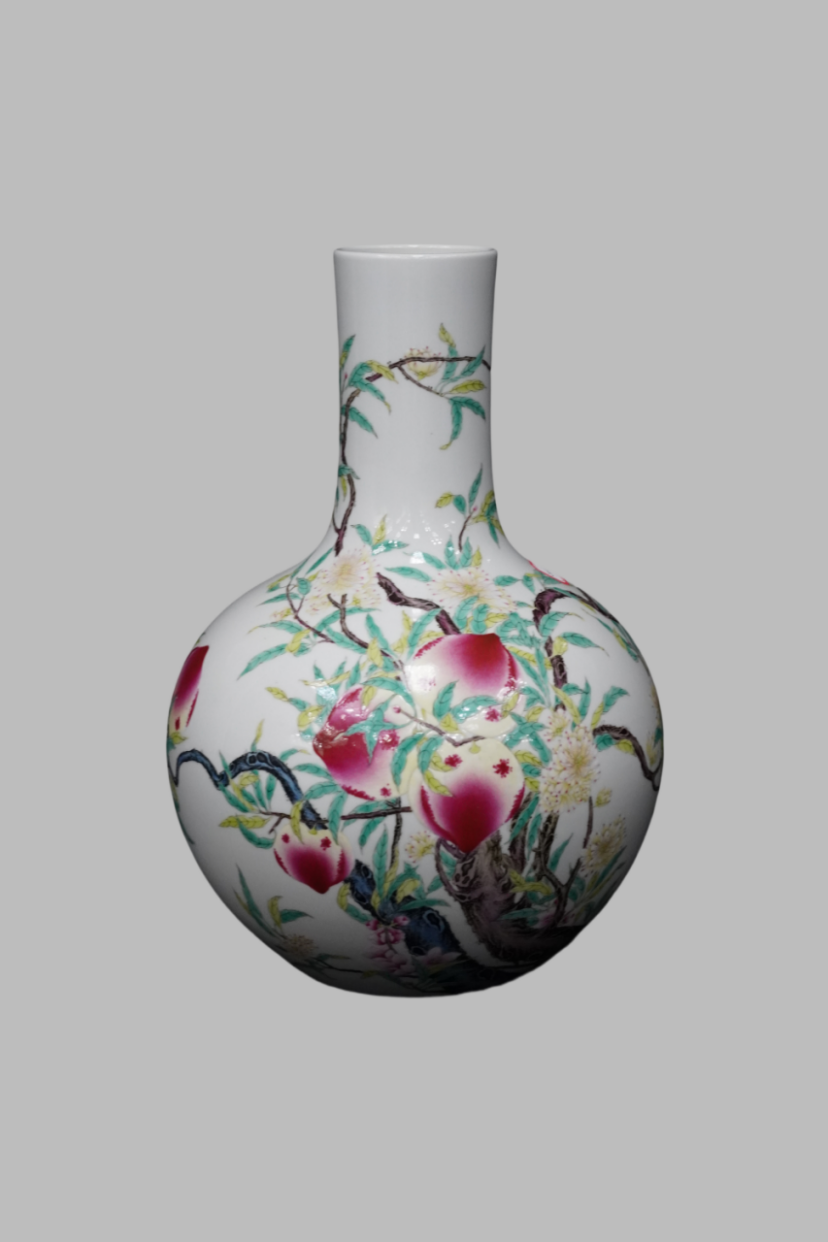
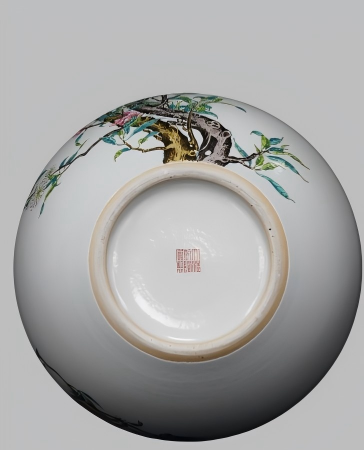
天球瓶造型源自明代永乐、宣德,清代雍正、乾隆时盛行,此瓶若为该时期制品,是研究清代粉彩工艺(如“玻璃白” 运用、多层晕染)、宫廷审美(吉祥纹饰寓意)及制瓷史的关键实物。雍正朝粉彩达巅峰,此瓶见证当时御窑厂顶尖技艺与帝王审美推动;乾隆朝延续并创新,反映盛世文化多元,对陶瓷史、文化传承意义重大,是清代制瓷辉煌的缩影。THE SHAPE OF THE CELESTIAL GLOBE VASE (TIANQIU PING) ORIGINATED DURING THE YONGLE AND XUANDE
Reigns of the Ming Dynasty and became prevalent in the Yongzheng and Qianlong reigns of the Qing Dynasty. If this vase is a product of this period, it serves as a key material object for studying the Qing Dynasty famille rose craftsmanship (such as the application of "glass white" and multi-layer gradient coloring), imperial court aesthetics (the implied meanings of auspicious decorative motifs), and the history of porcelain-making.The famille rose technique reached its peak during the Yongzheng reign, and this vase bears witness to the top-tier craftsmanship of the imperial kilns at that time, driven by the emperor's aesthetic preferences. The Qianlong reign continued and innovated upon this legacy, reflecting the cultural diversity of the prosperous era. It holds great significance for the history of ceramics and cultural inheritance, standing as an epitome of the glory of Qing Dynasty porcelain-making.
纹饰:主体是蟠桃纹,搭配枝叶、花卉,蟠桃饱满鲜艳,寓意长寿吉祥("雍八乾九”,雍正多绘八桃、乾隆多绘九桃,体现不同时期审美与寓意),是清代宫廷瓷器借纹饰传达福寿等美好祈愿的体现,绘画融合工笔细腻与写意灵动,层次丰富。
Decoration: the main decorative motif is the flat peach pattern, accompanied by branches, leaves, and flowers.The flat peaches are depicted as plump and vivid, symbolizing longevity and auspiciousness. There is a saying in Chinese ceramic history: "Eight peaches for Yongzheng, nine peaches for Qianlong" (yong ba qian jiu). Specifically, porcelain works from the Yongzheng period often feature eight peaches in their designs, while those from the Qianlong period typically include nine peaches. This difference reflects the distinct aesthetic preferences and implied meanings of the two eras.This decoration is a typical example of how Qing Dynasty imperial porcelain conveyed beautiful wishes such as longevity and good fortune through decorative patterns. In terms of painting techniques, it integrates the meticulous delicacy of gongbi (meticulous brushwork) and the flexible vividness of xieyi (freehand brushwork), resulting in a rich sense of layering.