
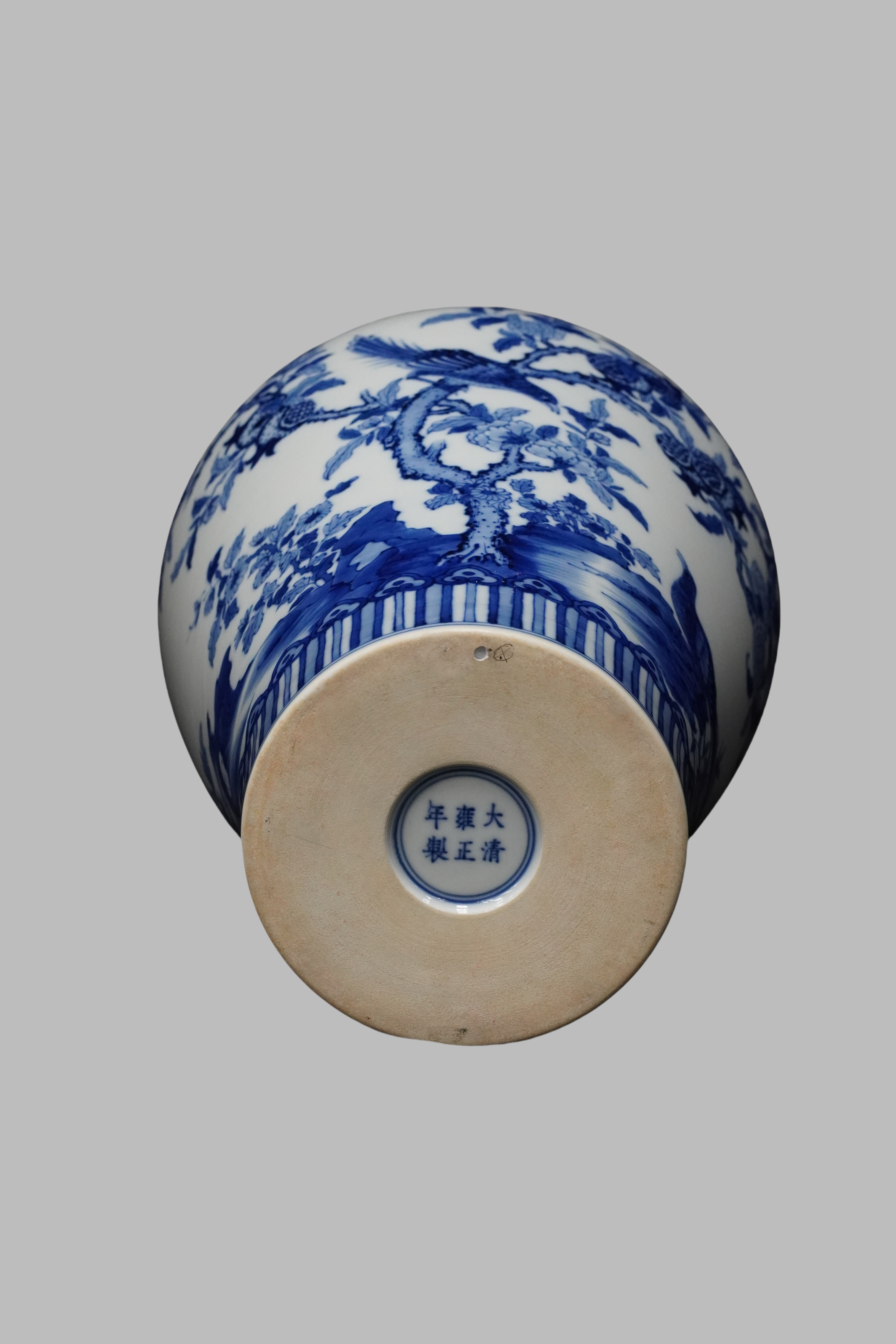
这是青花花鸟纹梅瓶器型:小口内敛、短颈挺拔、丰肩圆鼓、下腹渐收、圈足沉稳,比例雄浑协调,符合梅瓶经典制式,兼具实用(储酒等)与陈设功能。明代是青花瓷器发展高峰,技术成熟、风格鲜明;清代(康熙、雍正、乾隆等)青花在继承基础上创新,各朝有不同审美倾向。此瓶纹饰若有明代特征(如永宣 “铁锈斑”、构图疏朗),或清代特征(如康雍乾繁密精细),结合胎釉、款识辅助断代。
This is a blue-and-white plum vase with flower-and-bird motifs. It features a small, inward-curving mouth, a slender and upright short neck, full and rounded shoulders, a gradually tapering lower belly, and a stable ring foot. With a vigorous and well-proportioned structure, it conforms to the classic shape of plum vases and serves both practical purposes (such as storing wine) and decorative functions.The Ming Dynasty marked the peak of blue-and-white porcelain development, characterized by mature craftsmanship and distinct stylistic features. During the Qing Dynasty (especially the Kangxi, Yongzheng, and Qianlong reigns), blue-and-white porcelain inherited the traditions of previous dynasties while introducing innovations, with each era exhibiting unique aesthetic tendencies.If the decorative motifs of this vase display Ming Dynasty characteristics — such as the "iron rust spots" (a signature of blue-and-white porcelain from the Yongle and Xuande reigns of the Ming Dynasty) and sparse composition — or Qing Dynasty traits (e.g., the dense and exquisite patterns of the Kangxi, Yongzheng, and Qianlong periods), its dating can be further confirmed by combining observations of the porcelain body, glaze, and reign marks.
纹饰:主体是花鸟纹,绘有花鸟、树木、山石等,花鸟姿态灵动,枝叶舒展,构图饱满,借自然物象传达吉祥寓意(如花鸟象征生机、美好),融合工笔细腻与写意韵味,层次丰富,展现传统陶瓷纹饰的审美与文化内涵。
Decoration: the main motif is the flower-and-bird pattern, depicting flowers, birds, trees, rocks, and other elements. The flowers and birds are portrayed with vivid postures, while the branches and leaves stretch freely, resulting in a full and rich composition. Through these natural images, auspicious implications are conveyed — for example, flowers and birds symbolize vitality and beauty.The pattern integrates the delicate refinement of gongbi (meticulous brushwork) and the free-spirited charm of xieyi (freehand brushwork), boasting rich layers. It fully demonstrates the aesthetic value and cultural connotations of traditional ceramic decorations.