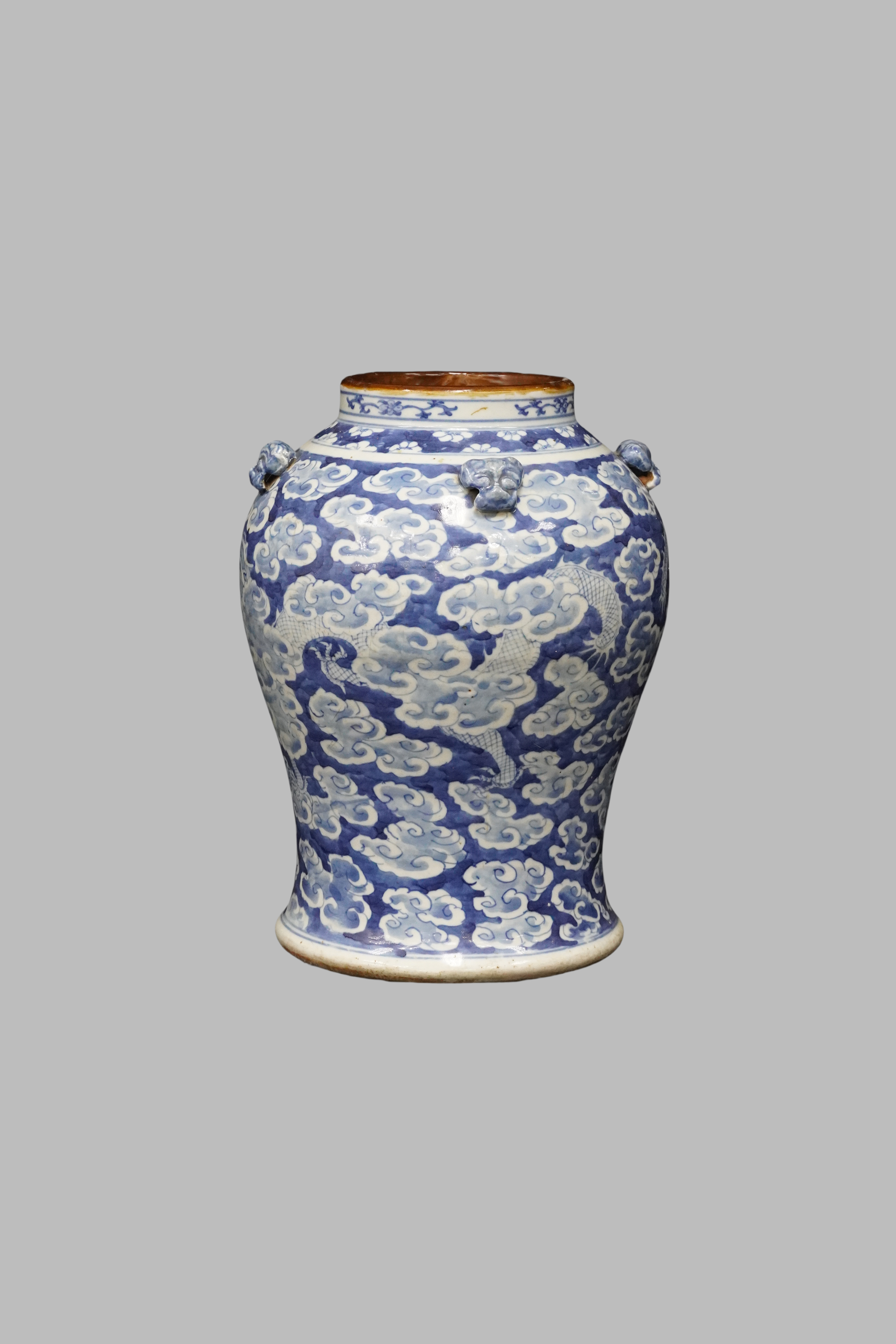
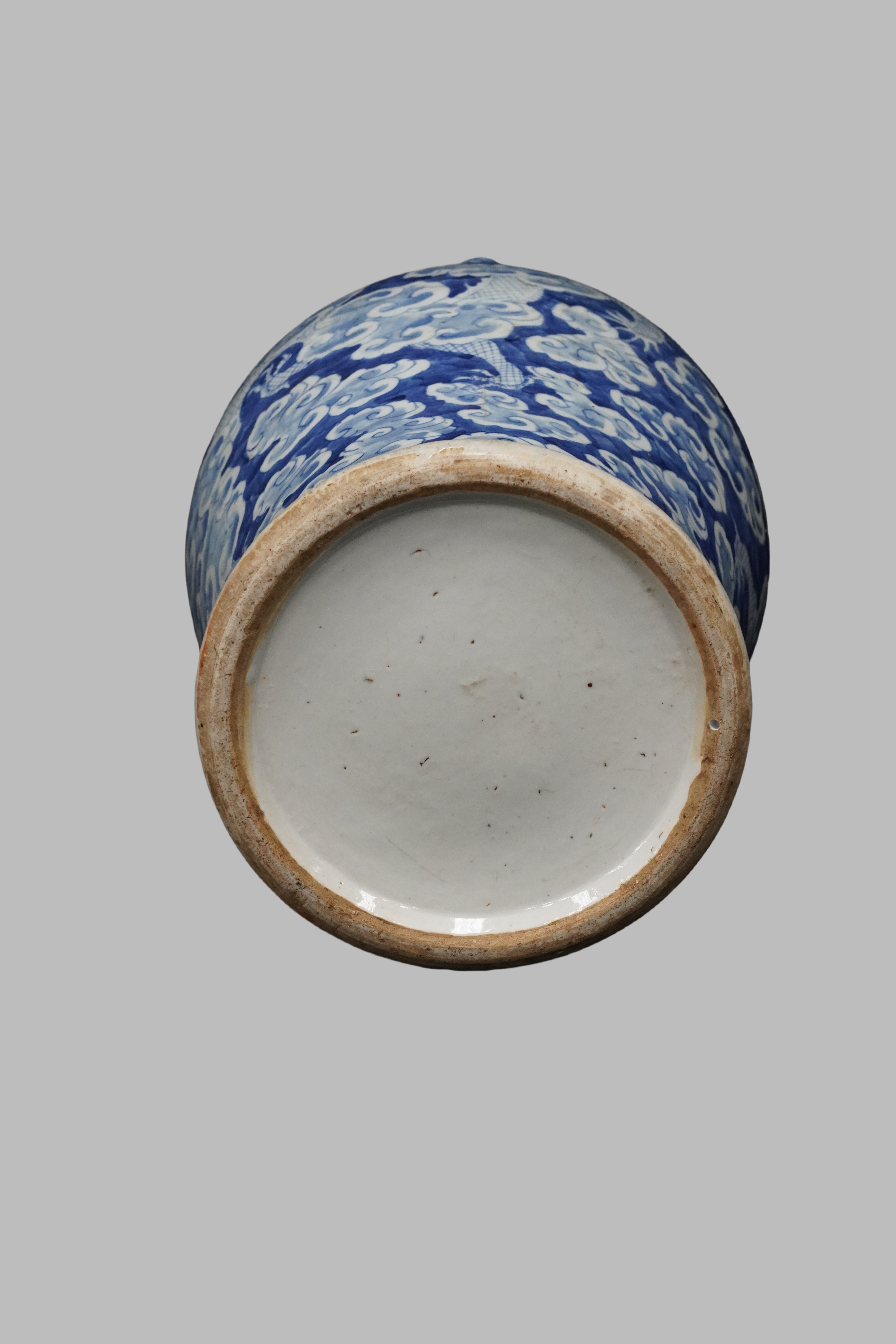
清代是青花瓷发展高峰,此罐为清代民窑制品,反映当时民间生活与文化风貌,是研究清代社会经济、文化习俗的实物资料,见证民间瓷器生产与文化传承。受工艺、品相、存世量等影响,清代民窑精品青花罐价格呈稳步上升趋势,该罐若工艺、纹饰佳,有艺术欣赏与财富增值潜力,具体价格需结合细节判定。特征:器型端庄古朴,罐口内敛、短颈、溜肩、鼓腹、圈足;胎质坚实致密(民窑制胎工艺成熟体现);施釉均匀莹润,白釉微泛青;青花绘制线条流畅,烧制对窑火把控精准。
The Qing Dynasty marked the peak of blue-and-white porcelain development. This jar is a product of civilian kilns in the Qing Dynasty, reflecting the folk life and cultural landscape of that era. It serves as tangible material for studying the social economy and cultural customs of the Qing Dynasty, and bears witness to the production of folk porcelain and the inheritance of culture.Affected by factors such as craftsmanship, condition, and survival quantity, the prices of fine blue-and-white jars from Qing Dynasty civilian kilns have shown a steady upward trend. If this jar boasts excellent craftsmanship and decorative patterns, it possesses potential for artistic appreciation and value appreciation, though its specific price needs to be determined based on detailed characteristics.Shape: it has a dignified and antique shape, with a contracted jar mouth, short neck, sloping shoulders, bulging belly, and ring foot.Porcelain body: the body is solid and dense, embodying the mature body-making craftsmanship of civilian kilns.Glaze: the glaze is evenly applied and lustrous, with the white glaze showing a slight bluish tint.Blue-and-white painting: the blue-and-white patterns are drawn with smooth lines, and the firing process demonstrates precise control of the kiln fire.
纹饰:主体是青花云龙纹,云纹满布,形态多样(如团云、卷云),龙纹穿梭其中,龙身矫健、鳞片清晰、爪具张力,象征皇权与祥瑞。云纹烘托龙纹,营造“云龙遨游” 气势,体现传统“龙行于天、主宰风雨”文化寓意,画面布局满而不乱,展现艺术感染力与文化内涵
Decoration:
The main motif is the blue-and-white cloud-dragon pattern. Cloud patterns are densely distributed across the surface in diverse forms, such as clustered clouds and rolling clouds. Dragon patterns weave through these clouds — with vigorous dragon bodies, clear scales, and powerful claws — symbolizing imperial authority and auspiciousness.
The cloud patterns set off the dragon patterns, creating a majestic atmosphere of "dragons soaring amid clouds." This embodies the traditional cultural connotation of "dragons traveling in the sky and governing wind and rain." The overall composition is rich yet well-organized, demonstrating remarkable artistic appeal and profound cultural significance.