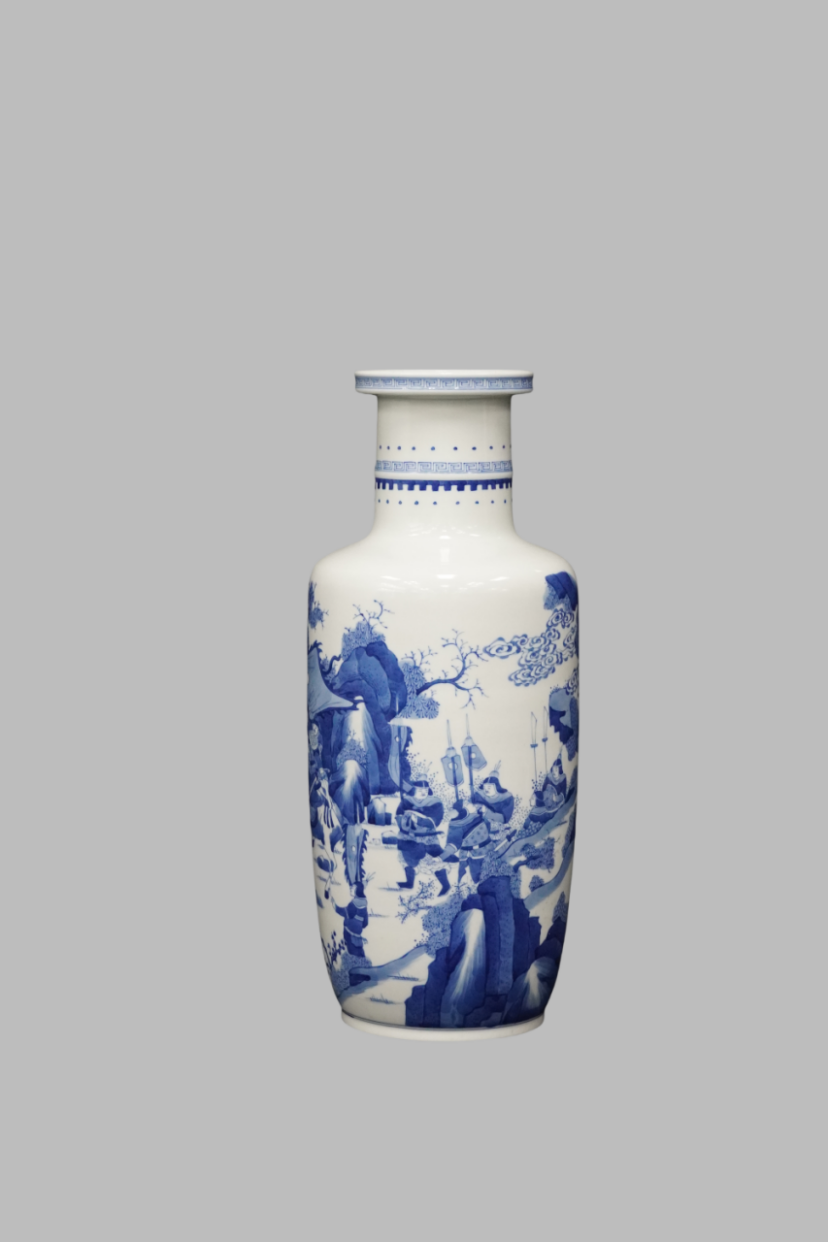
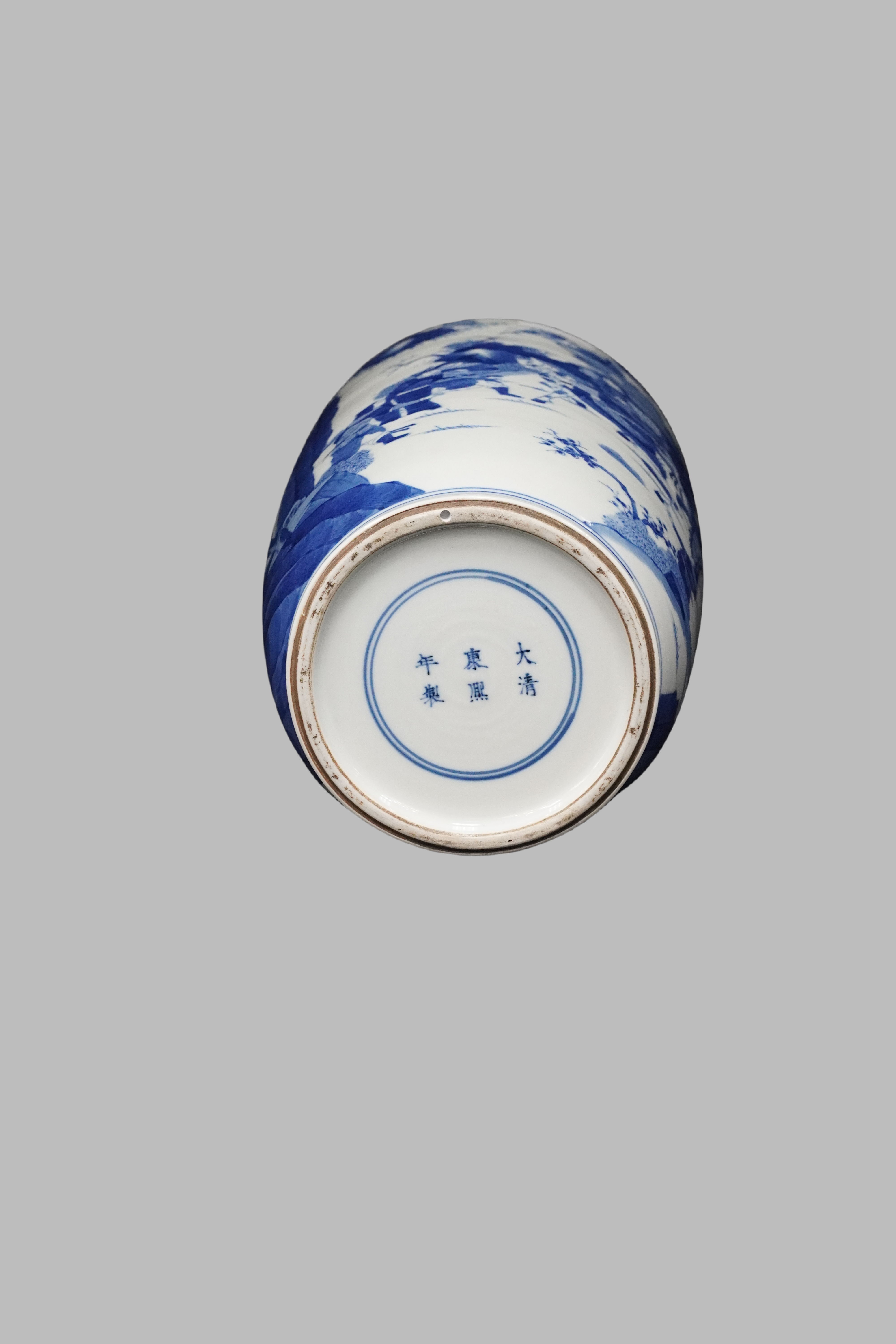
整体造型呈现"颈部短、腹部粗壮”,符合康熙棒槌瓶典型特征。康熙朝社会稳定、经济繁荣,青花瓷达历史顶点,此瓶是康熙制瓷工艺(如“翠毛蓝”青花、“分水皴”技法)的实物体现。研究当时社会审美、文化取向的“活资料”人物纹饰取材历史典故、文人雅集,反映清代早期对儒家文化、传统道德的推崇。
Its overall shape features a "short neck and a sturdy belly," which conforms to the typical characteristics of Kangxi period bangchui vases (rod-hammer shaped vases).During the Kangxi reign, society was stable and the economy prosperous, bringing blue-and-white porcelain to its historical peak. This vase is a tangible embodiment of Kangxi-era porcelain-making craftsmanship, such as the "emerald blue" blue-and-white pigment and the "fenshui cun" (water-splitting texturing) technique.The figure motifs are derived from historical allusions and scenes of literati gatherings. They reflect the admiration for Confucian culture and traditional ethics in the early Qing Dynasty, serving as "living materials" for studying the social aesthetics and cultural orientation of that time.
纹饰主体是青花人物故事纹,绘历史/民俗故事场景,人物互动、配景(山水、建筑、花木)烘托,传达文化寓意,是传统陶瓷借纹饰载道的体现,画面布局合理,具艺术感染力与文化内涵。
The main motif is the blue-and-white figure story pattern, depicting scenes from historical or folk tales. The interactions between the figures and the supporting elements (landscapes, architecture, flowers, and trees) set off the atmosphere, conveying cultural implications. This embodies the tradition of ceramic art "conveying moral and cultural values through decorative patterns."The composition of the scene is well-arranged, boasting both artistic appeal and profound cultural connotations.