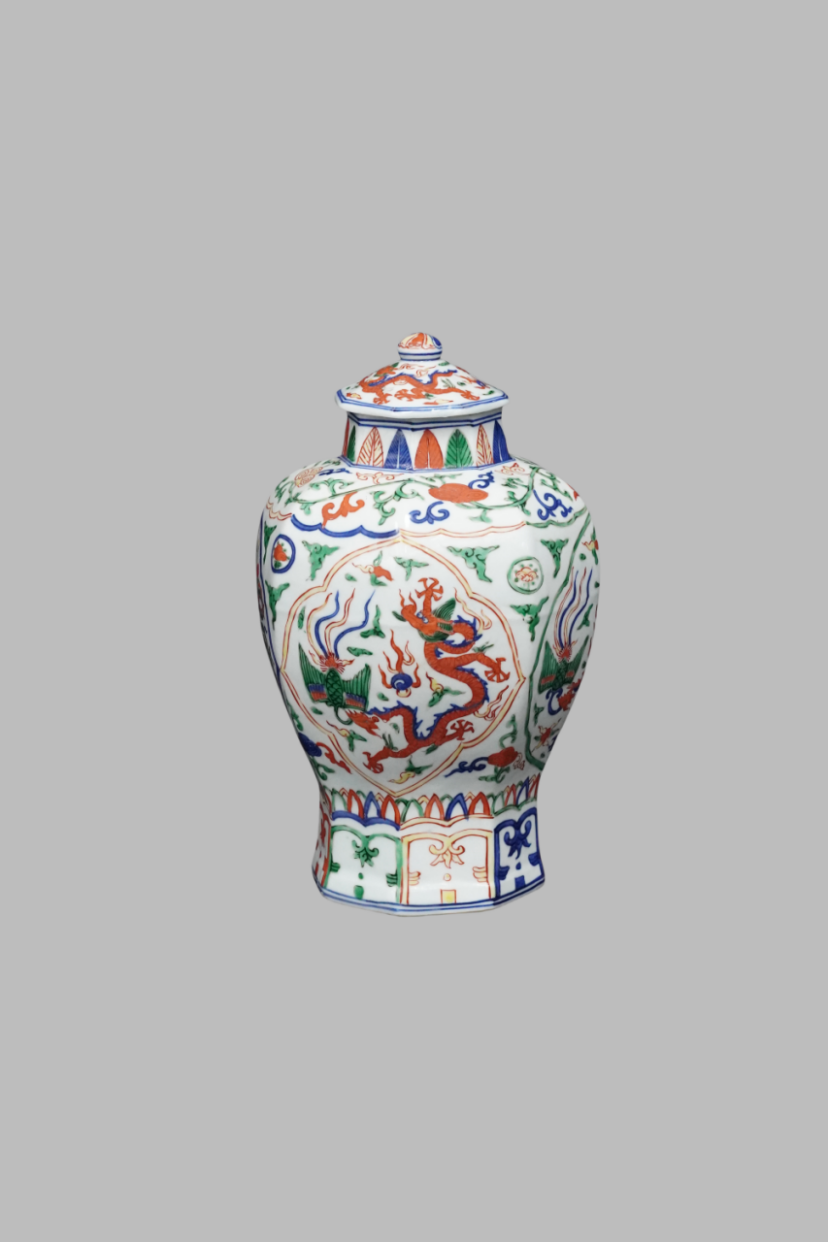
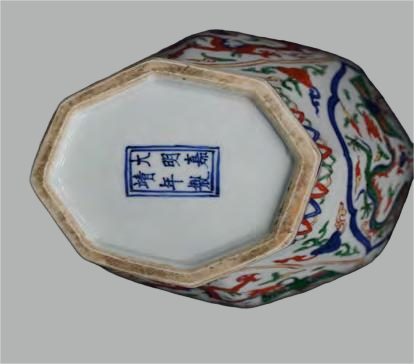

见证明代五彩瓷巅峰:嘉靖、万历是五彩瓷"黄金时代”,此罐承载当时制瓷工艺(釉下青花+釉上五彩二次烧成),反映晚明“彩不厌繁、纹不厌满”审美。
承载皇权与文化符号:龙纹是皇权象征,盖罐或为宫廷祭祀、陈设器,记录明代皇家信仰(如嘉靖崇道,纹饰含道教元素)与礼仪制度,是研究明代政治、文化的实物资料。
Witnessing the pinnacle of Ming Dynasty wucai porcelain: the Jiajing and Wanli reigns represent the golden age of wucai wares. This jar embodies the porcelain-making craftsmanship of its time — the two-firing process of underglaze blue-and-white combined with overglaze polychrome decoration — reflecting the late Ming aesthetic of "the more colors and intricate patterns, the better."Embracing imperial authority and cultural symbols: dragon motifs are emblems of imperial power. As a likely imperial ritual or display piece, this lidded jar documents the royal beliefs of the Ming Dynasty (e.g., Emperor Jiajing's devotion to Taoism, evidenced by Taoist elements in its decorative patterns) as well as the era's etiquette and institutional systems. It stands as a tangible artifact for researching Ming politics and culture.
纹饰:主体是五彩龙纹,龙身矫健,鳞片清晰,色彩搭配(如红彩绘龙、绿彩绘辅助纹)鲜明,周围辅以缠枝花卉、云纹、几何纹等。龙纹象征皇权、祥瑞,缠枝花卉寓意“生生不息、繁荣昌盛”,云纹烘托“龙腾云驾雾”气势,整体布局满而有序,具艺术感染力与文化内涵。
From the image, the belly features simple decorations such as bowstring patterns and chrysanthemum petal patterns. It belongs to the "plain vessel with hidden patterns" technique commonly used in monochromatic glaze porcelain. The hidden patterns are delicate and require careful observation to be clearly seen.