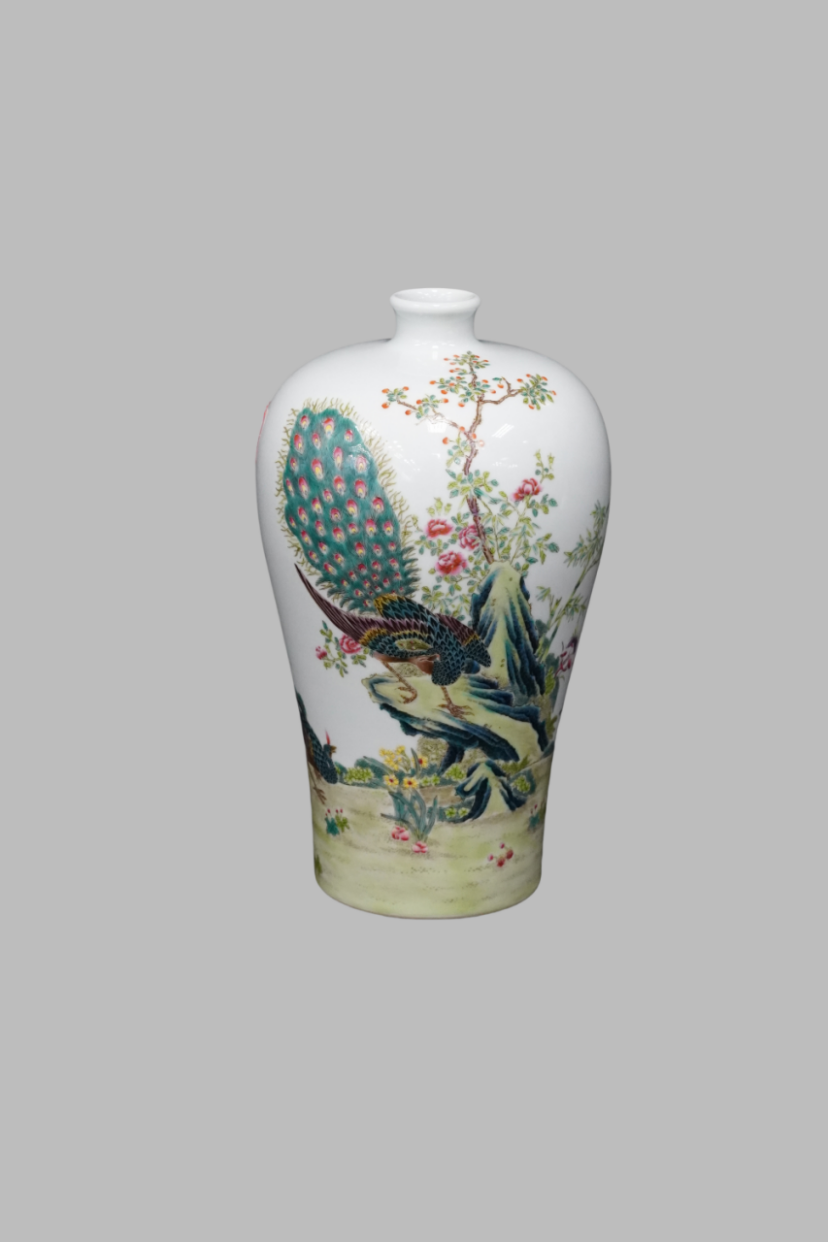
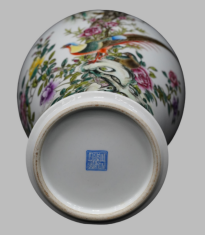
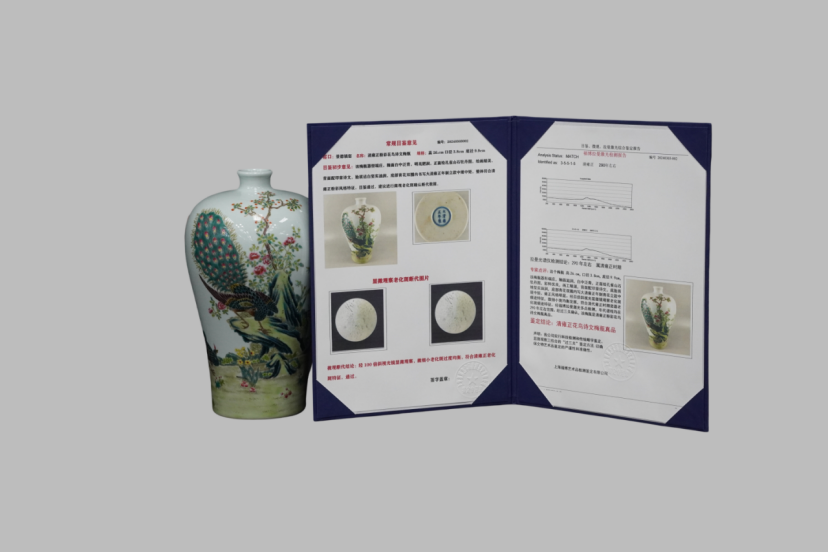
若经鉴定确为清代官窑粉彩梅瓶,历史价值极高。清代是中国陶瓷发展集大成期,粉彩为雍正、乾隆朝代表性彩瓷,承载当时制瓷工艺巅峰水准,反映清代审美、宫廷文化与陶瓷技术传承,是研究清代社会文化、手工业史的实物资料;若为民窑精品,也能体现清代民间制瓷艺术与生活审美,补全陶瓷史民间脉络。
The Jiajing and Wanli reigns of the Ming Dynasty marked the "golden age" of five-color porcelain. This jar embodies the porcelain-making craftsmanship of that era and reflects the late Ming aesthetic of "the more colorful, the better; the more intricate the patterns, the better."Dragon patterns are a symbol of imperial power. This lidded jar may have been used as a ritual utensil or decorative piece in the imperial court. It records the religious beliefs and ritual systems of the Ming imperial family, serving as tangible material for studying the politics and culture of the Ming Dynasty.
纹饰:以花鸟为主题,孔雀是吉祥象征(寓意富贵、长寿),搭配花卉、山石,营造自然生动画面,符合清代粉彩瓷“图必有意,意必吉祥”的装饰习惯。Centered on flower-and-bird motifs. The peacock, as an emblem of auspiciousness, symbolizes "prosperity and longevity." It is paired with flowers and rockery to create a vivid, nature-inspired scene — conforming to the decorative tradition of Qing Dynasty famille rose porcelain, which holds that "every design carries a meaning, and every meaning embodies auspiciousness."