
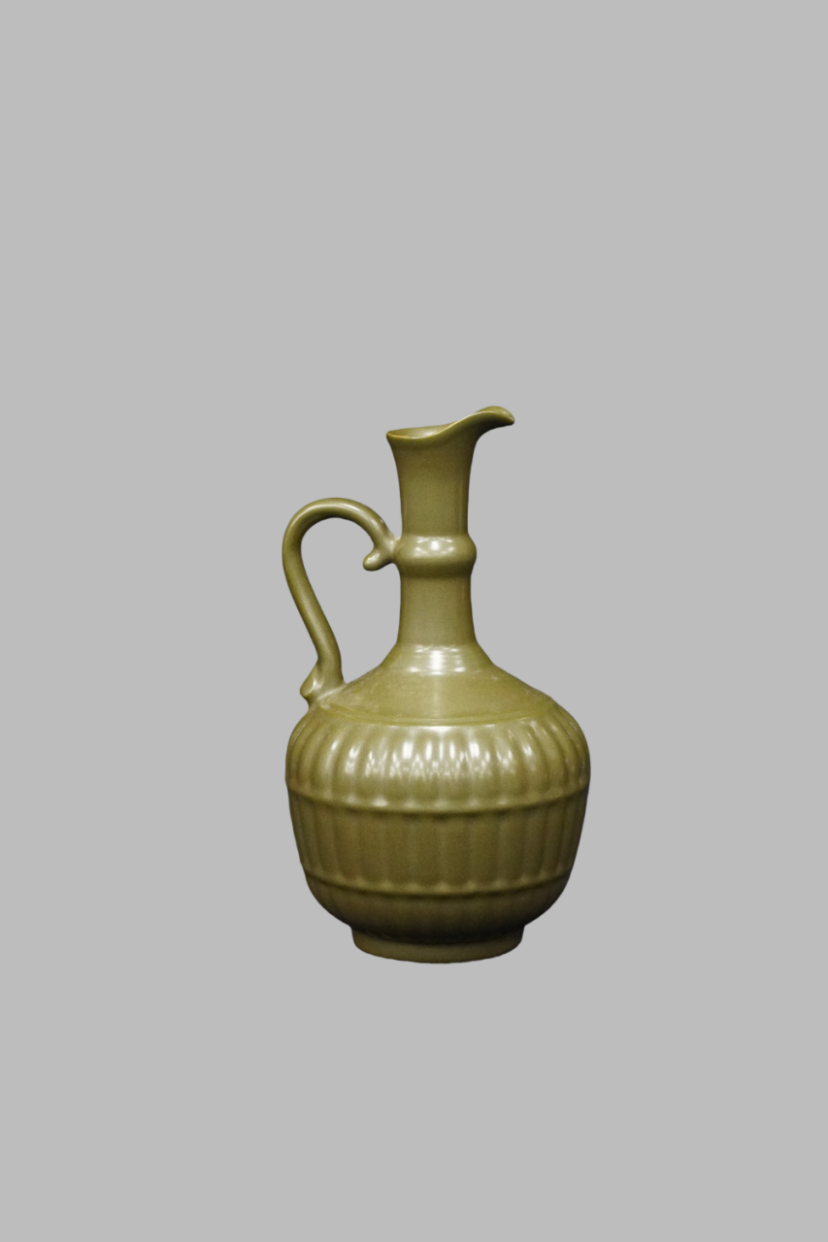
反映清代对传统造型的传承与釉色探索。单色釉瓷器承载中国古代制瓷对“釉水之美”的追求,见证不同朝代审美与技术传承,具有工艺史、文化史研究价值。造型:花浇样式,有出水口、柄,颈、腹、足比例协调,线条流畅。釉面匀净,色泽温润,单色釉突出“釉质美”,无复杂彩绘,靠釉色、釉面质感体现价值。
It reflects the Qing Dynasty's inheritance of traditional vessel shapes and exploration of glaze colors. Monochromatic glaze porcelain embodies the pursuit of "the beauty of glaze" in ancient Chinese porcelain-making. It witnesses the inheritance of aesthetics and techniques across different dynasties, holding significant research value for the history of craftsmanship and cultural history.Shape: It adopts the style of a flower watering vessel (bujiao), featuring a spout (water outlet) and a handle. The proportions of the neck, belly, and foot are well-coordinated, with smooth lines.Glaze: The glaze surface is uniform and clean, with a warm and moist luster. Monochromatic glaze emphasizes "the beauty of glaze texture" — it has no complex painted decorations and derives its value from the glaze color and the texture of the glaze surface.
纹饰:从图看,腹部有弦纹、菊瓣纹等简约装饰,属单色釉瓷器常见的纹“素器加暗”工艺,暗纹细腻,需仔细观察。
From the image, the belly features simple decorations such as bowstring patterns and chrysanthemum petal patterns. It belongs to the "plain vessel with hidden patterns" technique commonly used in monochromatic glaze porcelain. The hidden patterns are delicate and require careful observation to be clearly seen.