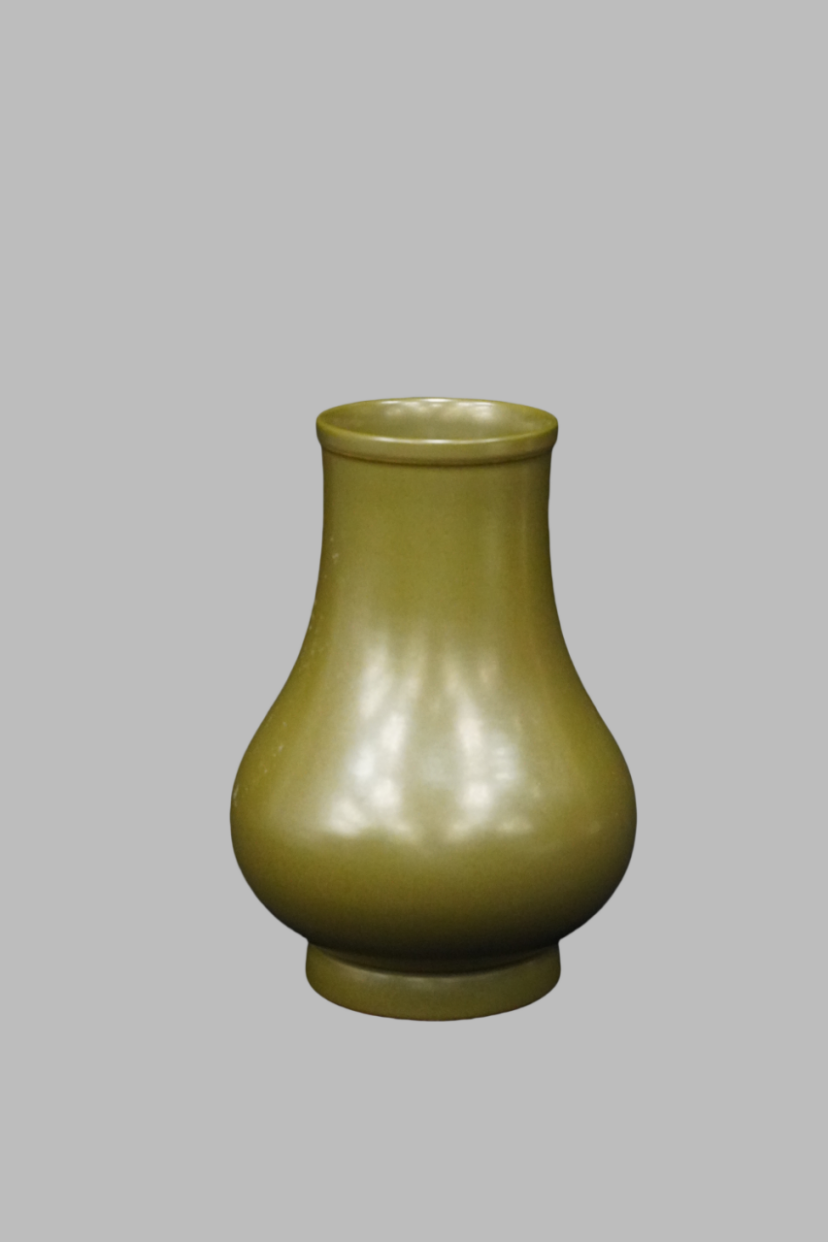
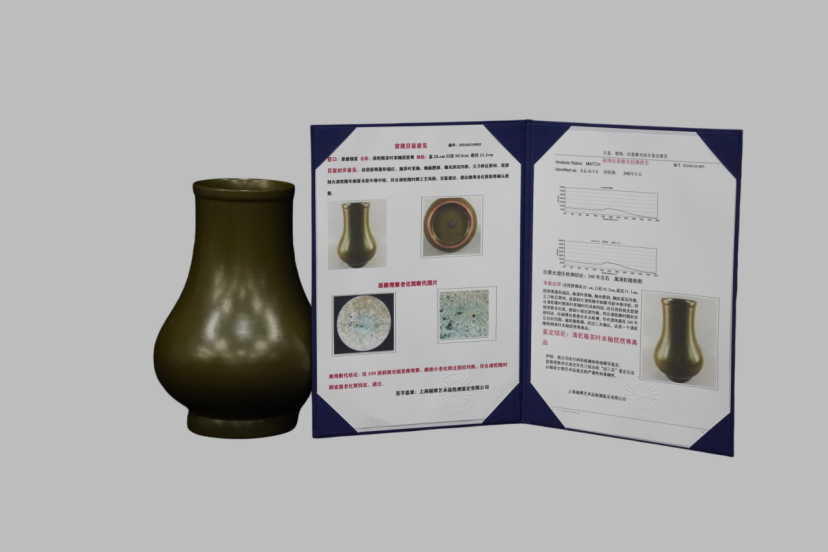
茶叶末釉是铁结晶釉的一种,由釉中的铁、镁与硅酸化合结晶而成。其釉色呈现出黄绿交映的色调,如同茶叶细末,在暗绿底色中闪现黄色星点。茶叶末釉的烧制工艺复杂,需要精确控制釉料配方和烧制温度,且通常要经过多次施釉和高温烧制,才能达到理想的色泽和质感。乾隆时期,景德镇御窑厂的制瓷工艺达到了很高的水平,使得茶叶末釉琵琶尊的釉层均匀、质地细腻。
Tea dust glaze is a type of iron crystal glaze, formed by the combination and crystallization of iron, magnesium, and silicic acid in the glaze. Its glaze color presents a mixed tone of yellow and green, resembling fine tea dust—with yellow specks shimmering against a dark green base.The firing process of tea dust glaze is complex: it requires precise control of the glaze formula and firing temperature, and usually involves multiple glazing applications and high-temperature firings to achieve the desired color and texture.During the Qianlong period, the porcelain-making craftsmanship of the Jingdezhen imperial kiln reached an extremely high level, resulting in the tea dust glaze pipa zun (lute-shaped vase) having an even glaze layer and a fine, smooth texture.
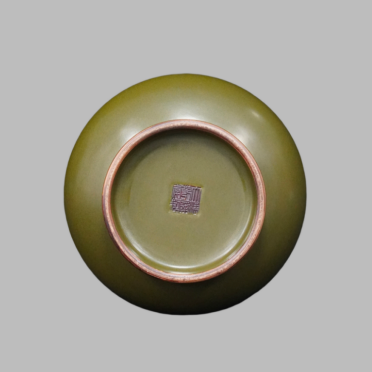
琵琶尊因形似弦乐器琵琶而得名,其造型为撇口,束颈,弧腹,胫较高,圈足多为宽窄不同的二层台式。这种造型在乾隆时期的瓷器中较为独特,既具有线条美,又显得端庄稳重。由于乾隆时期瓷器的制作严格遵循皇家标准,茶叶末釉琵琶尊的存世量相对有限,尤其是完整无损的作品更为珍贵。其制作工艺复杂,艺术价值高,在收藏市场上备受青睐,具有较高的收藏价值和升值潜力。
The pipa zun (pipa-shaped zun) gets its name from its resemblance to the pipa, a plucked string instrument. It features a flared mouth, a constricted neck, a curved belly, a relatively tall shank, and a ring foot mostly in the form of a two-tiered platform with varying widths. This shape was quite unique among porcelains of the Qianlong period, possessing both linear beauty and an air of dignity and stability.
Since the production of porcelains in the Qianlong period strictly adhered to imperial standards, the number of surviving tea dust glaze pipa zun pieces is relatively limited—especially intact examples, which are even more precious. With its sophisticated crafting techniques and high artistic value, it is highly sought after in the collection market and boasts significant collection value and appreciation potential.