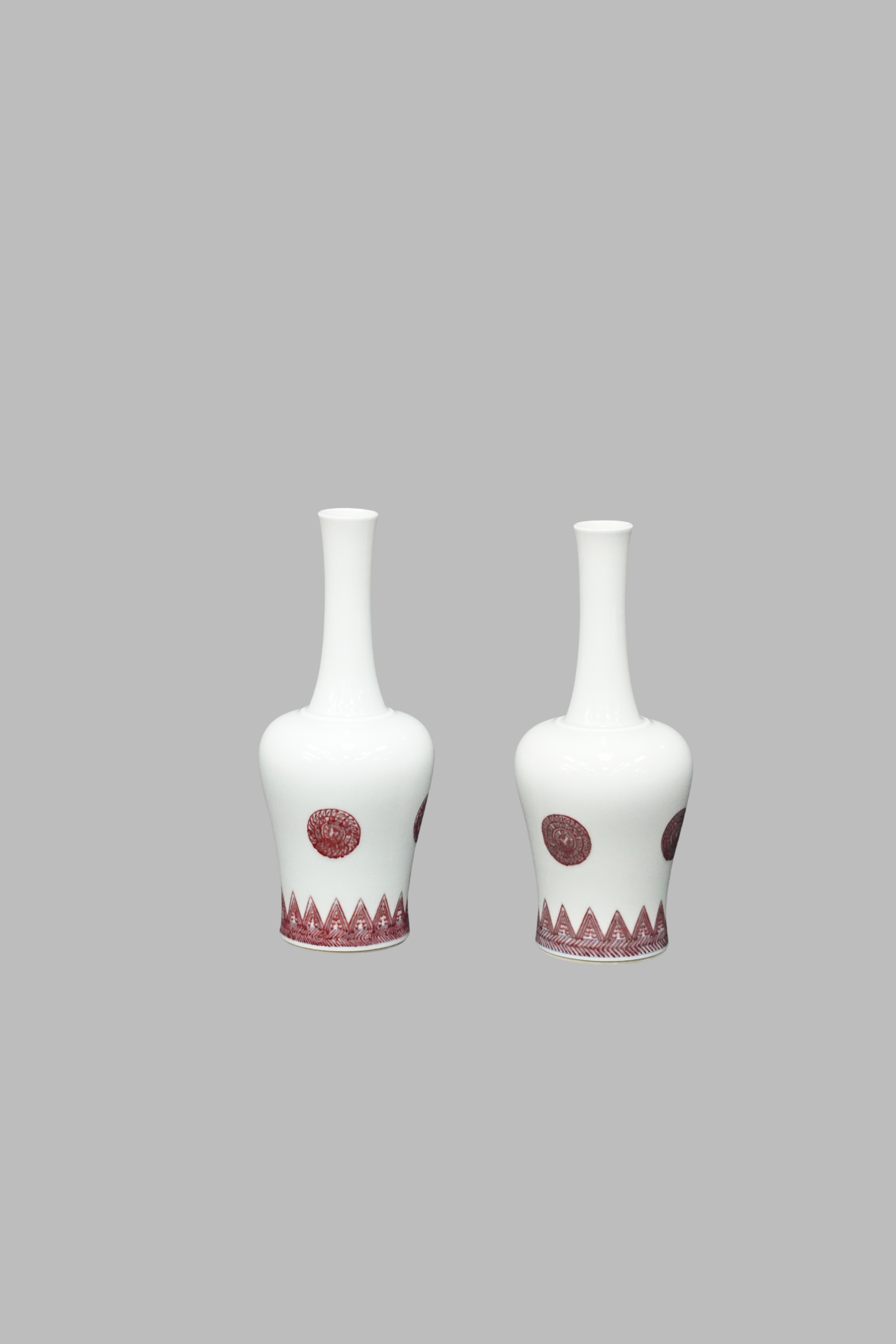
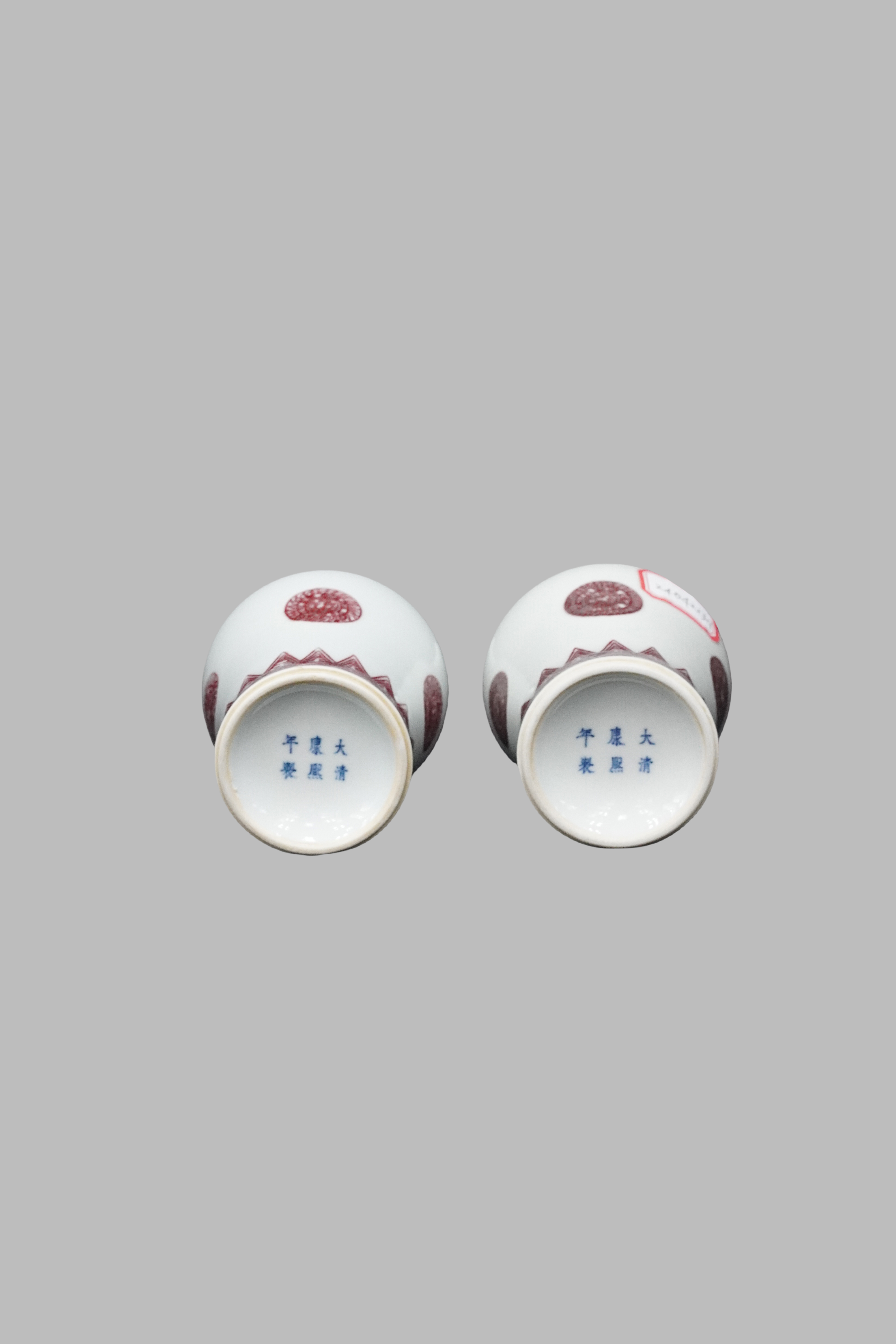
这件是清雍正釉里红团纹摇铃尊(一对),摇铃尊是雍正朝标志性器型,釉里红是其经典单色釉品种,摇铃尊(小口、直颈、丰肩、敛腹),因形似摇铃得名,是雍正朝创新陈设器型;胎体为"糯米胎”,细腻轻薄(雍正瓷胎质坚致,小型器尤为秀雅);釉面洁白莹润,是典型的“白釉地”。雍正釉里红工艺的巅峰标本:是雍正朝釉里红“发色纯正、工艺稳定” 的典型代表,见证了清代单色釉的工艺突破。。
Underglaze red vase with roundel patterns in the shape of a handbell (a pair), Yongzheng reign of the Qing Dynasty. The handbell-shaped vase was an iconic vessel form of the Yongzheng reign, and underglaze red was its classic monochromatic glaze variety. Named for its resemblance to a handbell, this vase features a small mouth, straight neck, full shoulder, and tapering belly, and was an innovative display vessel shape of the Yongzheng reign.Its body was made of "glutinous rice paste-like clay", which was delicate and lightweight (Yongzheng porcelain had a firm and compact body, and small-sized vessels were particularly elegant and refined). The glaze surface was white and smooth, representing a typical "white glaze ground".As a pinnacle specimen of Yongzheng underglaze red craftsmanship, it is a classic example of the "pure color and stable craftsmanship" of underglaze red porcelain in the Yongzheng reign, bearing witness to the technological breakthroughs of monochromatic glazes in the Qing Dynasty.
主题:器身绘釉里红团纹(多为团龙、团凤或吉祥纹样),是雍正朝单色釉器常见的“简约华丽”
题材;“圆满吉祥”,釉里红代表“富贵喜庆”,整体传递“吉祥圆满、富寓意:团纹象征贵安康”的祈愿;
风格:团纹布局疏朗、线条简洁,与洁白釉地形成鲜明对比,符合雍正朝"淡逸雅致、简洁庄重”的审美特点。
Theme: The body of the vessel is decorated with underglaze red roundel patterns (mostly round dragon, round phoenix or auspicious motifs), which was a common "simple yet magnificent" theme for monochromatic glaze wares of the Yongzheng reign.
Implication: Roundel patterns symbolize "completeness and auspiciousness", and underglaze red represents "prosperity and festivity". On the whole, it conveys the aspiration for "auspicious completeness, as well as prosperity and health".
Style: The roundel patterns are arranged in a sparse and orderly manner with concise lines, forming a striking contrast with the pure white glaze ground. This conforms to the aesthetic characteristic of the Yongzheng reign—understated elegance, simplicity and solemnity.