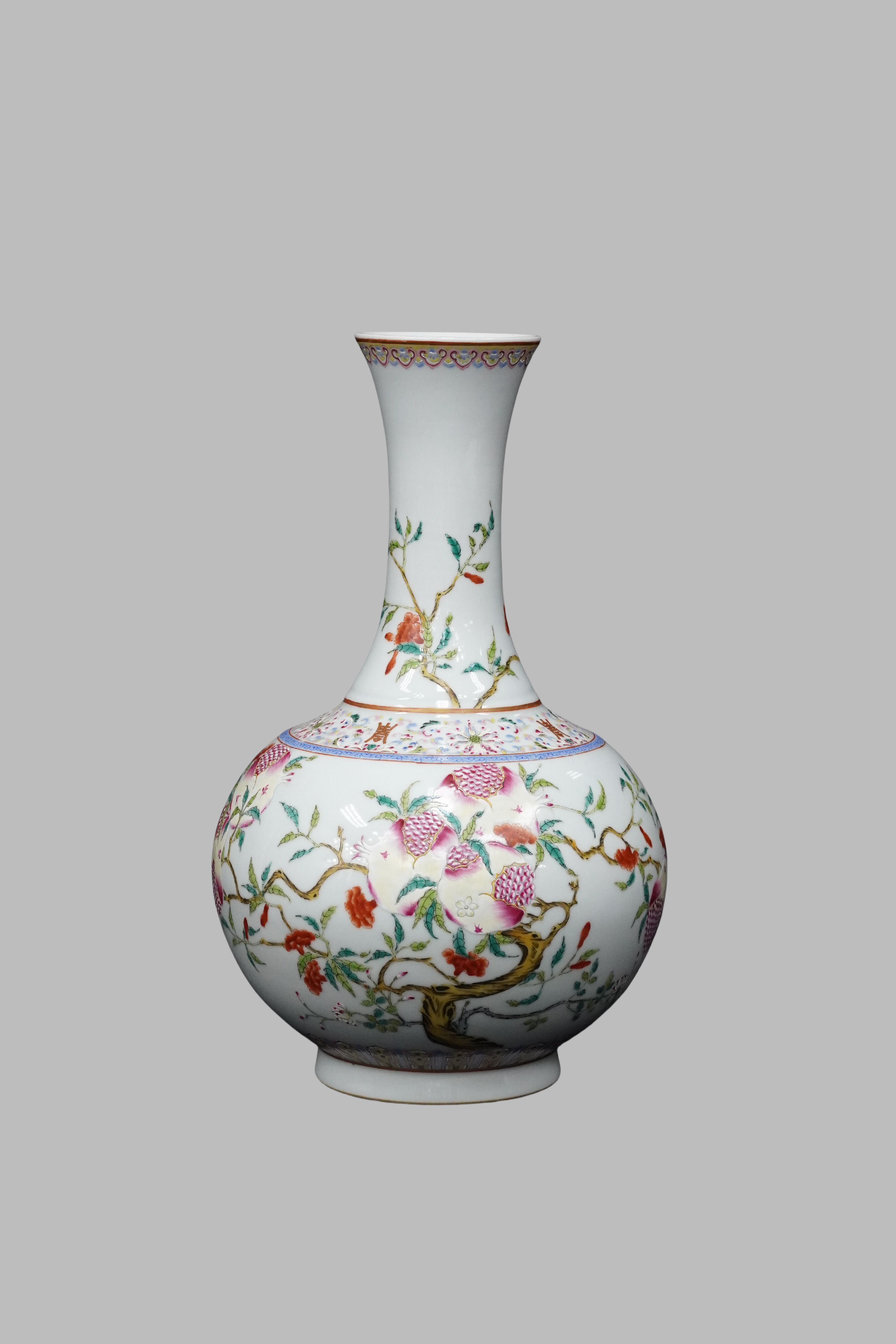
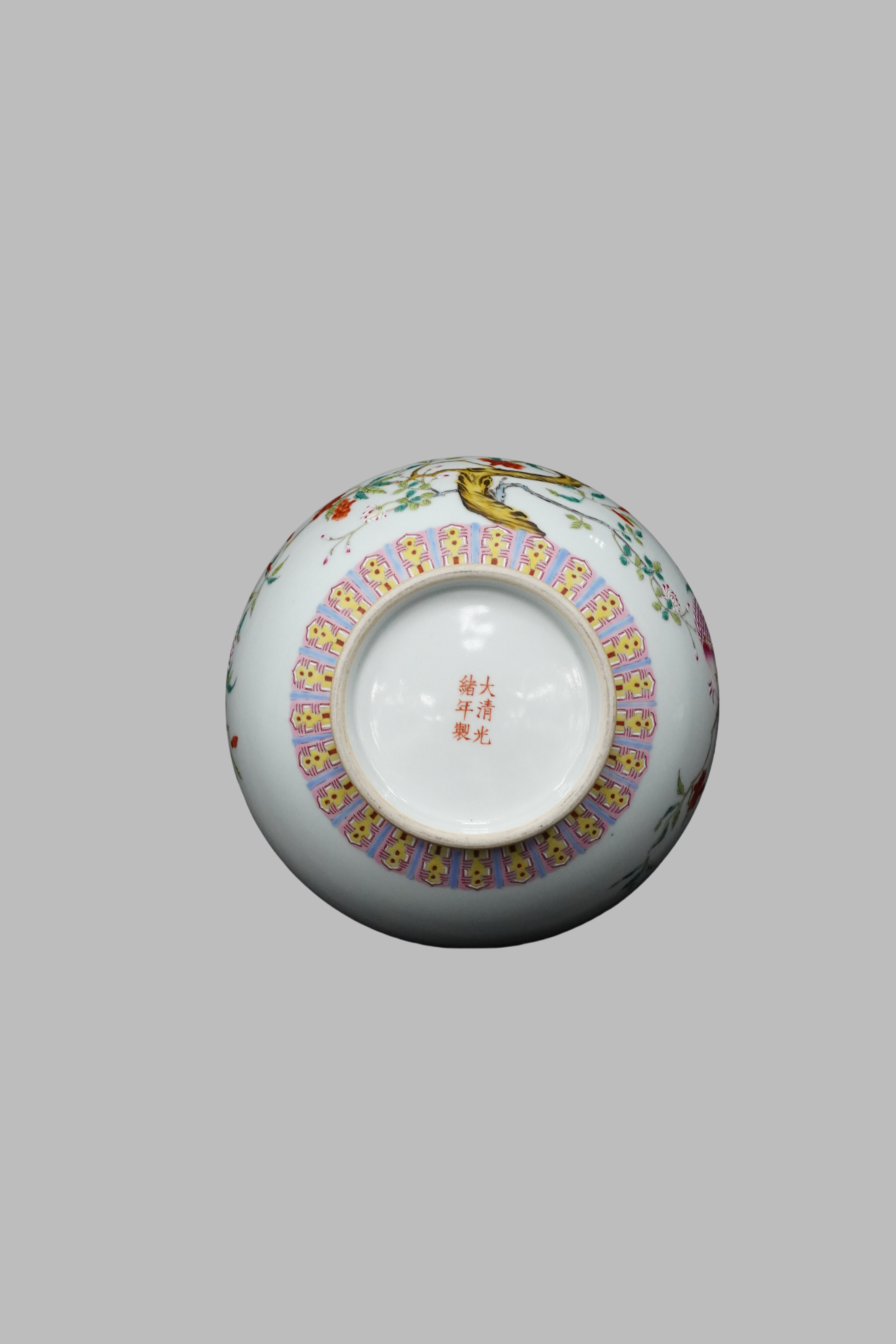
这件是清光绪粉彩九桃纹赏瓶,赏瓶是清代宫廷标志性陈设器,光绪朝粉彩以"仿乾隆华丽风格”为核心,赏瓶(撇口、长颈、鼓腹、圈足),是清代宫廷“赏赐用器”的经典形制;胎体为“糯米胎”,细腻洁白(光绪胎釉质量接近清中期);釉面莹润,口沿、颈部、圈足均有描金+粉彩边饰,器型规整华丽。光绪仿乾隆工艺的代表:九桃纹赏瓶是乾隆朝经典器型,此件是光绪朝对乾隆官窑工艺的精准模仿,见证了晚清制瓷水平的回升。
Famille-rose appreciation vase with nine peach pattern, Guangxu reign of the Qing Dynasty.The appreciation vase was an iconic display vessel of the Qing imperial court. Famille-rose porcelain of the Guangxu reign centered on the "gorgeous style imitating that of the Qianlong period". The appreciation vase—featuring a flared mouth, long neck, bulging belly, and ring foot—was a classic shape of "royal reward vessels" in the Qing imperial court.
Its body was made of "glutinous rice paste-like clay", which was delicate and pure white (the quality of Guangxu's porcelain body and glaze was close to that of the mid-Qing Dynasty). The glaze surface was smooth and glossy; the mouth rim, neck, and ring foot were all decorated with gold-traced and famille-rose borders, rendering the vessel neat and magnificent in appearance.As a representative work of Guangxu's craftsmanship imitating that of the Qianlong period, the nine peach pattern appreciation vase was a classic vessel form of the Qianlong reign, and this piece is an accurate imitation of Qianlong imperial kiln craftsmanship in the Guangxu reign, bearing witness to the recovery of porcelain-making standards in the late Qing Dynasty.
主题:器身绘九桃纹(九颗桃子),是清代流行的“长寿吉祥”题材。
寓意:“九”象征“长久”,“桃”代表“寿桃”,整体传递“福寿绵长、多子多福”的祈愿。
风格:桃子形态饱满、色彩粉嫩,枝叶舒展灵动,符合光绪朝“仿乾隆工笔精细、华丽喜庆”的审美特点。
Theme: The body of the vessel is painted with the nine-peach pattern (nine peaches in total), which was a popular "longevity and auspiciousness" theme in the Qing Dynasty.
Implication: The number "nine" symbolizes "permanence and longevity", and the "peach" represents the "peach of immortality". Overall it conveys the wish for "enduring fortune and longevity, as well as abundant descendants and blessings".
Style: The peaches have plump shapes and tender pink hues, while the branches and leaves are stretched and vivid. This conforms to the aesthetic characteristic of the Guangxu reign—"imitating the exquisite, magnificent and festive fine brushwork style of the Qianlong period".