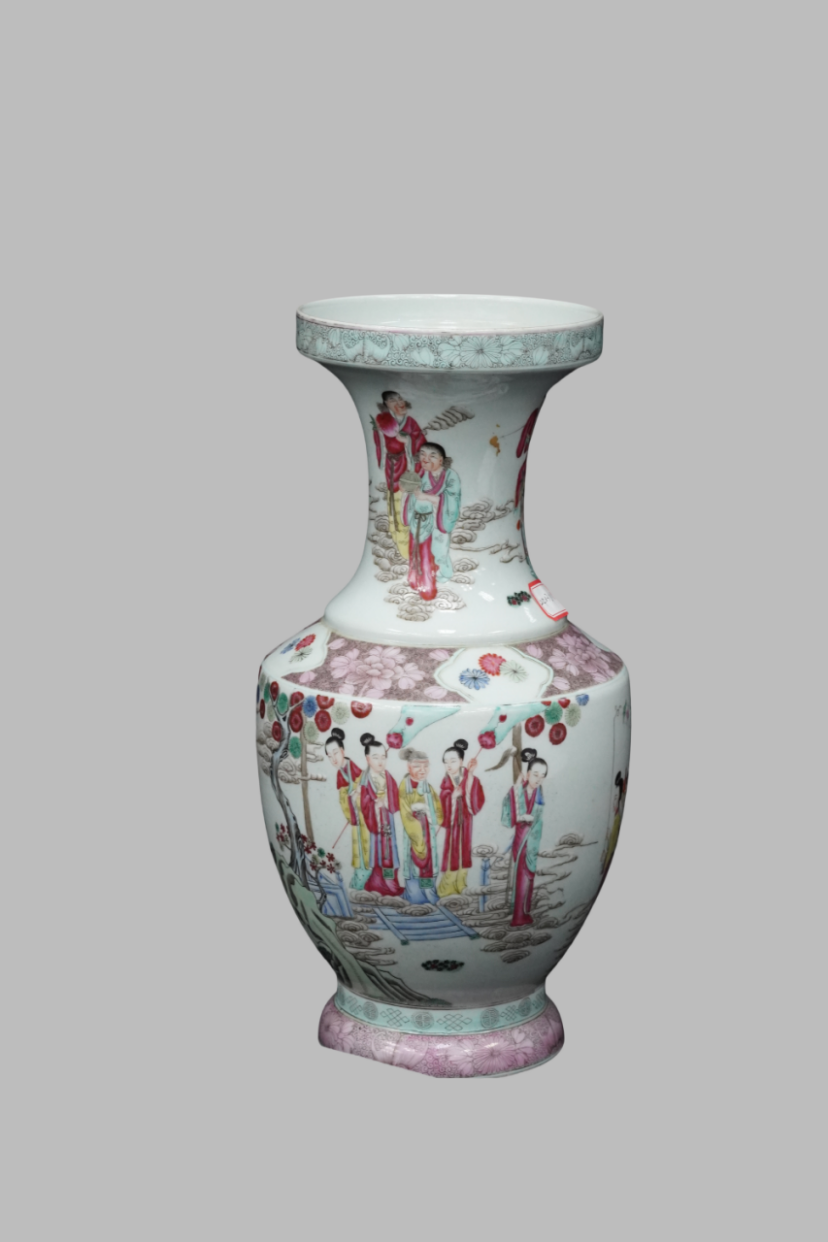
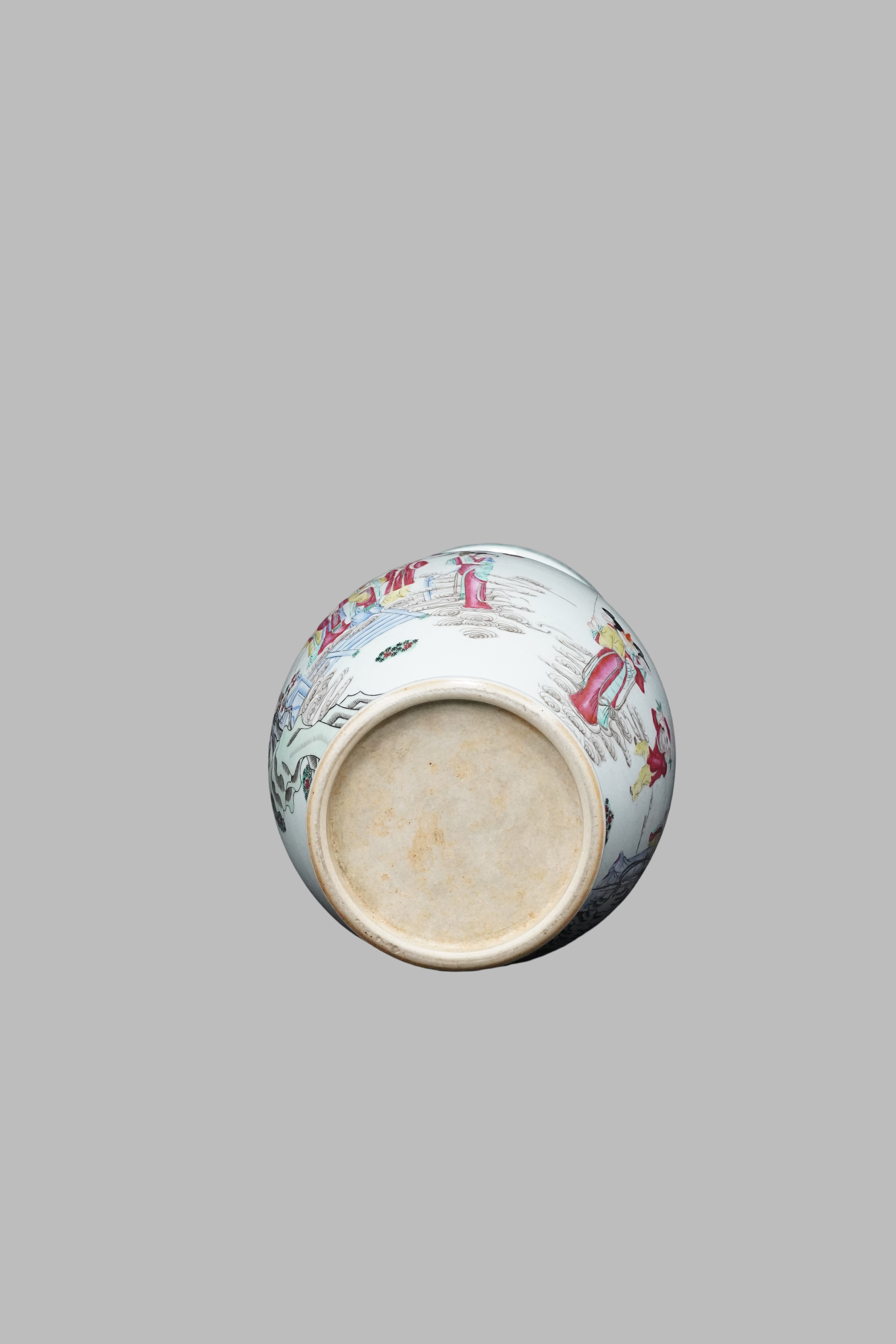
这件瓷器是清晚期粉彩群仙祝寿图凤尾尊,器型:凤尾尊(撇口、长颈、鼓腹、圈足),是清代中晚期流行的陈设器型,胎体洁白细腻(民国细路瓷胎质接近晚清水准),釉面莹润;是晚清民国粉彩瓷的代表:反映了当时制瓷业对“吉祥题材+华丽装饰”的追求,体现了民间对“福寿”主题的偏好。
Famille-rose phoenix-tail zun with "immortals celebrating birthday" pattern, late Qing Dynasty.Shape: The phoenix-tail zun—featuring a flared mouth, long neck, bulging belly, and ring foot—was a popular display vessel shape in the mid-to-late Qing Dynasty. Its body was white and fine-grained (the body quality of high-grade Republic of China porcelain was close to that of the late Qing Dynasty), and the glaze surface was smooth and glossy.As a representative work of famille-rose porcelain from the late Qing to the Republic of China period, it reflects the porcelain-making industry's pursuit of "auspicious themes plus gorgeous decorations" at that time, and embodies the folk preference for "blessing and longevity" motifs.
主题:器身绘“群仙祝寿”图(包含仙人、仕女、花卉、祥云等元素),是晚清民国流行的吉祥题材。
寓意:仙人象征“长寿”,仕女与花卉代表“吉祥美满”,整体传递“福寿安康、吉祥如意”的祈愿。
风格:纹饰繁复华丽,人物形态生动、色彩搭配浓烈,符合晚清民国“世俗化、喜庆化”的审美特点。
Theme: The vessel's body is painted with the "immortals celebrating birthday" motif (including elements such as immortals, maidens, flowers, and auspicious clouds), which was a popular auspicious theme in the late Qing Dynasty and the Republic of China period.
Implication: Immortals symbolize "longevity", while maidens and flowers represent "auspiciousness and happiness". On the whole, it conveys the wish for "blessing, longevity, health, and good fortune and contentment".
Style: The decorative patterns are complex and magnificent, with vivid figures and strong color combinations, conforming to the "secularized and festive" aesthetic characteristic of the late Qing Dynasty and the Republic of China period.