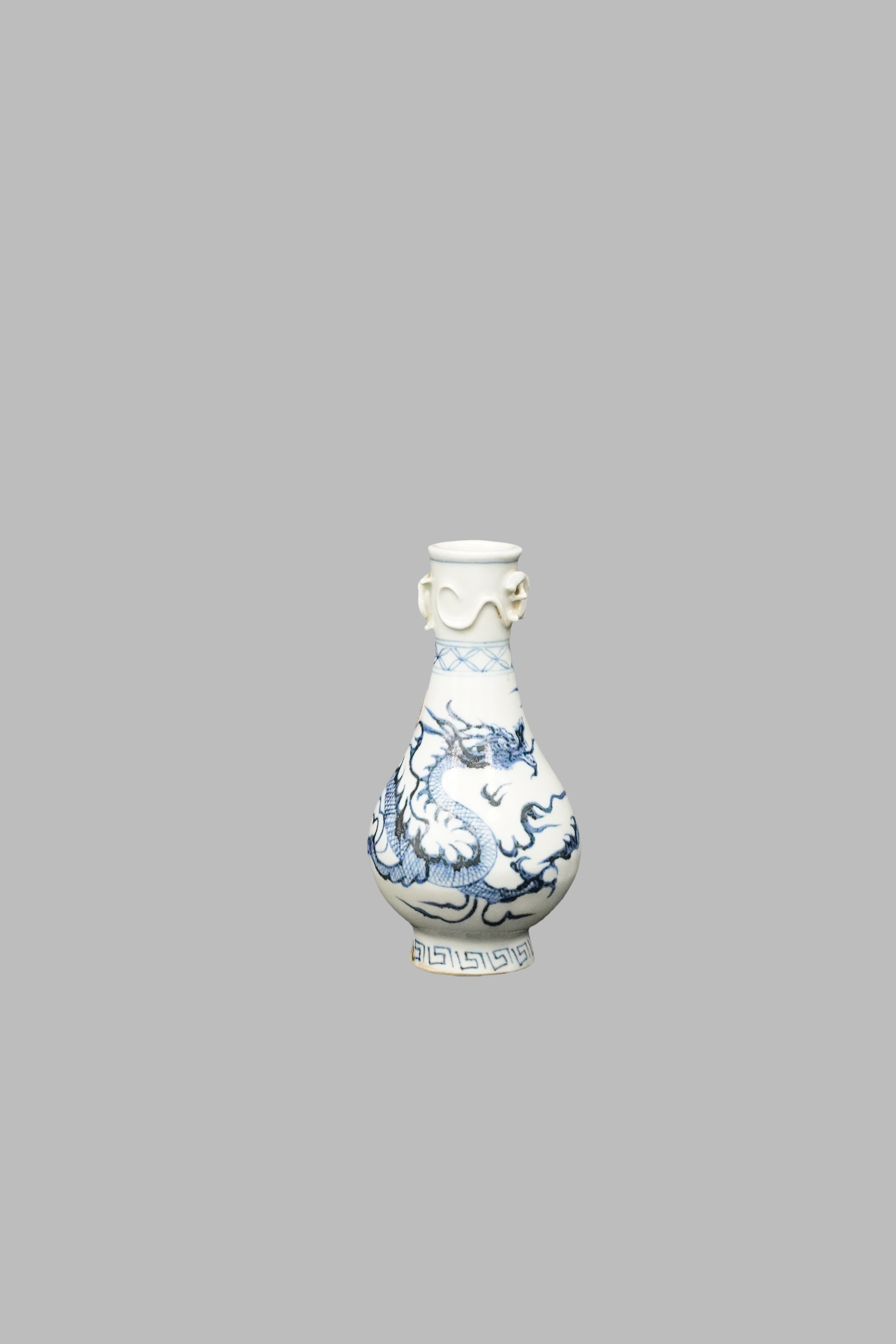
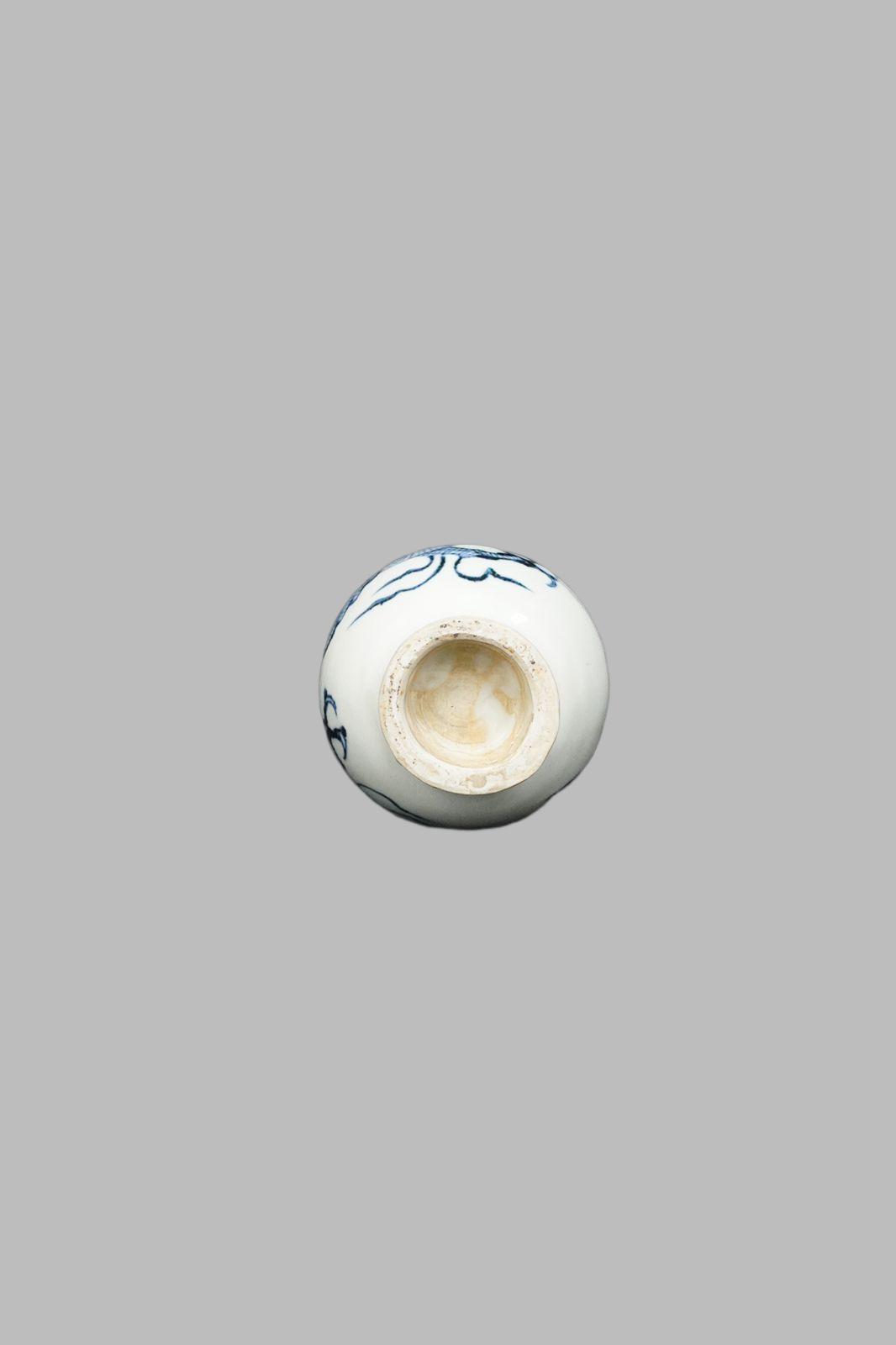
这件瓷器是明期时期的青花龙纹双耳瓶,器型:小口长颈双耳瓶(又称 "胆式瓶” 变体),是明代常见的文房/陈设小器;胎体为“灰白胎”,略显厚重但坚致;釉面白中泛青,口沿与颈部有青花边饰,双耳为“如意形堆塑”(明晚期流行的装饰手法);明晚期青花工艺的实物:反映了明代从“进口料青花”向“国产料青花”的工艺转型,是明代青花发展的重要标本。民间龙纹使用的见证:明晚期龙纹逐渐向民间普及,此瓶体现了当时社会“吉祥纹饰世俗化”的趋势。
Blue-and-white dragon pattern double-eared vase, Ming Dynasty.Shape: This small-mouthed, long-necked double-eared vase (also known as a variant of the "gall-shaped vase") was a common small stationery or display vessel in the Ming Dynasty. Its body was made of "grayish-white clay", which was slightly thick yet firm and compact. The glaze surface had a faint bluish tint in white; the mouth rim and neck were adorned with blue-and-white borders, and the double ears were crafted in the form of "ruyi-shaped relief sculptures" (a popular decorative technique in the late Ming Dynasty).As a physical example of late Ming blue-and-white craftsmanship, it reflects the technological transition of Ming blue-and-white porcelain from "imported material-based blue-and-white" to "domestic material-based blue-and-white", and is an important specimen for the study of blue-and-white porcelain development in the Ming Dynasty. It also serves as evidence of the civilian use of dragon patterns: dragon motifs gradually became popular among the folk in the late Ming Dynasty, and this vase embodies the social trend of "secularization of auspicious patterns" at that time.
主题:瓶身绘青花龙纹(单龙穿云),是明代皇权与吉祥的标志性纹饰。
寓意:龙象征“权威、祥瑞”,明晚期民间也常以龙纹寄托“平安吉祥”的祈愿。
风格:龙纹粗犷奔放一一龙身矫健、鬃毛飞扬,符合明晚期青花"写意化、民间化”的审美特点(区别于明初龙纹的威严规整)
Theme: The vase's body is painted with a blue-and-white dragon pattern (a single dragon soaring through clouds), which was an iconic motif representing imperial power and auspiciousness in the Ming Dynasty.
Implication: The dragon symbolizes "authority and good omens"; in the late Ming Dynasty, the folk also often used dragon patterns to express wishes for "peace and auspiciousness".
Style: The dragon pattern is bold and unrestrained—the dragon's body is vigorous and its mane flutters dynamically, which conforms to the "freehand and folk-oriented" aesthetic characteristic of blue-and-white porcelain in the late Ming Dynasty (distinguished from the solemn and neat style of dragon patterns in the early Ming Dynasty).