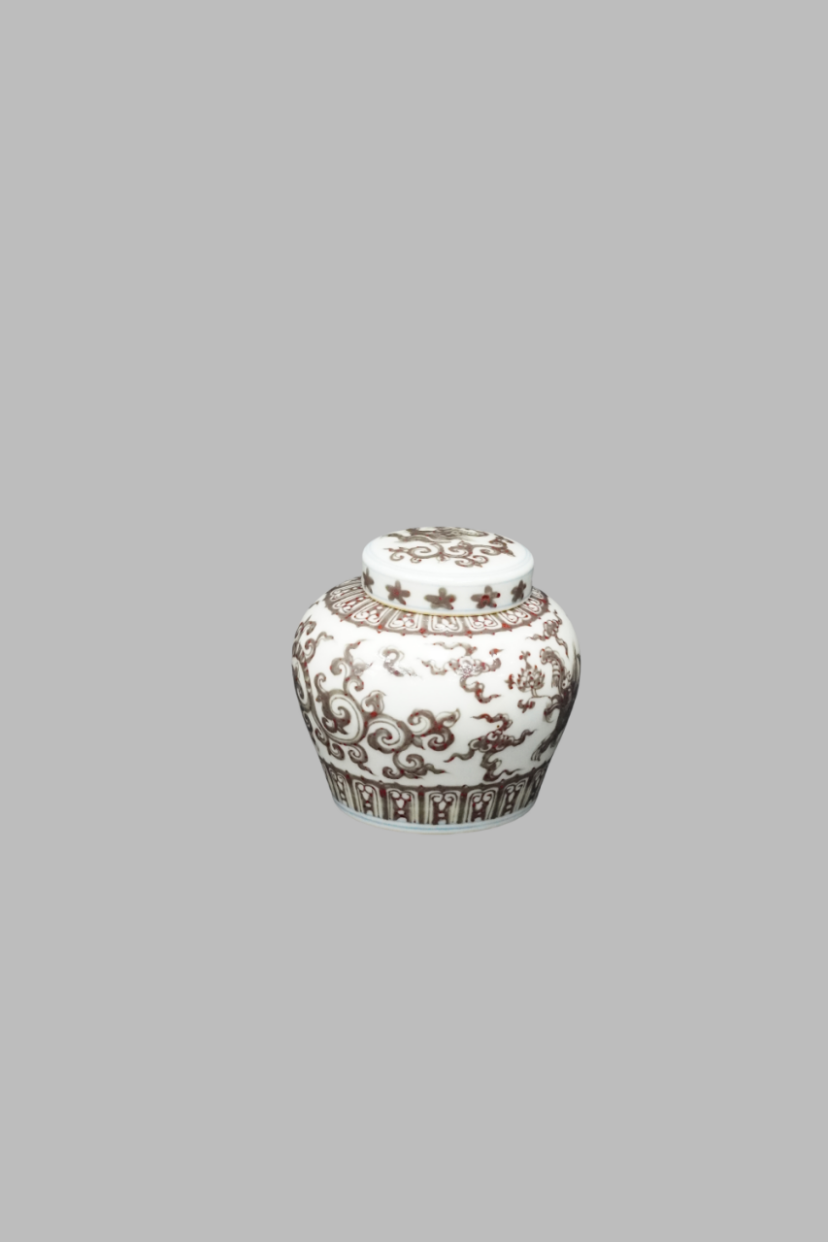
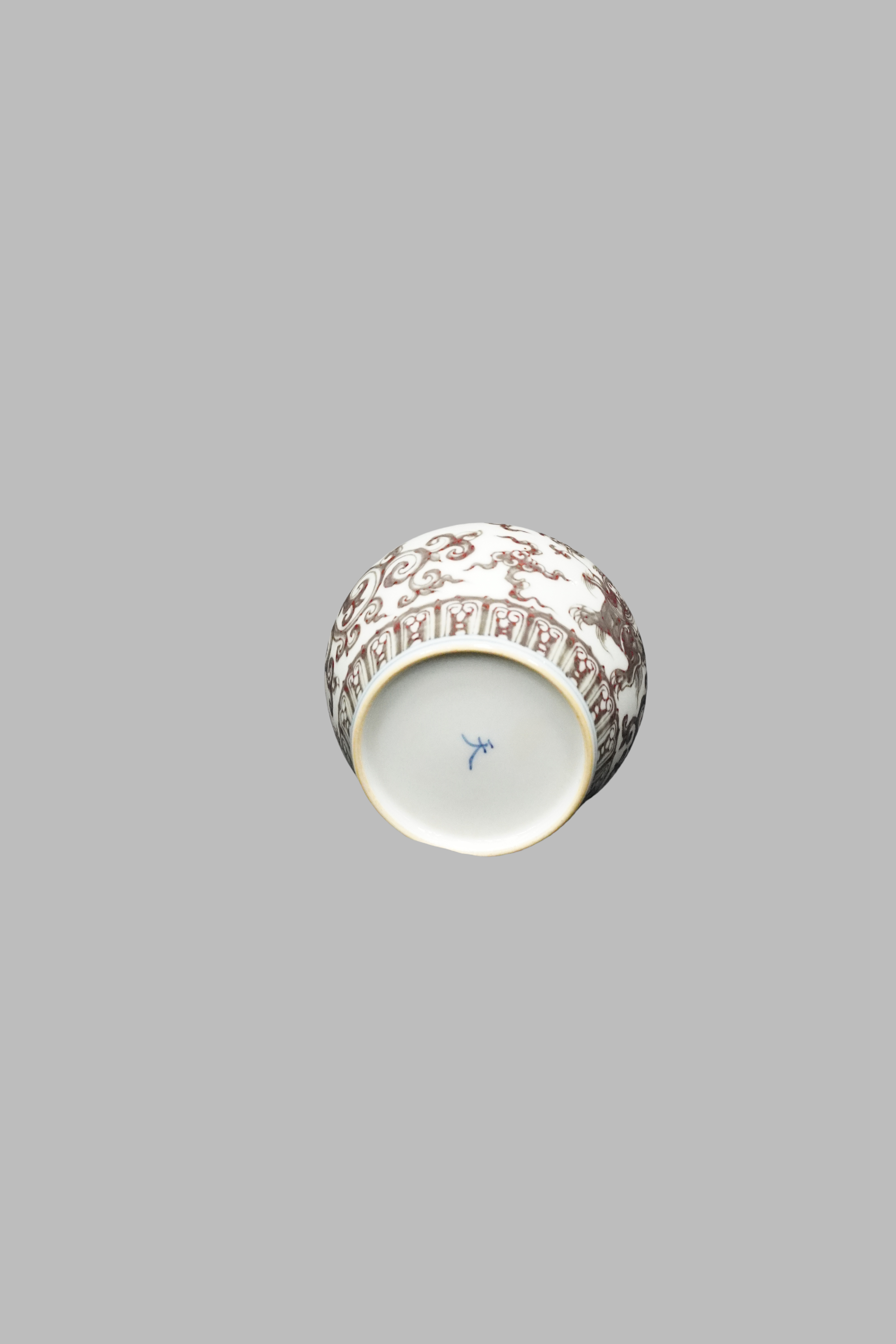

这是明成化里红夔龙纹天字罐,明成化时期(1465-1487年),成化瓷以 “淡雅秀逸”著称,成化盖罐多为“小巧圆润”的形制,胎体是标志性的“香灰胎”(迎光透影呈肉红色),胎质细腻轻薄(成化瓷以“薄如蝉翼”闻名);釉面为“白中泛青”的亮青釉,莹润如玉。是成化釉里红工艺的孤品级标本,成化釉里红存世极少,是明代彩瓷发展的顶级实物。
Underglaze red Tianzi jar with Kui dragon pattern, Chenghua reign of the Ming Dynasty.During the Chenghua reign of the Ming Dynasty (1465-1487), Chenghua porcelain was renowned for its elegant and understated charm. Most covered jars of the Chenghua period featured a compact and rounded shape. The body was made of the iconic "incense ash paste" clay (showing a flesh-red hue when held up to light), with a fine and lightweight texture—Chenghua porcelain was famous for being "as thin as cicada wings". The glaze surface was a bright celadon glaze with a slight bluish tint in white, as smooth and glossy as jade.As a unique-grade specimen of Chenghua underglaze red craftsmanship, it is an elite physical example of the development of colored porcelain in the Ming Dynasty, given the extreme rarity of surviving Chenghua underglaze red wares, with genuine and intact Chenghua underglaze red pieces being nearly one-of-a-kind.
主题:罐身绘夔龙纹+缠枝卷草纹(夔龙是清代常见的吉祥龙纹变体)。
寓意:夔龙象征“权威、祥瑞”,缠枝纹寓意"连绵吉祥”,整体传递“富贵安康”的祈愿。
风格:纹饰规整华丽,夔龙形态灵动、卷草纹层次丰富,符合清代"工笔精细”的审美特点(区别于成化瓷的“淡雅秀逸”)
Theme: The jar's body is painted with Kui dragon patterns and interlocking scroll patterns (the Kui dragon is a common auspicious dragon motif variant in the Qing Dynasty).
Implication: The Kui dragon symbolizes "authority and auspiciousness", while the interlocking scroll patterns connote "continuous good fortune". Overall, it conveys the wish for "prosperity and peace".
Style: The decorative patterns are neat and magnificent. The Kui dragons have vivid forms, and the scroll patterns have rich layers, which conforms to the aesthetic characteristic of "exquisite fine brushwork" in the Qing Dynasty (distinguished from the "elegant and understated charm" of Chenghua porcelain).