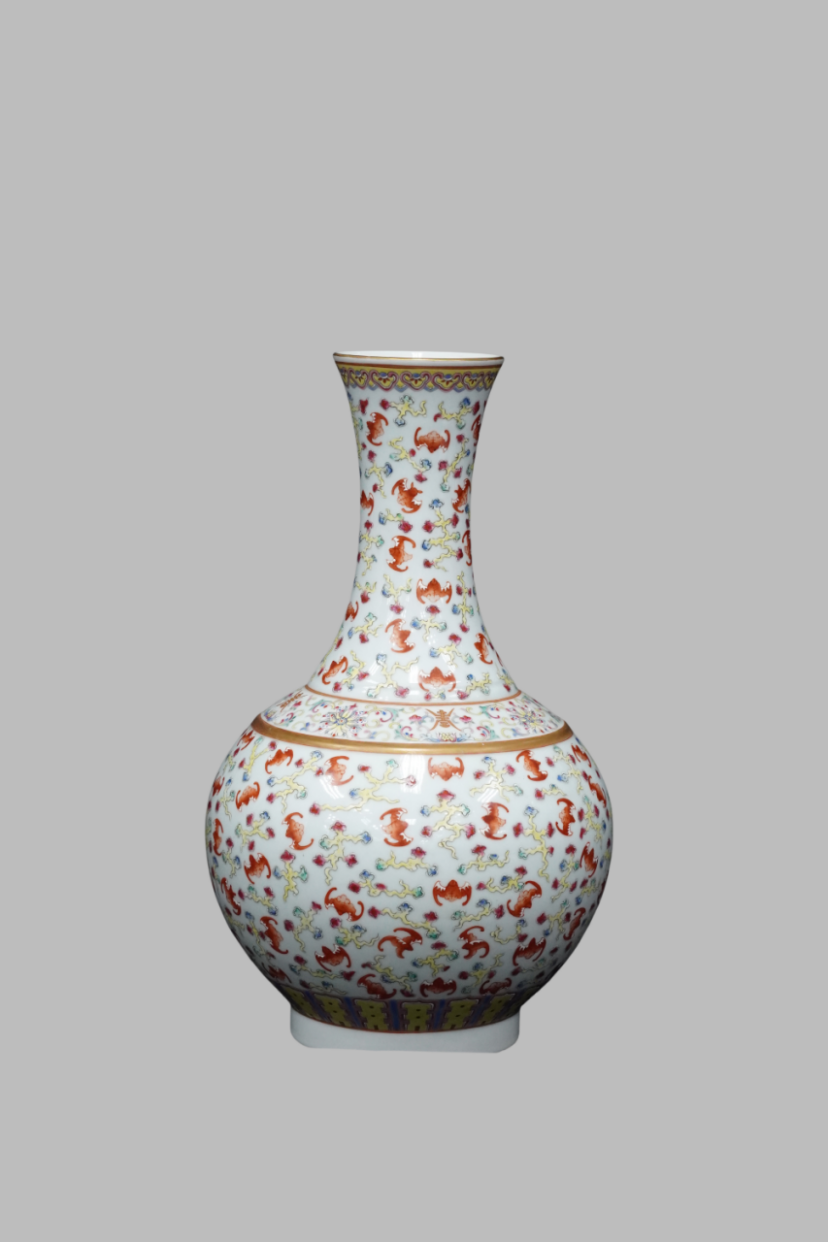
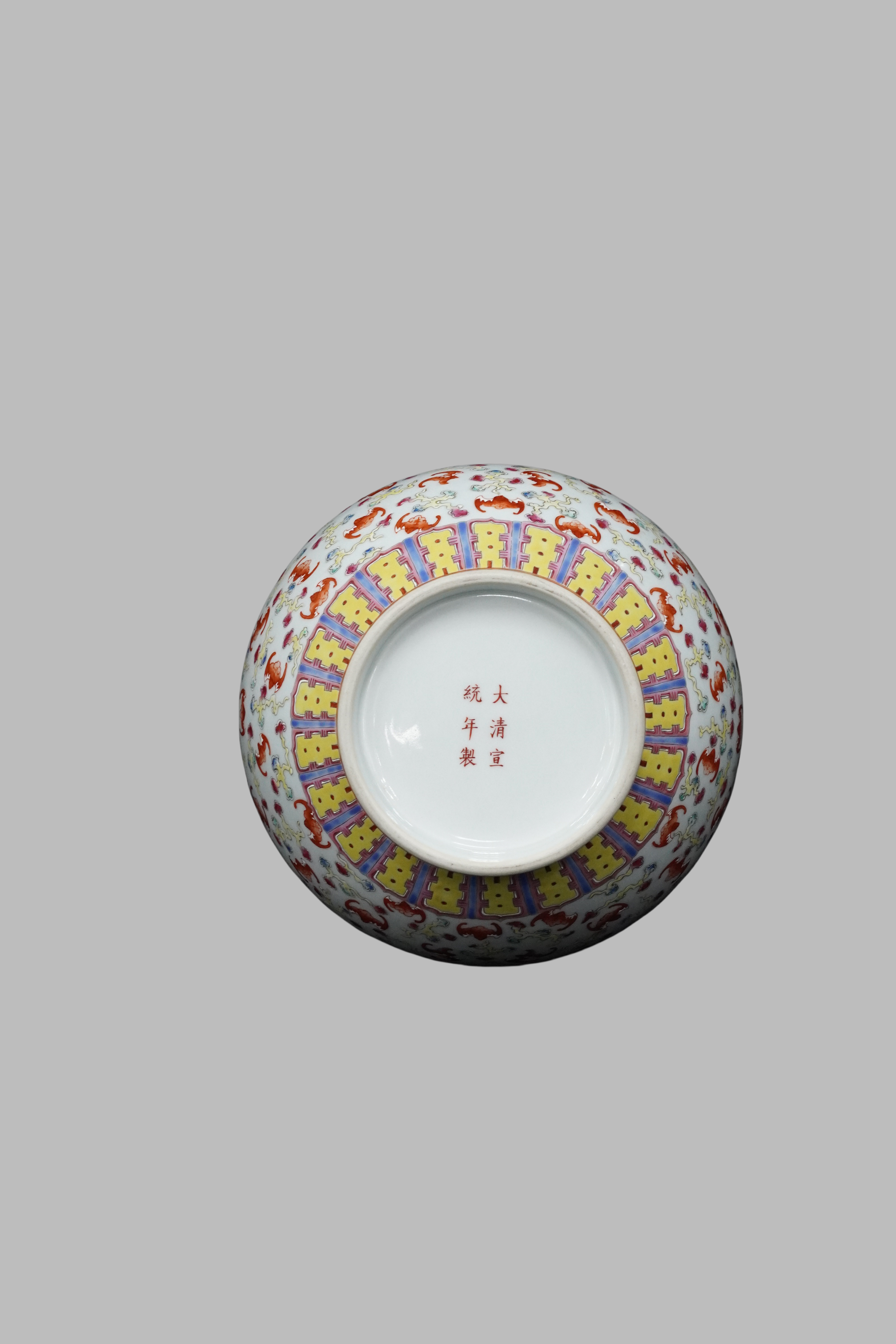
这件瓷器是清宣统粉彩"洪福齐天”纹赏瓶,宣统朝是清代制瓷的"收官阶段”;赏瓶(撇口、长颈、鼓腹、圈足),是清代宫廷陈设器的经典器型;胎体为 “糯米胎”,细腻洁白(宣统瓷胎釉质量接近乾隆朝,有"晚清官窑精品”之称);釉面莹润,口沿、颈部、腹部均有描金边饰,提升华丽感。是清代官窑的:“收官标本”,反映了宣统朝制瓷工艺对乾隆官窑的传承,是清代官窑制瓷史的最后阶段代表。
Famille-rose appreciation vase with "may boundless blessings descend" pattern, Xuantong reign of the Qing Dynasty (with imperial kiln mark).
The Xuantong reign marked the final phase of porcelain-making in the Qing Dynasty.The appreciation vase, characterized by its flared mouth, long neck, bulging belly, and ring foot, was a classic shape of imperial court display porcelain in the Qing Dynasty.Its body was made of glutinous rice paste-like clay, which was delicate and pure white. The quality of the body and glaze of Xuantong porcelain was close to that of the Qianlong reign, earning it the reputation of top-tier imperial kiln works of the late Qing Dynasty.The glaze surface was smooth and glossy, and the mouth rim, neck, and belly were all decorated with gold-traced borders to enhance its magnificence.As a closing specimen of Qing imperial kiln porcelain, it reflects the inheritance of Qianlong imperial kiln craftsmanship in the porcelain-making technology of the Xuantong reign, and stands as a representative of the final stage in the history of Qing imperial kiln porcelain production.
主题:器身满绘红蝠+缠枝卷草纹("蝠”谐音“福"),是清代晚期流行的“洪福齐天”题材。
寓意:红蝠象征“洪福”,缠枝纹寓意“连绵不绝”,整体传递“福运绵长、吉祥如意”的祈愿。
风格:纹饰繁密华丽,红蝠形态灵动、卷草纹层次丰富,符合宣统朝“仿乾隆奢华风格”的审美特点。
Theme: The entire body of the vessel is densely painted with red bats and interlocking scroll patterns. The character "bat" is a homophone for "blessing" in Chinese, which belongs to the popular "may boundless blessings descend" theme in the late Qing Dynasty.
Implication: Red bats symbolize "great blessings", and interlocking scroll patterns connote "endlessness and continuity". On the whole, it conveys the aspiration for long-lasting fortune and auspiciousness and contentment.
Style: The decorative patterns are dense and magnificent. The red bats have vivid and lively forms, and the scroll patterns boast rich layers, which conforms to the aesthetic feature of "imitating the luxurious style of the Qianlong period" in the Xuantong reign.