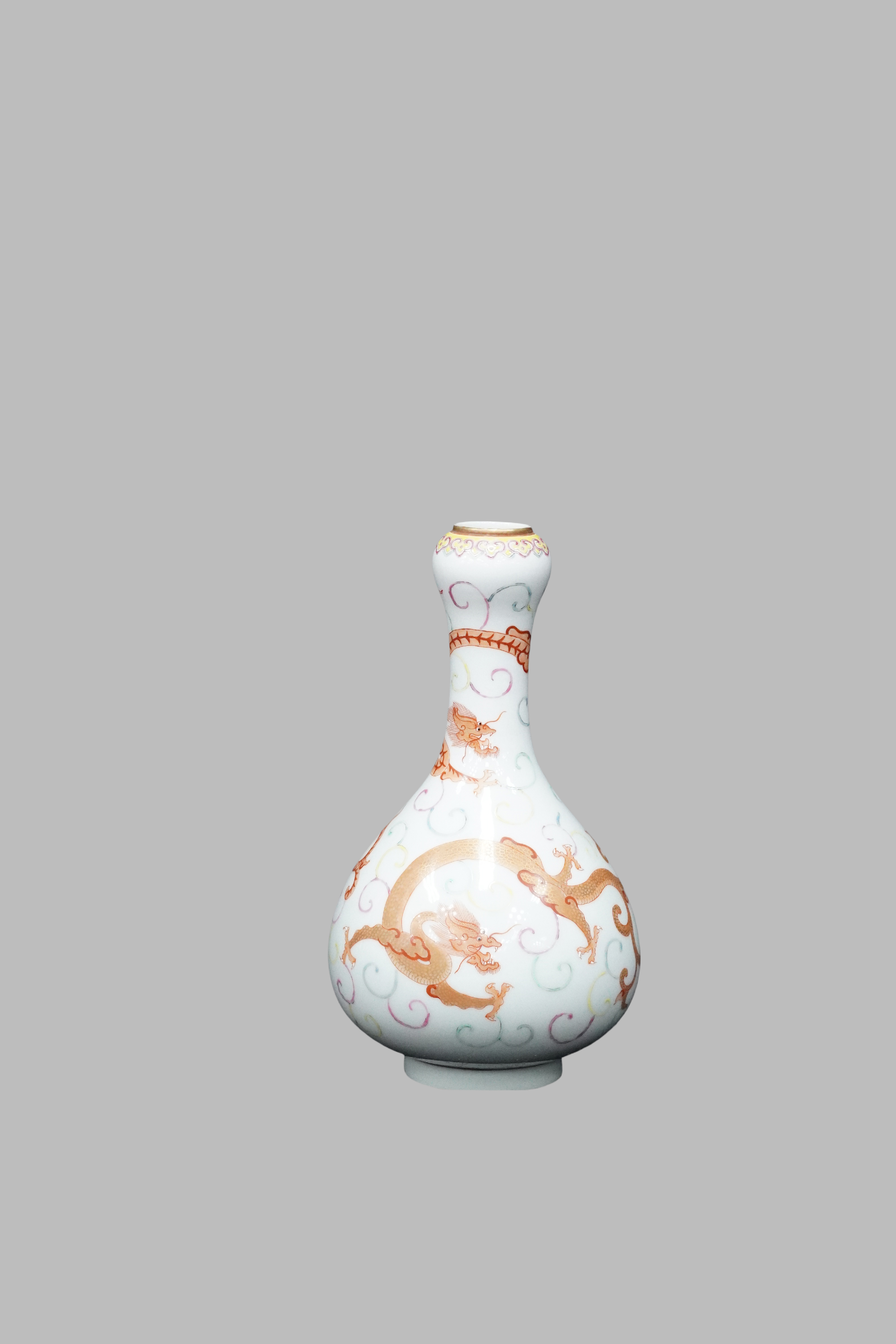
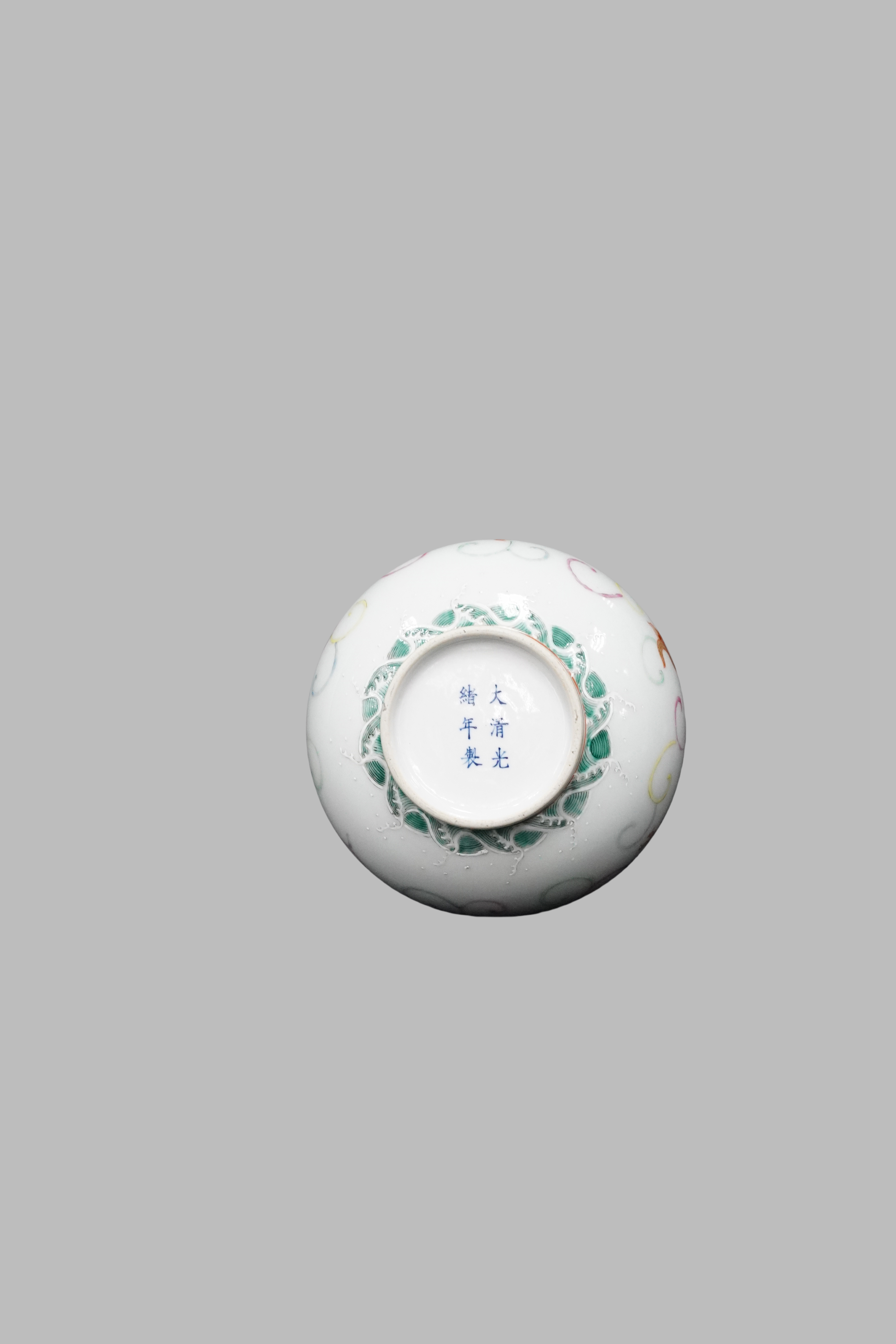
这件是清光绪粉彩描金龙纹蒜头瓶,光绪朝是晚清制瓷"复兴期” 的代表,蒜头瓶(小口、长颈、鼓腹、圈足),是清代宫廷经典陈设器型;胎体为"糯米胎”,细腻洁白(光绪胎釉质量回升,接近清中期水准);釉面莹润,口沿、颈部有描金边饰,器型规整挺拔。光绪瓷艺复兴的体现:反映了"同光中兴”时期制瓷业对乾隆官窑工艺的传承,是晚清制瓷水平回升的标本。
This is an imperial kiln famille rose garlic-shaped vase with gilded dragon patterns from the Guangxu period of the Qing Dynasty. The Guangxu era was a representative "renaissance period" for porcelain-making in the late Qing Dynasty. The garlic-shaped vase (featuring a small mouth, slender neck, bulging belly, and ring foot) was a classic display vessel shape of the Qing imperial court.
Its body is made of "glutinous rice paste" porcelain, which is delicate and pure white (the quality of Guangxu's porcelain body and glaze recovered and was close to the standard of the mid-Qing Dynasty). The glaze surface is smooth and glossy, with gilded decorative borders on the mouth rim and neck, and the overall shape is regular and upright.
It embodies the renaissance of porcelain craftsmanship in the Guangxu period: it reflects the inheritance of Qianlong imperial kiln craftsmanship by the porcelain-making industry during the "Tongguang Restoration" period, and is a specimen of the recovery of porcelain-making standards in the late Qing Dynasty.
主题:器身绘单龙穿云纹(龙纹是清代皇权象征,光绪朝民间也常以龙纹寄托"吉祥权威”)。
寓意:龙象征“祥瑞、权威”,云纹寓意“高升如意”,整体传递“尊贵吉祥、福运昌隆”的祈愿。
风格:龙纹矫健华丽一一 龙身用描金勾勒,鬃毛飞扬,云纹线条柔美,符合光绪朝“仿乾隆工笔精细”的审美特点。
Theme: the body of the vessel is painted with a single dragon soaring through clouds (dragon patterns were a symbol of imperial power in the Qing Dynasty; in the Guangxu period, they were also commonly used by the folk to embody the wish for "auspiciousness and authority").
Implication: the dragon symbolizes "auspicious omens and authority," while cloud patterns connote "promotion and good fortune." Overall, it conveys the aspiration for "nobility, auspiciousness, and prosperity of fortune and luck."
Style: the dragon pattern is vigorous and magnificent — the dragon's body is outlined with gold tracing, its mane flutters dynamically, and the cloud patterns feature soft and graceful lines, which conforms to the aesthetic characteristic of "imitating the exquisite gongbi (fine brushwork) style of the Qianlong period" in the Guangxu era.