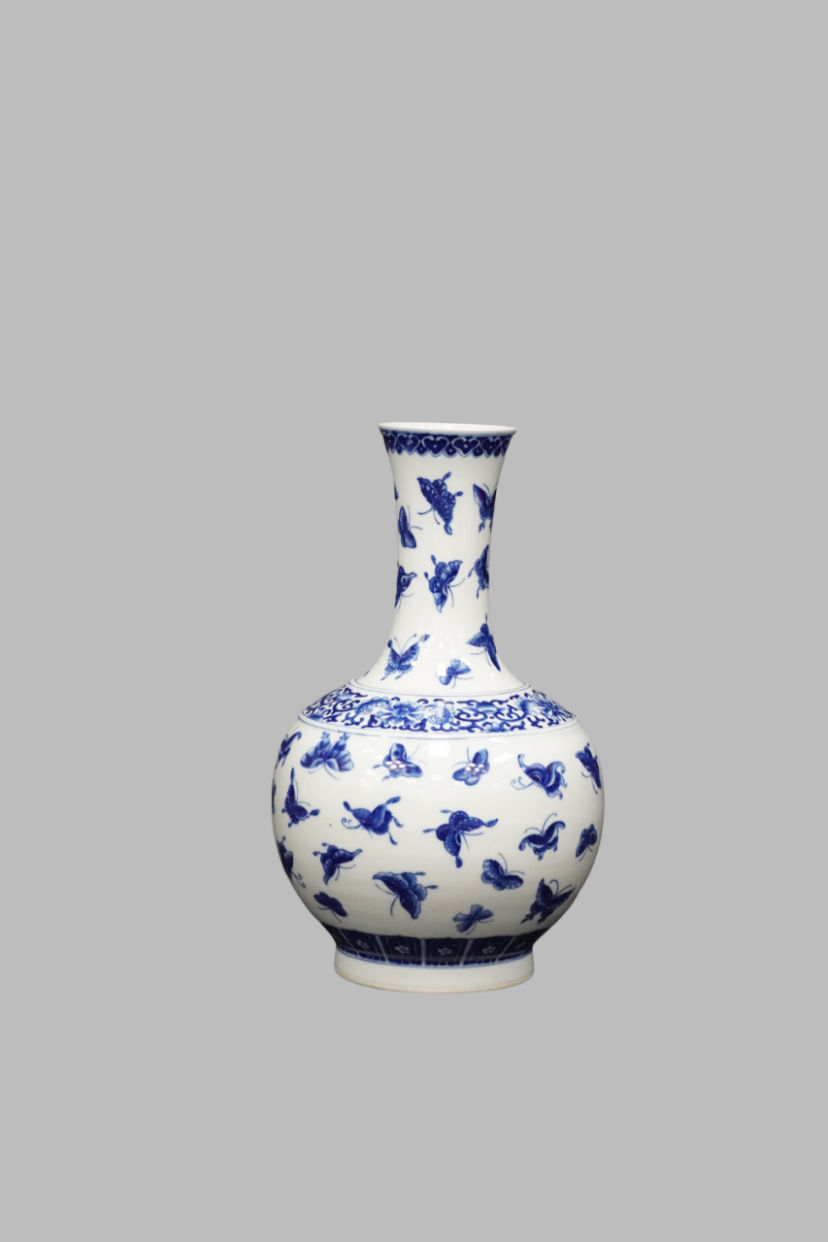
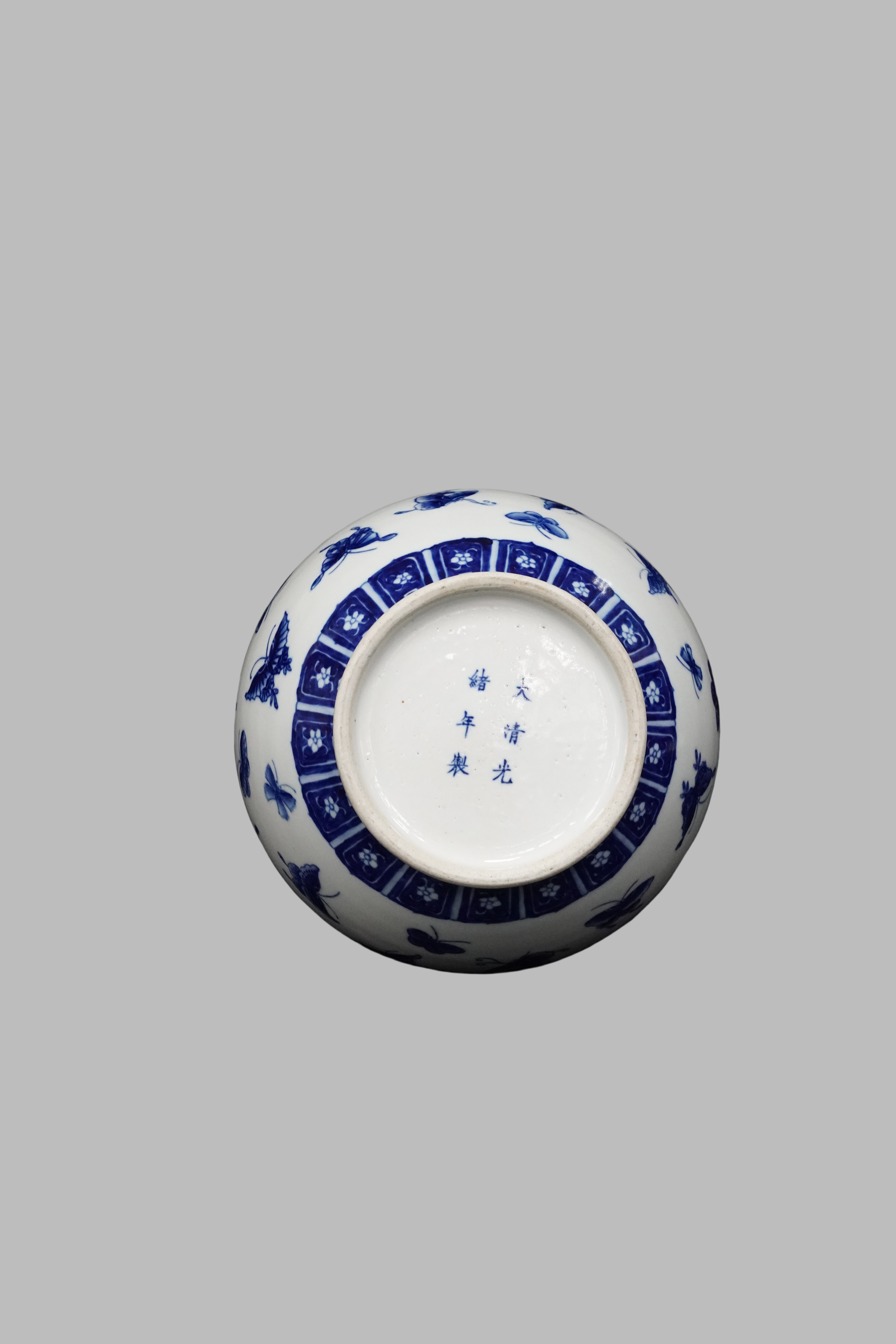
这件是清光绪青花百蝶纹赏瓶,光绪朝青花延续了晚清"仿乾隆雅致风格",赏瓶(撇口、长颈、鼓腹、圈足),是清代宫廷标志性陈设器;胎体为“糯米胎”,细腻洁白(光绪胎釉质量接近清中期);釉面莹润,口沿、颈部、圈足均有青花边饰,器型规整秀雅。光绪青花工艺的代表:反映了"同光中兴”时期制瓷业对乾隆青花的精准模仿,是晚清青花工艺回升的实物标本。
This is a blue-and-white hundred-butterfly-patterned appreciation vase from the Guangxu period of the Qing Dynasty. Blue-and-white porcelain of the Guangxu era inherited the "elegant Qianlong imitation style" prevalent in the late Qing Dynasty. As an appreciation vase (featuring a flared mouth, slender neck, bulging belly, and ring foot), it was an iconic display vessel of the Qing imperial court.
Its body is made of "glutinous rice paste" porcelain, which is delicate and pure white (the quality of Guangxu's porcelain body and glaze was close to that of the mid-Qing Dynasty). The glaze surface is smooth and glossy, with blue-and-white decorative borders applied to the mouth rim, neck, and ring foot, and the overall shape is regular and elegant.
It stands as a representative of Guangxu blue-and-white craftsmanship: it reflects the precise imitation of Qianlong blue-and-white porcelain by the porcelain-making industry during the "Tongguang Restoration" period, and is a physical specimen of the recovery of blue-and-white craftsmanship in the late Qing Dynasty.
主题:器身满绘百蝶纹("蝶” 谐音"耋”,代表长寿),搭配缠枝边饰,是清代晚期流行的吉祥题材。
寓意:百蝶象征“福寿绵长、耄耋安康”,缠枝纹寓意"连绵吉祥”,整体传递“健康长寿、吉祥美满”的祈愿的审美
风格:蝴蝶形态灵动多样、布局疏朗雅致,符合光绪朝"仿乾隆工笔细腻”点,区别于晚清其他时期的粗犷风格
Theme: the vase's body is fully decorated with the hundred-butterfly pattern (the Chinese character for "butterfly" (die) is a homophone for "octogenarian" (die), symbolizing longevity), paired with interlocking branch borders. It is a popular auspicious theme in the late Qing Dynasty.
Meaning: the hundred butterflies symbolize "enduring blessings and longevity, as well as health in old age," while the interlocking branch patterns imply "continuous auspiciousness." Overall, it conveys wishes for "good health, longevity, and auspicious happiness."
Style: the butterflies are depicted in vivid and varied postures with a sparse and elegant composition, conforming to the aesthetic characteristic of the Guangxu period of "imitating the exquisite fine brushwork of the Qianlong era," which distinguishes it from the rugged styles of other periods in the late Qing Dynasty.