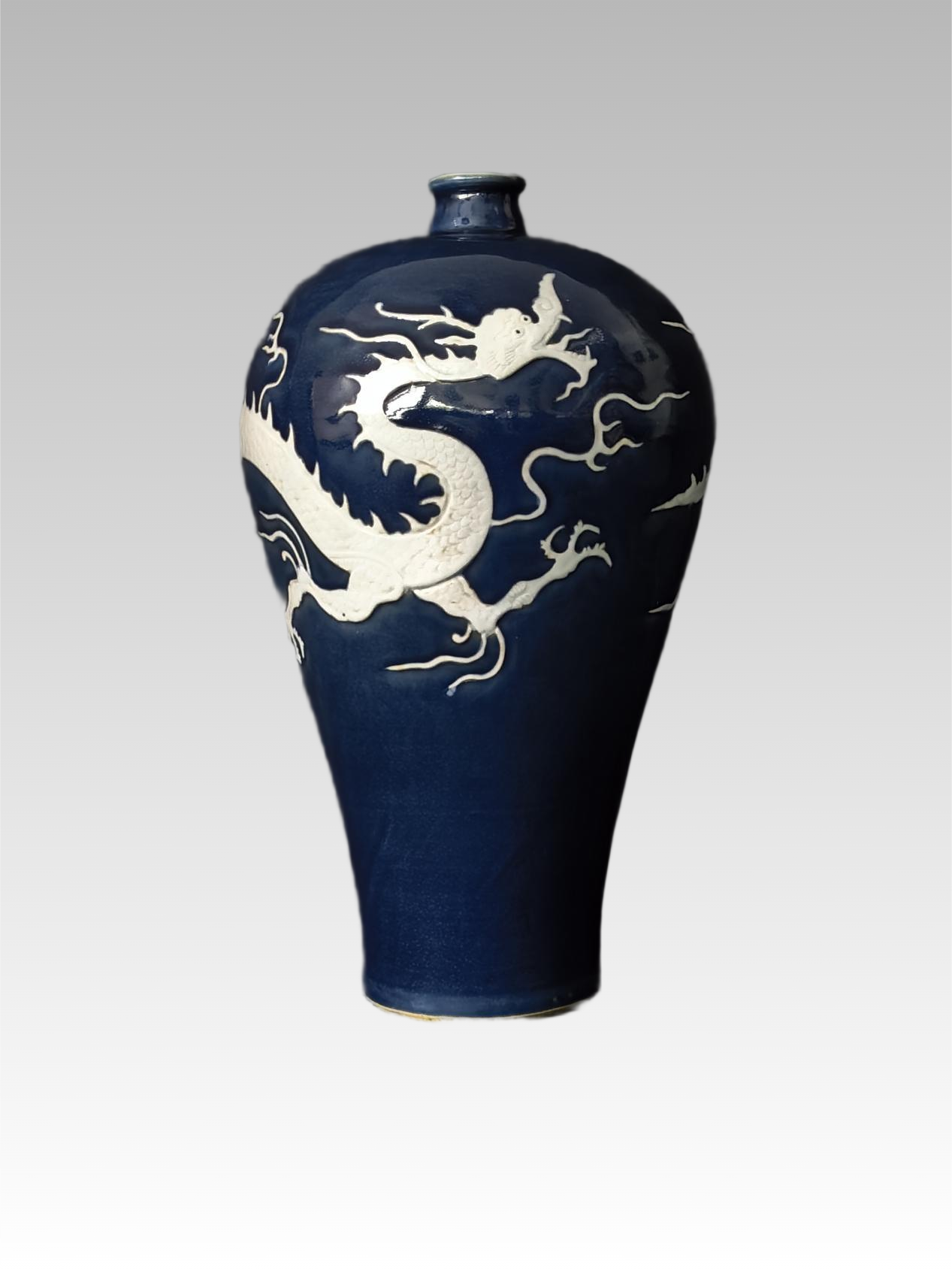
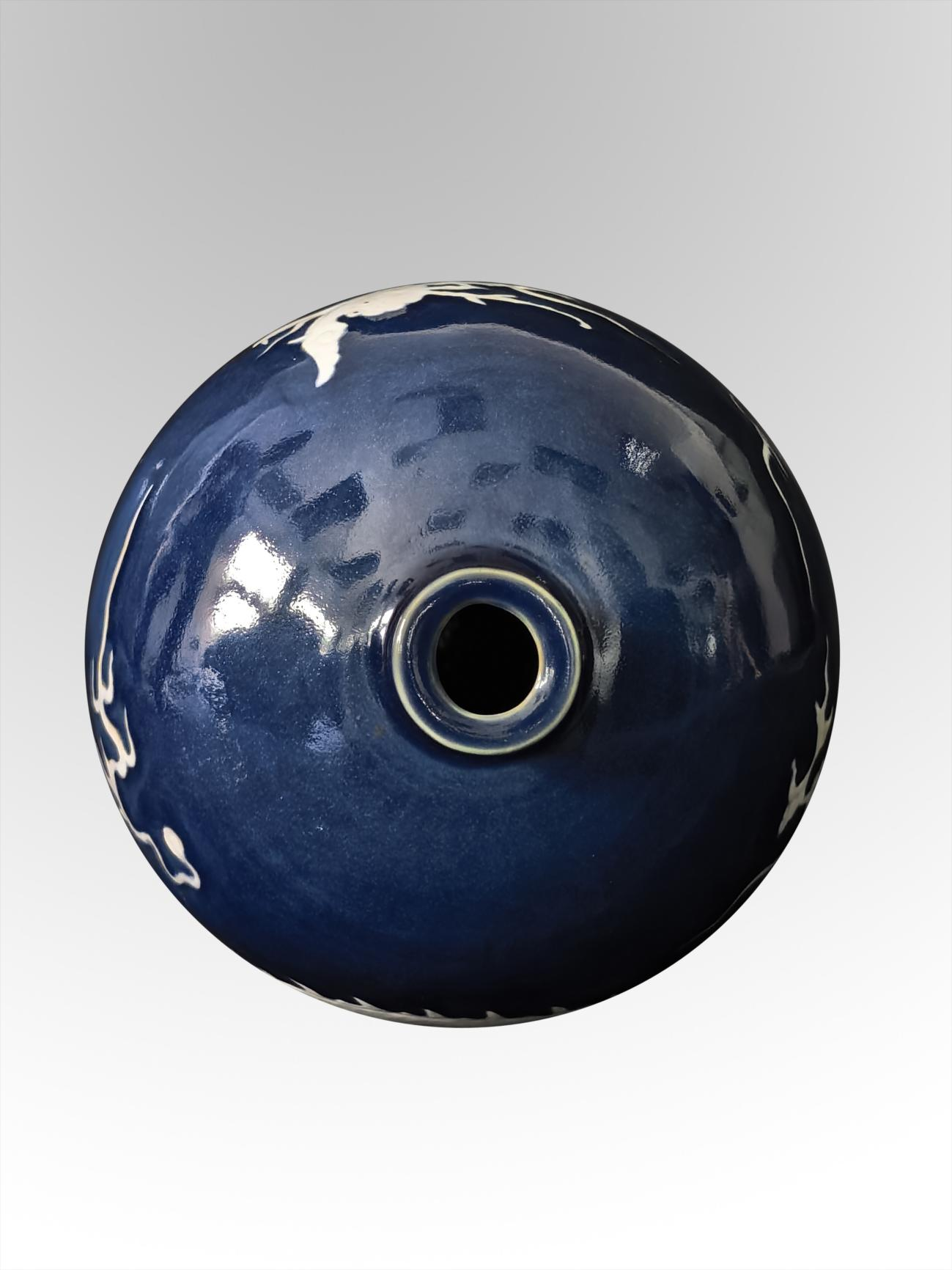
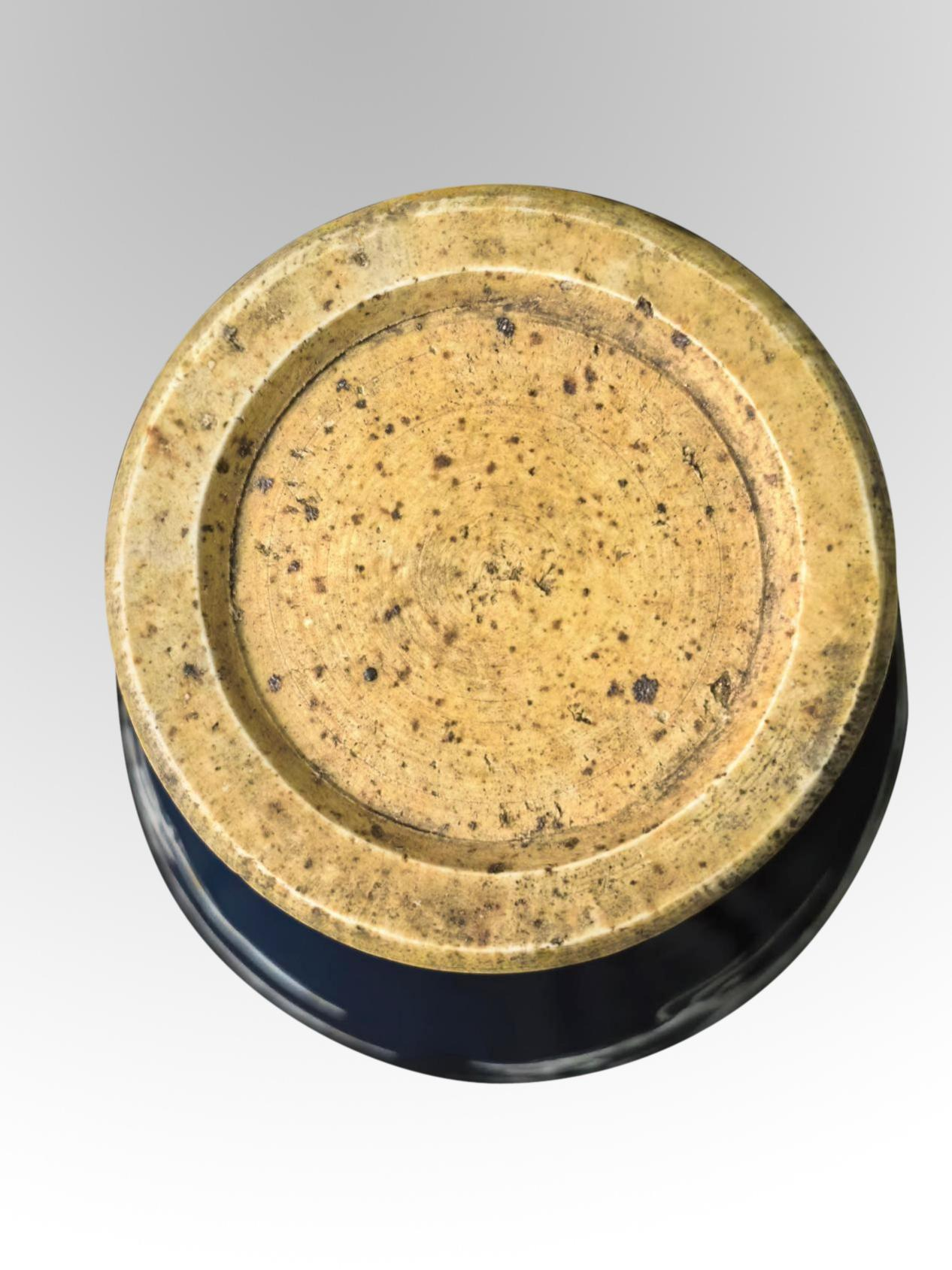
瓷器简介:瓶身经典“梅瓶”形制:小口、短颈、丰肩、敛腹,线条圆润饱满,既具实用盛器的功能,又暗含典雅的审美意趣。通体施霁蓝釉“一种以钴为呈色剂的高温蓝釉”,色泽浓艳如宝石,是元代景德镇窑独创的名贵釉种;瓶身主体以白釉堆塑出矫健的白龙纹,龙身蜿蜒腾跃,鳞爪分明,与深蓝釉面形成强烈视觉对比,工艺高温一次烧成,火候与釉料的控制要求近乎苛刻,成品率不足万分之一。
Porcelain Introduction: the vase takes the classic "plum vase" shape: with a small mouth, short neck, full shoulders and a tapering belly. Its lines are round and plump, serving both as a practical container and embodying elegant aesthetic appeal. The entire body is coated with Ji blue glaze, "a high-temperature blue glaze using cobalt as the colorant", with a rich and vivid color like gemstones. It is a precious glaze variety uniquely created by the Jingdezhen kilns during the Yuan Dynasty. The main body of the vase features a vigorous white-glazed embossed white dragon pattern. The dragon's body winds and leaps, with distinct scales and claws, forming a strong visual contrast with the deep blue glaze. The craftsmanship requires a single firing at high temperature, with extremely strict requirements for temperature control and glaze materials, resulting in a yield rate of less than one in ten thousand.
收藏统计:“元霁蓝釉白龙纹梅瓶”为元代皇室专用器物,存世仅3件,分藏于北京颐和园、法国吉美博物馆,中国扬州博物馆,其中,中国扬州博物馆的器型最完整、纹饰最精美,2013年被列入“中国禁止出国(境)展览文物”,是扬州博物馆的“镇馆之宝”。而此件霁蓝釉白云龙纹梅瓶,为明嘉靖至明万历年间烧造的器物,属于后世仿品。于2025年6月今成国际集团在一位老首长处购买,霁蓝釉白云龙纹梅瓶更被誉为“瓷中帝王”。
According to collection statistics, The Yuan dynasty ji-blue-glazed meiping vase with white dragon patterns was an exclusive utensil for the Yuan imperial family, with only three surviving pieces, held respectively at the Beijing Summer Palace, the Musée Guimet in Paris, and the Yangzhou Museum in China. Among them, the example in the Yangzhou Museum features the most complete form and the most exquisite decoration. It was listed as a "Chinese cultural relic prohibited from going abroad for exhibition" in 2013 and is regarded as the "treasure of the museum" of the Yangzhou Museum.This ji-blue-glazed meiping vase with white cloud and dragon patterns, however, was produced during the Jiajing to Wanli periods of the Ming dynasty (c. 1522–1620), representing a later imitation. Acquired in June 2025 by Jincheng International Group from a retired senior official, this vase has been hailed as the "emperor of porcelain."