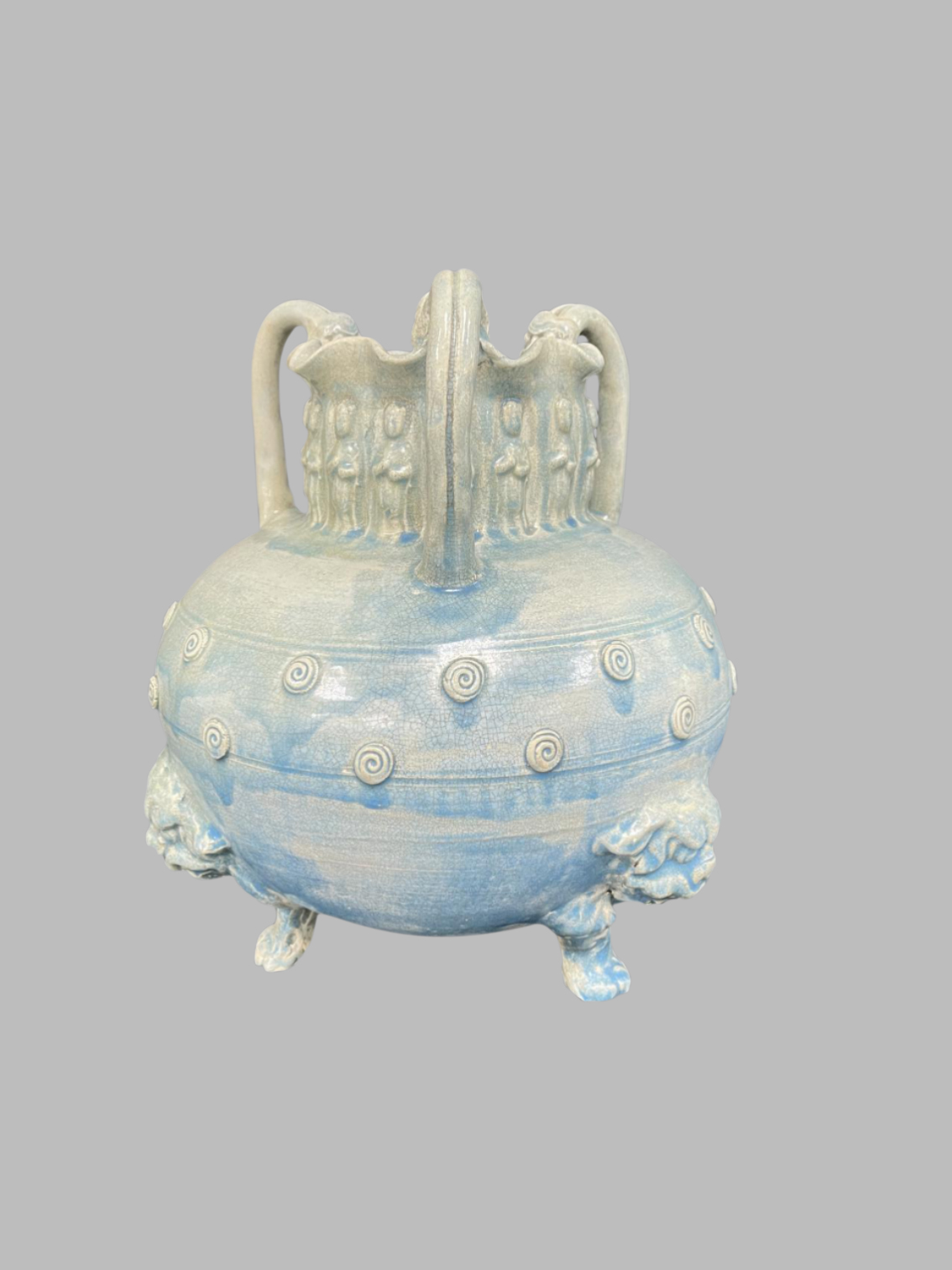
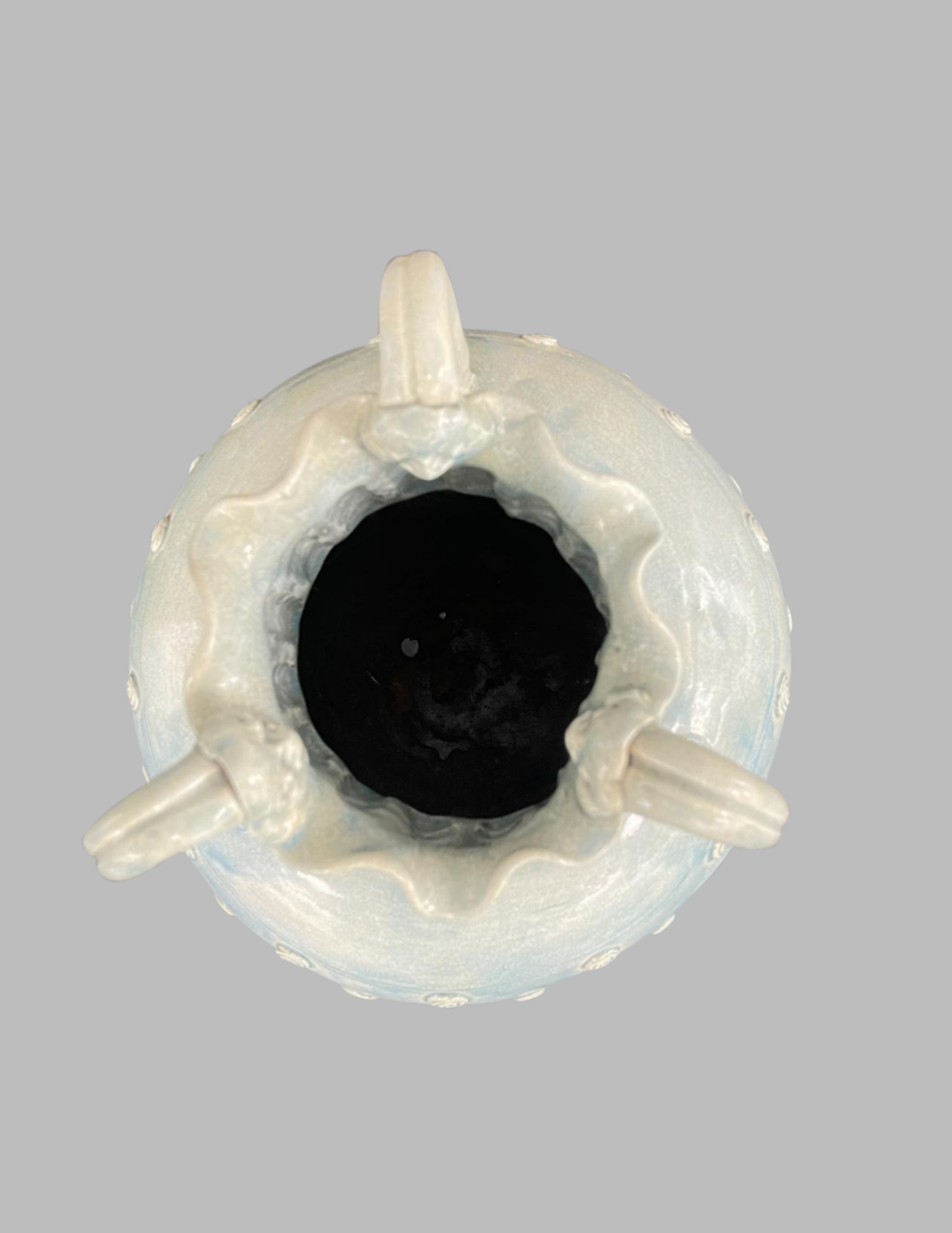
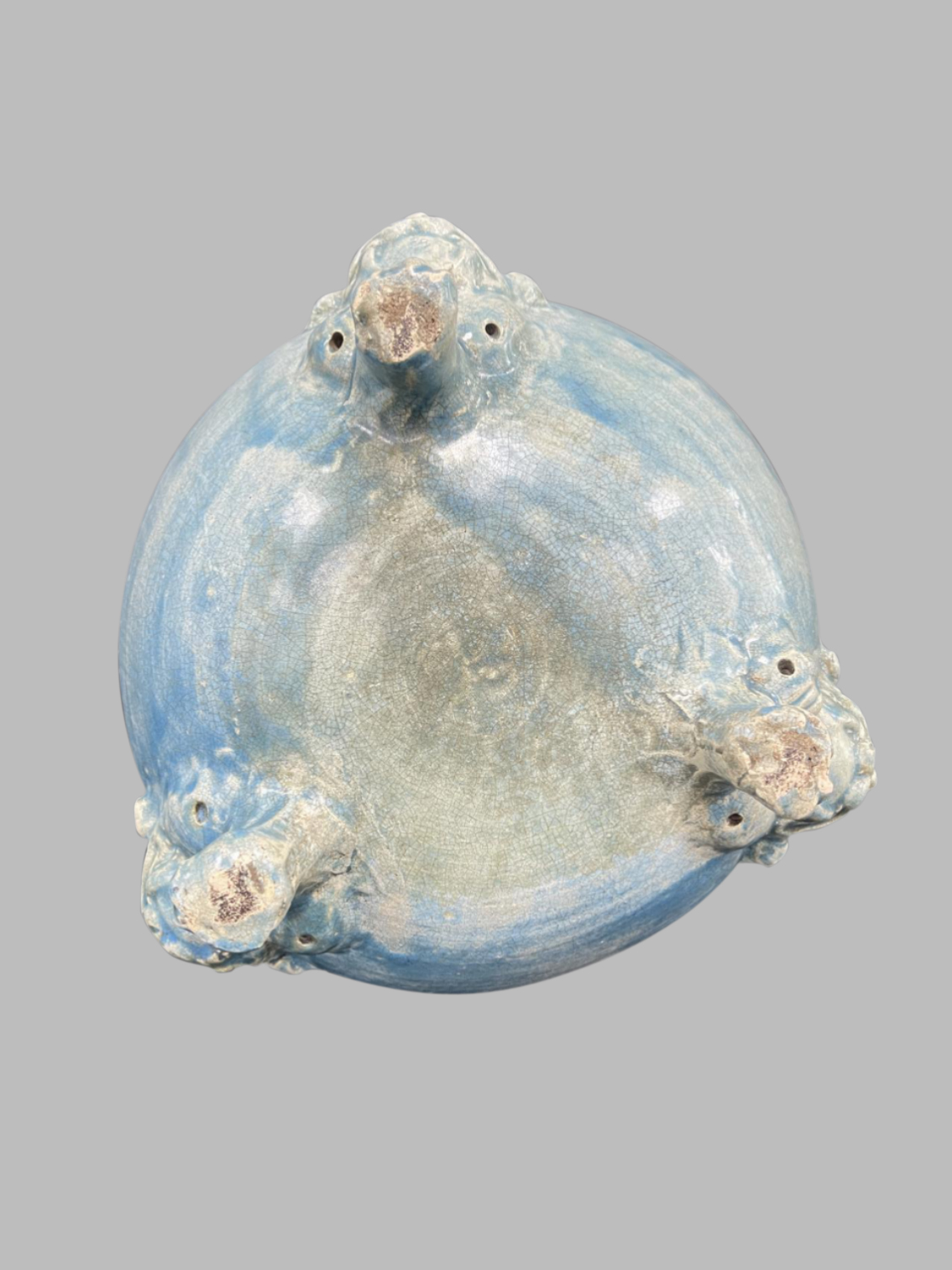
瓷器简介:造型独特,具有多足(兽首行形三足),底部的兽首足不仅起到支撑作用,还增添了艺术感与威严感,顶部有多系执手用于提拿系绳,器身呈球形,线条圆润饱满器身装饰螺旋纹乳钉,螺旋纹的设计富有动感,兽首雕刻生动,细节处可见工匠的用心,将动物形象与实用器型结合,体现了当时的工艺审美。
The overall shape is rather unique, featuring multiple legs (three legs in the shape of an animal head). The animal head legs at the bottom not only provide support but also add an artistic and imposing touch. There are multiple ties (or handles) at the top, which may be used for carrying or tying ropes, combining practical and decorative functions. The body of the vessel is spherical or drum-shaped, with smooth and full lines. The body is decorated with spiral-patterned milk nails, which are neatly arranged. The spiral pattern design is dynamic and breaks the monotony of the body. The animal head foot at the bottom is vividly carved, and the details show the craftsman's dedication. The combination of animal images and practical vessel shapes reflects the aesthetic standards of craftsmanship at that time.
兽首足:古代人对兽类(尤其是神兽)有图腾崇拜,兽首足被赋予避邪纳福的寓意,其能驱散邪恶、守护器物与使用者。瓷器上的兽首足,常出现在祭祀、礼器中,体现对神灵的敬畏与祈福。
Animal heads and feet: ancient people had totem worship of beasts (especially divine beasts), and animal heads and feet were endowed with the meaning of warding off evil and bringing good fortune, believing that they could drive away evil and protect objects and users. The animal heads and feet on porcelain often appear in sacrificial ceremonies and ritual vessels, symbolizing reverence for deities and blessings.
权利与身份象征:在贵族使用的器物中,兽首足的工艺复杂,彰显了使用者的身份地位。如汉代的兽耳衔环熊足奁,是贵族墓葬中的常见器物。
Symbols of power and status: among the artifacts used by the nobility, the complexity of craftsmanship and artistic expressiveness of animal heads and feet highlighted the status and position of the users. For instance, the beast-ear ring and bear-foot casebox of the Han Dynasty was a common item in the tombs of the nobility, reflecting the social status and wealth situation at that time.
收藏统计: 同款青花兽钮贴花三足尊真品全球现存世完整器不超 3 件,青花兽钮贴花三足尊于2025年1月今成国际集团花在国内知名收藏家处购买,青花兽钮贴花三足尊更被誉为“青花瓷器的始祖和陶瓷中的稀世之珍”。
According to collection statistics, there are no more than three genuine and intact pieces of the blue - and - white three - legged zun with beast - shaped knob and appliqué patterns in the world. This blue - and - white three - legged zun with beast - shaped knob and appliqué patterns was purchased at a high price by Jincheng International Group from a well - known domestic collector in January 2025. It is hailed as the "ancestor of blue - and - white porcelain and a rare treasure among ceramics".
稀缺性:历史沉淀下的 “不可再生资源 ”历史损毁导致存世量锐减。以元代青花为例,元代烧造时间短、工艺复杂,且历经战乱损耗,全球完整器存世希少,民间流通品更是凤毛麟角。
Scarcity: "Non-Renewable Resources" Shaped by History.Historical damage has led to a sharp decline in the number of surviving artifacts. Taking Yuan Dynasty blue-and-white porcelain as an example, its production period was brief, the craftsmanship was complex, and it suffered significant losses due to wars throughout history. As a result, intact pieces are exceedingly rare worldwide, and those circulating among the public are particularly scarce.