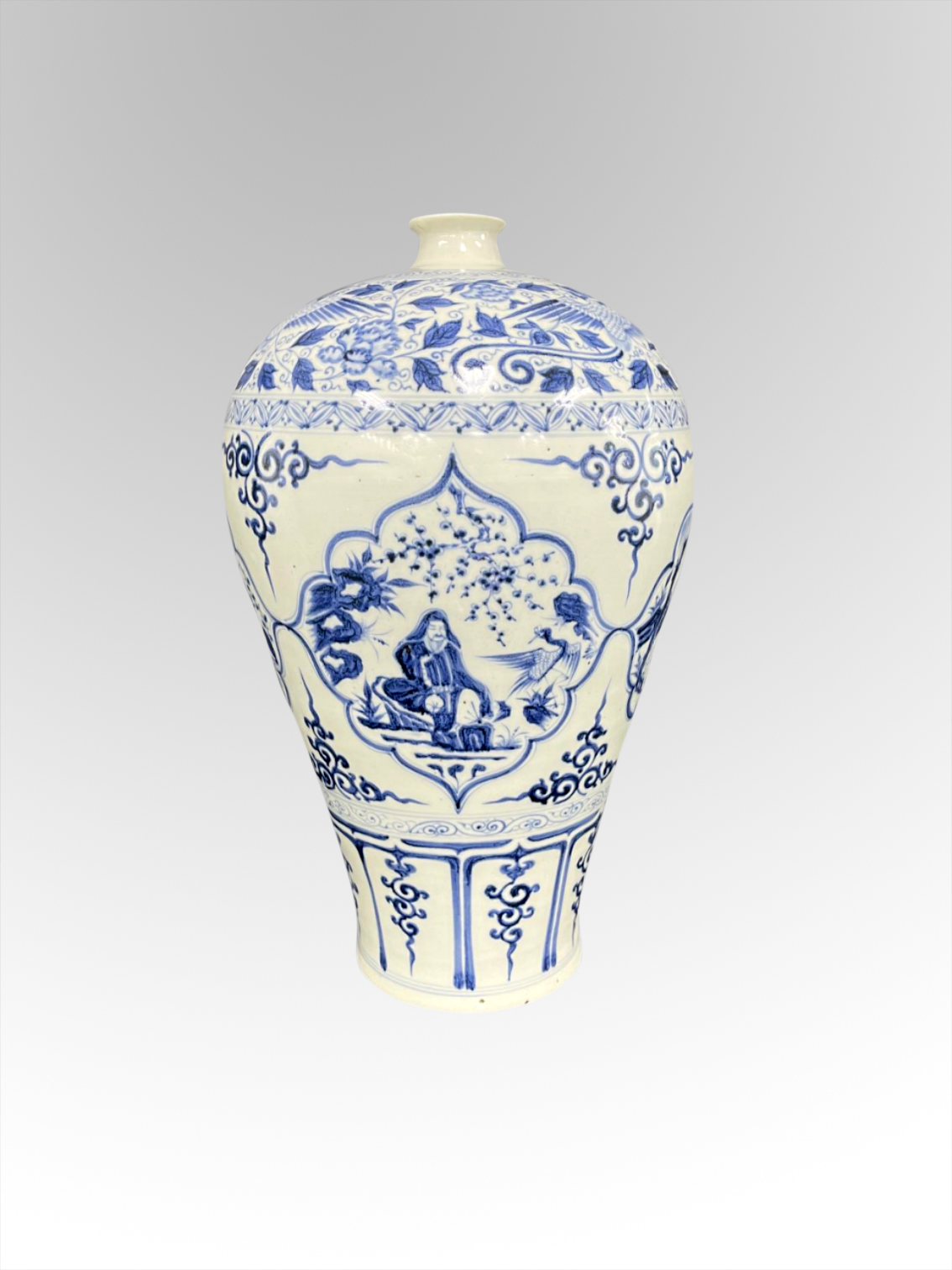
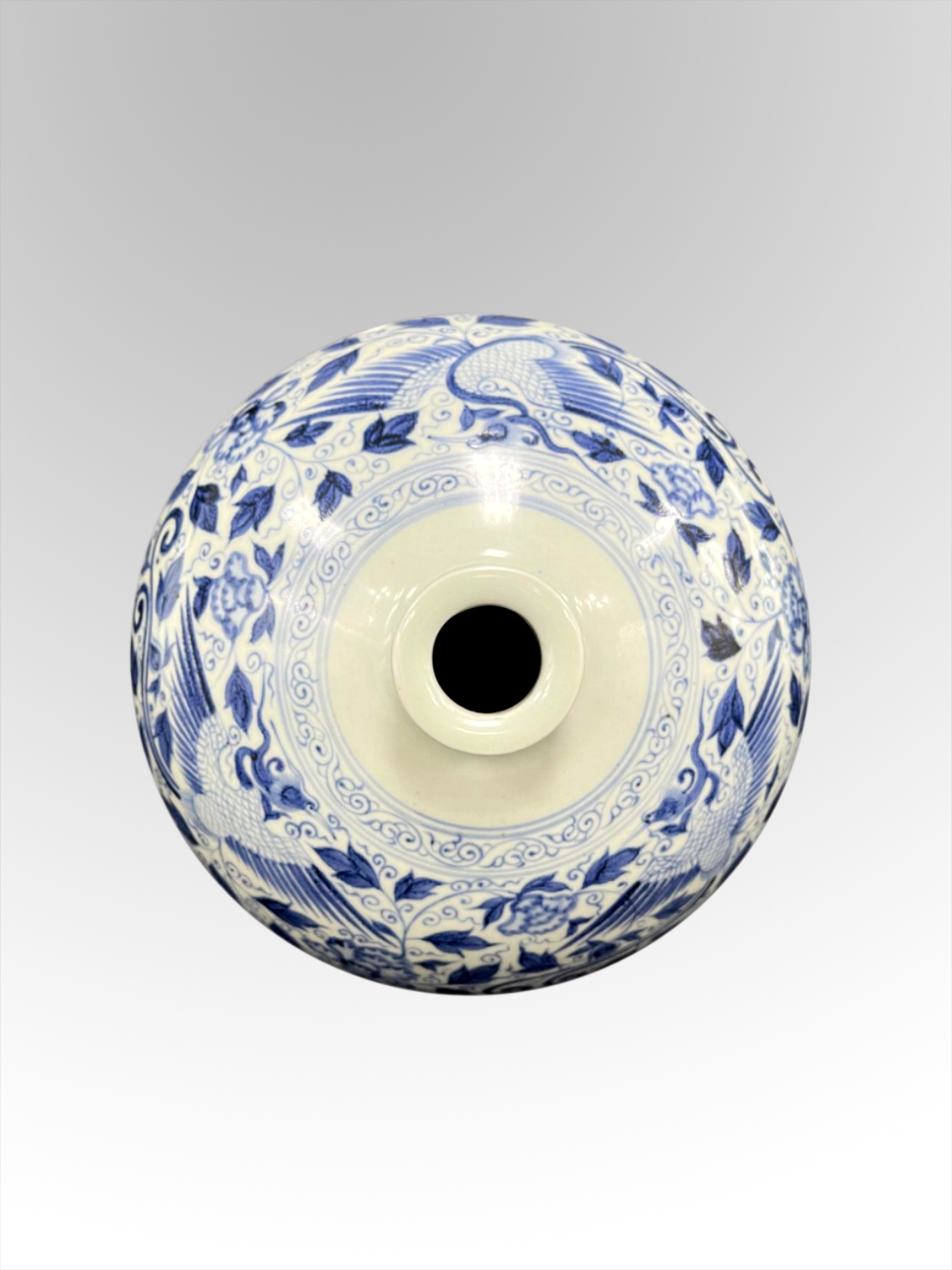
瓷器简介:景德镇窑青花梅瓶,器形呈小口外撇、短颈丰肩、敛腹圈足,器身饱满端庄,白釉莹润为地,青花装饰层次分明,是元青花人物题材的代表性器物之一。肩部纹饰:绘凤穿缠枝花卉纹,凤凰姿态舒展,缠枝花叶缠绕其间,线条灵动且纹饰繁密,尽显华贵气韵;腹部主体:以四个菱花形开光为核心,开光间以缠枝卷草纹分隔,每个开光对应 “四爱” 王羲之爱兰 , 文人持兰而立,旁衬兰草、湖石,尽显君子清雅;林和靖爱梅鹤 ,隐士伴梅而坐,仙鹤栖于侧,呼应“梅妻鹤子”的隐逸情怀;陶渊明爱菊, 诗人持杖赏菊,菊丛点缀其间,暗合 “采菊东篱下”的悠然。
Porcelain Introduction:this blue-and-white Meiping vase from the Jingdezhen kilns features a flared small mouth, short neck, broad shoulders, a gently tapered belly, and a ring foot. Its form is full and dignified, with a lustrous white glaze serving as the ground for clearly defined layers of underglaze-blue decoration. It stands as one of the representative figure-decorated vessels of Yuan dynasty blue-and-white porcelain.
Shoulder Decoration: painted with a phoenix soaring through scrolling flowers, the phoenix is rendered in an elegant, outstretched posture amidst intricately entwined blooms and leaves. The dynamic lines and dense patterning exude an air of luxurious refinement.
Main Body Decoration: the belly is centered around four rhombus-shaped reserved panels, separated by interlocking floral and leafy scrolls. Each panel illustrates one of the “Four Gentlemenly Pursuits”:
Wang Xizhi’s Love of Orchids: A scholar stands holding an orchid, accompanied by orchid plants and a lake rock, embodying the elegance of a noble mind.
Lin Hejing’s Love of Plum Blossoms and Cranes: A recluse sits beside a plum tree, with a crane perched nearby, alluding to his poetic life symbolized by “taking the plum as his wife and the crane as his son.”
Tao Yuanming’s Love of Chrysanthemums: The poet leans on a staff admiring chrysanthemums, with clusters of the flowers scattered around, evoking the sentiment of his verse, “Picking chrysanthemums by the eastern fence.”
青花工艺:采用元代典型的 “苏麻离青” 钴料,青花发色浓淡有致,釉面光洁莹润;它以 “文人四爱” 为核心题材,将元代文人审美与青花工艺结合,纹饰布局繁而不乱、主题鲜明,是元青花人物器的精品。
Blue-and-White Craftsmanship:it adopts the typical Sumaliqing cobalt pigment of the Yuan Dynasty, with the blue-and-white color showing a distinct gradation between dark and light shades, and the glaze surface is smooth and glossy. Centered on the theme of "Four Loves of Literati", it integrates the literati aesthetic of the Yuan Dynasty with blue-and-white craftsmanship. The decorative layout is elaborate yet well-organized with a distinct theme. As a high-quality piece of Yuan blue-and-white porcelain featuring figure patterns,it boasts both remarkable artistic expressiveness and profound historical and cultural value.
艺术价值:它的艺术价值体现在 “纹饰叙事 + 美学布局” 的双重表达,以 “四爱” 文人典故为核心,每个菱花开光都生动刻画了文人场景(如王羲之持兰的清雅、林和靖伴梅鹤的隐逸),人物神态、景物细节(兰、莲、菊、梅)的刻画细腻传神,是元代瓷绘 “以画叙事” 的精品。
Its artistic value is reflected in the dual expression of "pattern narration + aesthetic layout". Centered on the literati allusions of the "Four Loves", each rhombus-shaped openwork vividly depicts literati scenes (such as the elegance and purity of Wang Xizhi holding an orchid, and the seclusion of Lin Hejing accompanying plum blossoms and cranes). The depictions of the figures' expressions and the details of scenery (orchids, lotus
flowers, chrysanthemums, plum blossoms) are delicate and lifelike, making it an exquisite example of "narrating stories through paintings" in Yuan Dynasty porcelain painting.
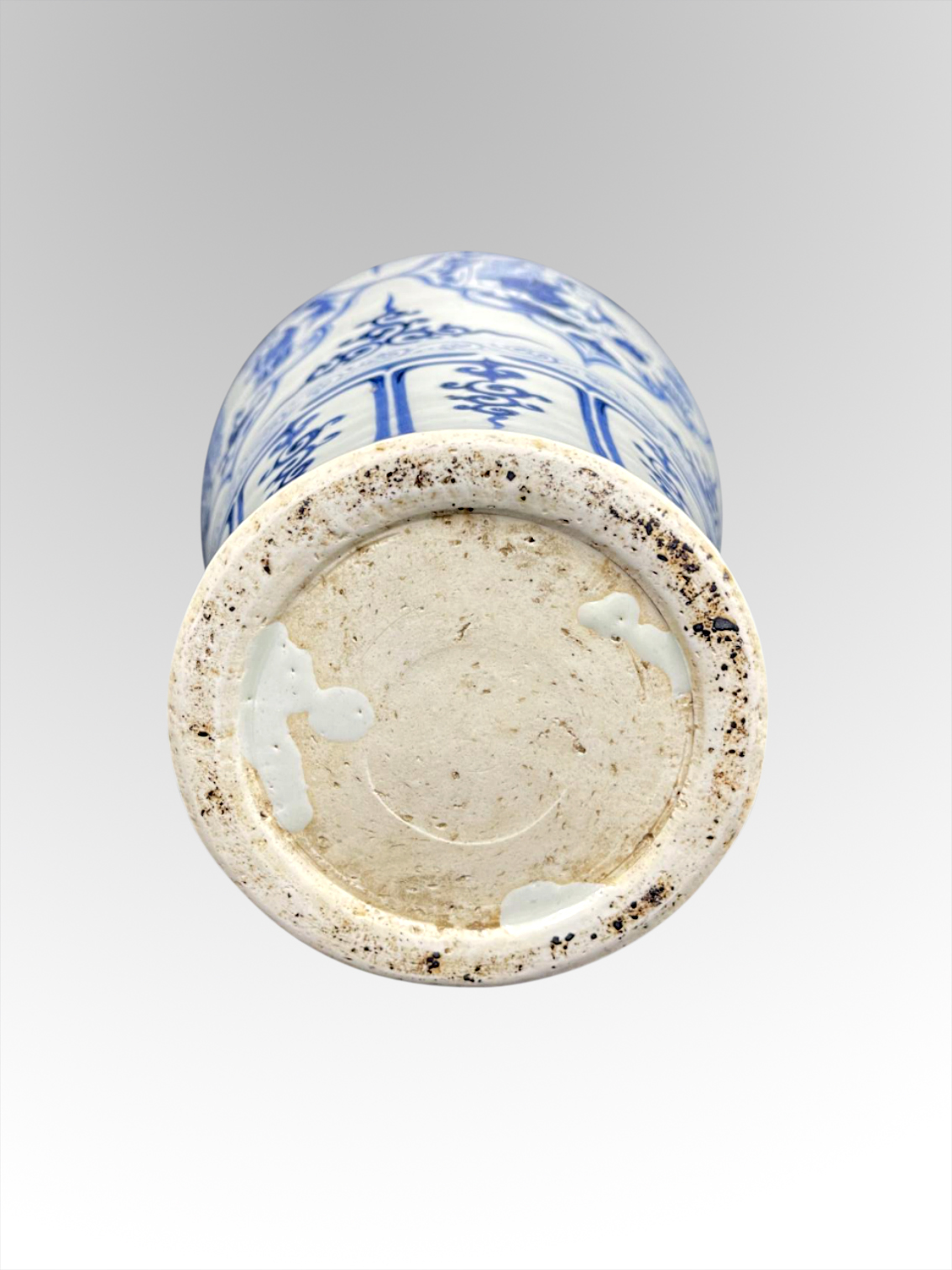
工艺价值:用料上,使用进口 “苏麻离青” 钴料,青花发色浓艳幽蓝,釉面白中泛青,是元代青花 “蓝白相映” 风格的典型体现;反映了元代大件瓷器拉坯、成型的高超技艺,底部涩胎圈足的胎质特征,也是元代瓷器工艺的标志。
In terms of materials, it uses imported Sumaliqing cobalt pigment. The blue-and-white color is rich, vivid, and deep blue, with the glaze surface showing a bluish tint against the white base. It is a typical embodiment of the "blue-white contrast" style of Yuan Dynasty blue-and-white porcelain.In terms of production, the plum vase has a plump shape and a thick body, reflecting the superb craftsmanship of clay throwing and shaping for large porcelain vessels in the Yuan Dynasty; the body texture characteristics of the unglazed ring foot at the bottom are also a hallmark detail of Yuan Dynasty porcelain craftsmanship.
稀缺性:目前已知的馆藏级元青花四爱图梅瓶仅存两件真品,且均为公立博物馆馆藏(湖北博物馆、武汉博物馆),私人收藏及市场流通不超过3件(此三件均为元末明初时期烧造),受文物保护法规限制无法流通交易,属于“非市场流通”的孤品级器物,其稀缺性使其价值远超一般可交易文物,是文物界公认的“青花珍品标杆”
Scarcity Value:currently, only two authentic museum-grade Yuan Dynasty blue-and-white plum vases with the "Four Loves" motif are known to exist, and both are housed in public museums (Hubei Museum and Wuhan Museum). No more than three such vases are in private collections or circulating on the market (all three were fired during the late Yuan and early Ming dynasties). Restricted by cultural relic protection laws and regulations, they cannot be circulated or traded, making them solitary-grade artifacts that are "non-marketable". Their scarcity renders their value far higher than that of ordinary tradable cultural relics, and they are recognized by the cultural relic circle as the "benchmark of blue-and-white treasures".