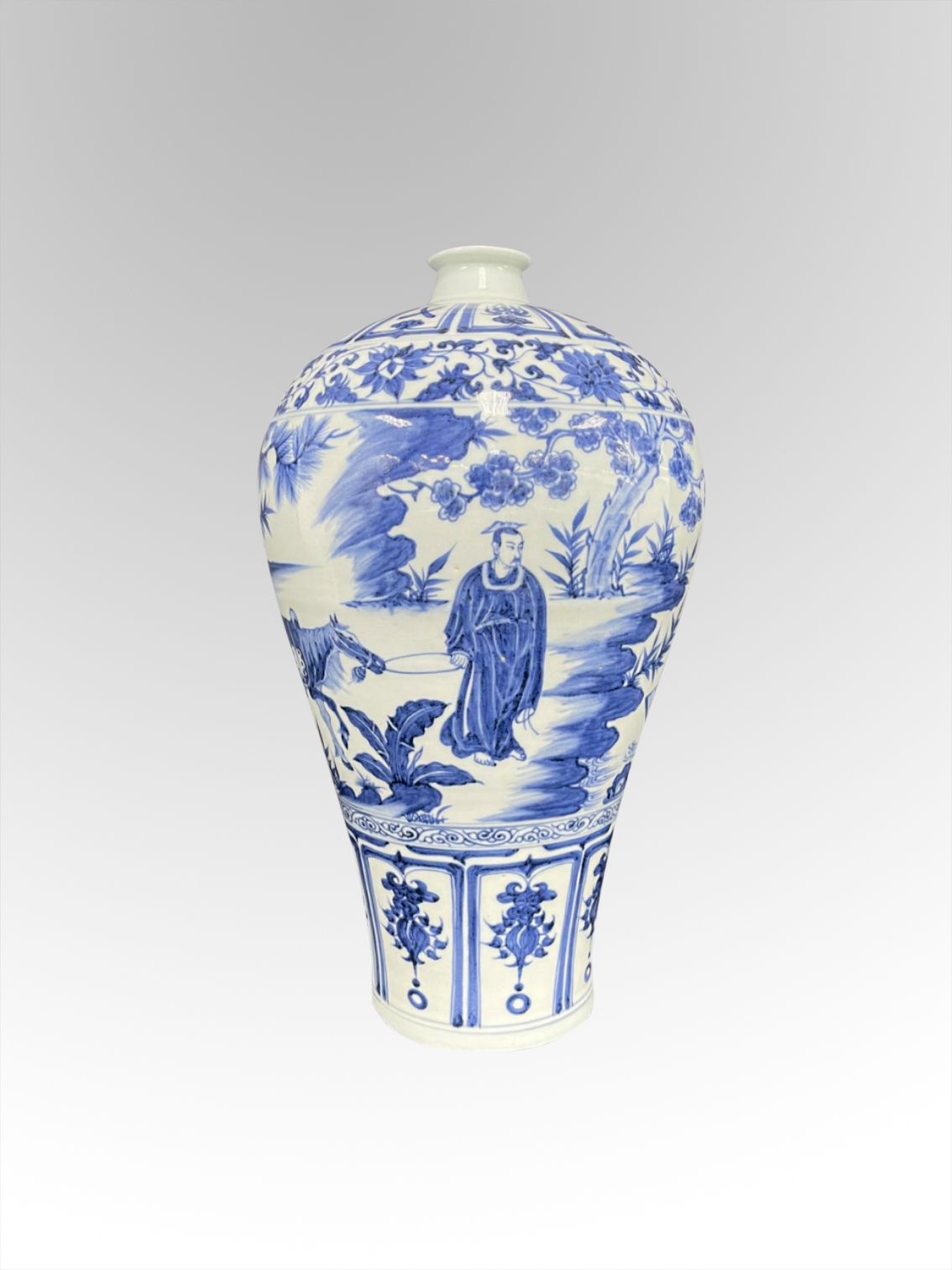
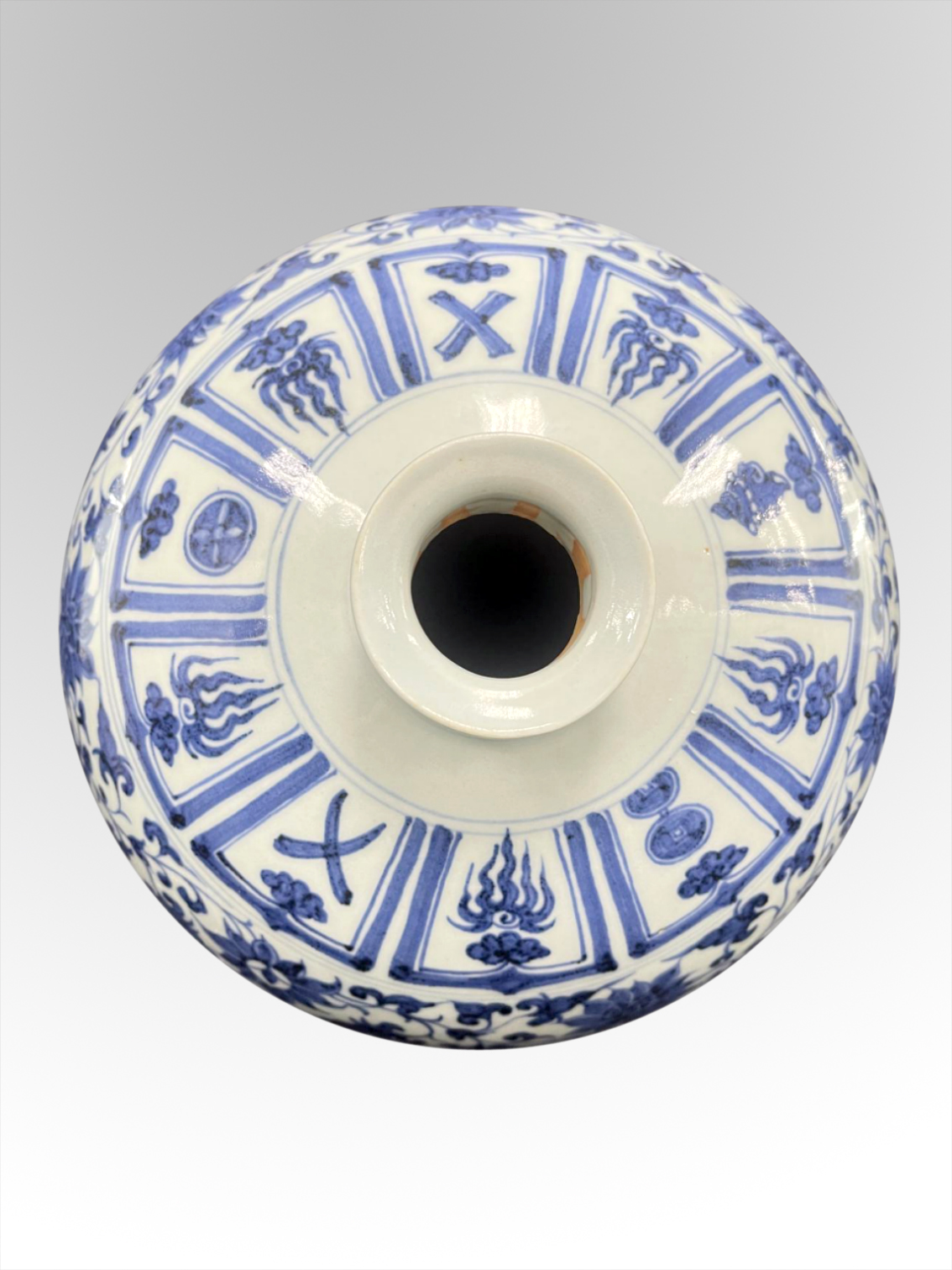
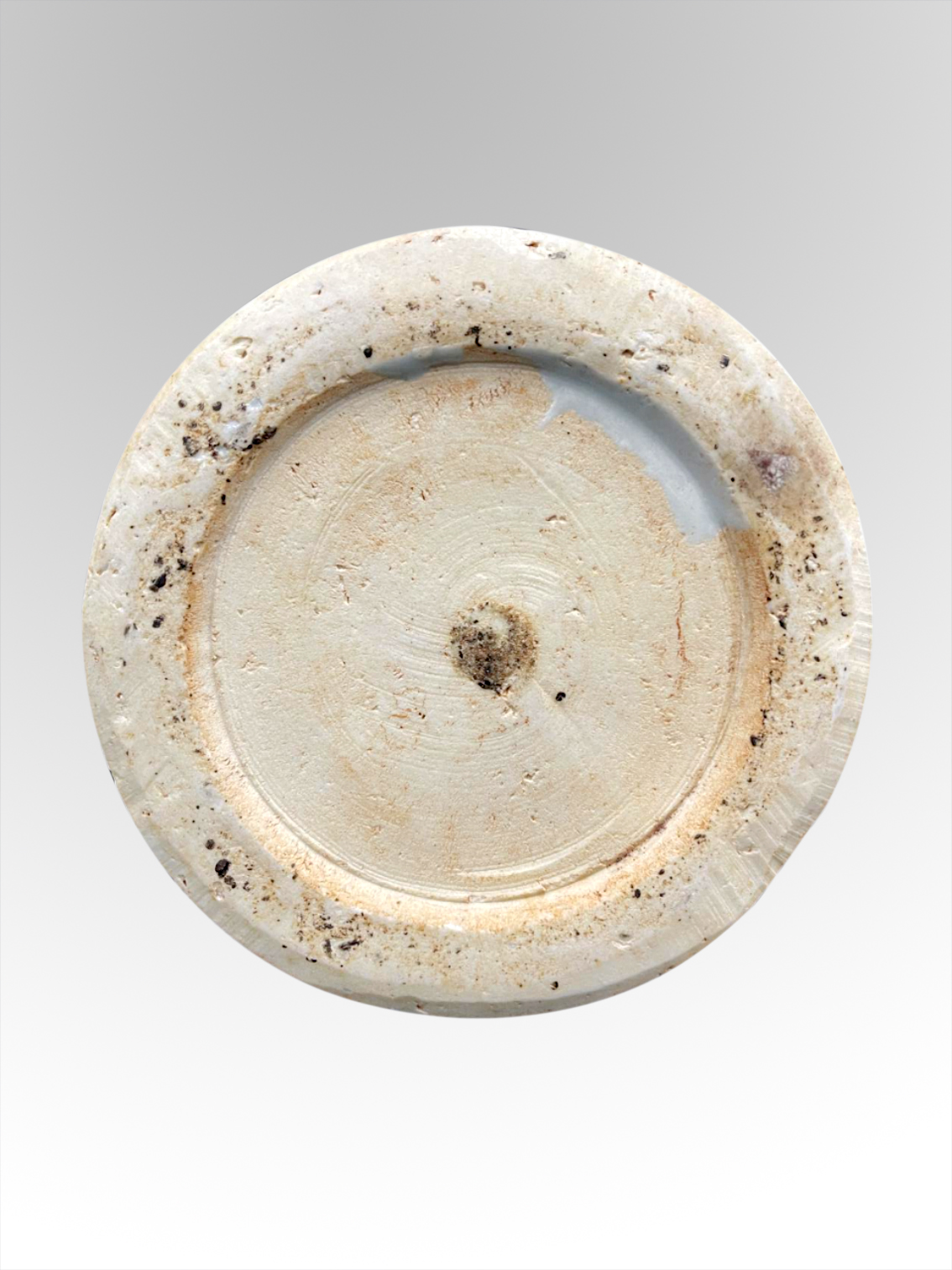
瓷器简介:瓶小口外撇,短颈而细,丰肩,肩部以下逐渐收敛,胫部修长,圈足稍外扬,浅底内凹,器形秀丽挺拔。通体绘有六层青花纹,布局繁而不乱、主次分明。瓶口外壁杂宝覆莲纹。肩上部缠枝莲花纹。腹部主体“萧何月下追韩信 ”历史故事,画面中萧何策马狂奔、神情焦急,韩信河边观望、踌躇不定,艄公持桨而立、神态悠然,还点缀有松、竹、梅、芭蕉、山石等,生动再现了这一经典历史场景。胫部卷草纹和花卉仰莲瓣纹,其间以莲瓣纹间隔,元青花萧何月下追韩信梅瓶(清乾隆仿元青花)。
This bottle has a small mouth that is slanted outward, a short and slender neck, a full shoulder that gradually narrates below the shoulder, a slender shank, a slightly protruding ring foot, a shallow bottom that is concave inward, and a graceful and upright shape. The entire body is painted with six layers of blue and white patterns, with a complex yet orderly layout and a clear distinction between the main and secondary elements. The outer wall of the bottle mouth is covered with various lotus patterns. The upper part of the shoulder is wrapped with lotus patterns. The main body of the picture is the historical story of "Xiao He Chasing Han Xin under the Moon". In the picture, Xiao He is galloping on horseback with a anxious expression, Han Xin is watching by the river and hesitating, and the boatman is standing with an oar, looking relaxed. There are also pine trees, bamboo, plum blossoms, banana plants and rocks as embellishments, vividly recreating this classic historical scene. The tibia features a cursive grass pattern and a flower-shaped lotus petal pattern, separated by lotus petal patterns,This blue-and-white plum vase depicting "Xiao He Chasing Han Xin Under the Moon" (an imitation of Yuan Dynasty blue-and-white porcelain from the Qianlong period of the Qing Dynasty) is an exquisite piece of traditional porcelain craftsmanship that replicates a renowned official kiln work of Yuan Dynasty blue-and-white porcelain.
题材背景:取材于《史记・淮阴侯列传》,讲述萧何月夜追赶韩信,最终劝其回营,助刘邦成就大业的故事。以历史故事为装饰题材,反映了元代戏曲故事对社会生活的深入影响。
The subject matter and background: based on "The Records of the Grand Historian: The Biography of Marquis Huaiyin", it tells the story of Xiao He chasing Han Xin under the moonlight and eventually persuading him to return to his camp to help Liu Bang achieve great things. Taking historical stories as decorative themes, it reflects the profound influence of Yuan Dynasty opera stories on social life.
收藏统计:元青花萧何月下追韩信梅瓶真品全球仅存1件,是南京市博物馆 "镇馆之宝"。此件青花萧何月下追韩信梅瓶于2025 年4月今成国际集团在国内知名的藏品交流会上购买,是清乾隆年间的元青花仿品,是传统瓷艺对“元青花”名品的致敬,也体现了传统制瓷工艺的传承与仿古风尚。
According to collection statistics, there is only one authentic piece of the Yuan Dynasty blue-and-white porcelain meiping vase with the scene of Xiao He Chasing Han Xin Under the Moon in the world, which is the "treasure of the museum" of Nanjing Museum.
This blue-and-white porcelain meiping vase depicting Xiao He Chasing Han Xin Under the Moon was purchased by Jincheng International Group at a well-known domestic collection exchange in April 2025. It is an imitation of Yuan Dynasty blue-and-white porcelain made during the Qianlong period of the Qing Dynasty, serving as a tribute from traditional porcelain craftsmanship to the famous "Yuan blue-and-white" works, and also reflecting the inheritance of traditional porcelain-making techniques and the fashion of imitating ancient porcelain.
历史价值:它是乾隆朝仿古风尚的实物佐证,当时朝廷推崇前朝瓷器,御窑厂大量仿造宋元明珍品,此梅瓶正是这一潮流的体现,为研究清代仿古瓷的工艺传承与审美变迁提供了重要实物。同时,瓶身的“萧何月下追韩信”典故,延续了元青花以历史故事为纹饰的传统,反映出这类经典文化题材在古代的传播力,也体现了乾隆时期文人文化与制瓷工艺的融合,对梳理古代文化符号的瓷器载体传承有重要意义。
Historical and cultural value: it is a material evidence of the archaic imitation trend during the Qianlong period. At that time, the imperial court held porcelain from previous dynasties in high regard, and the imperial kilns produced a large number of imitations of precious works from the Song, Yuan, and Ming dynasties. This plum vase is exactly a reflection of this trend, providing important material objects for studying the craftsmanship inheritance and aesthetic changes of archaic imitation porcelain in the Qing Dynasty.
Meanwhile, the allusion "Xiao He Chasing Han Xin Under the Moon" on the vase's body continues the tradition of Yuan blue-and-white porcelain using historical stories as decorative themes, reflecting the spread of such classic cultural themes in ancient times. It also embodies the integration of literati culture and porcelain-making craftsmanship during the Qianlong period, which is of great significance for sorting out the inheritance of ancient cultural symbols carried by porcelain