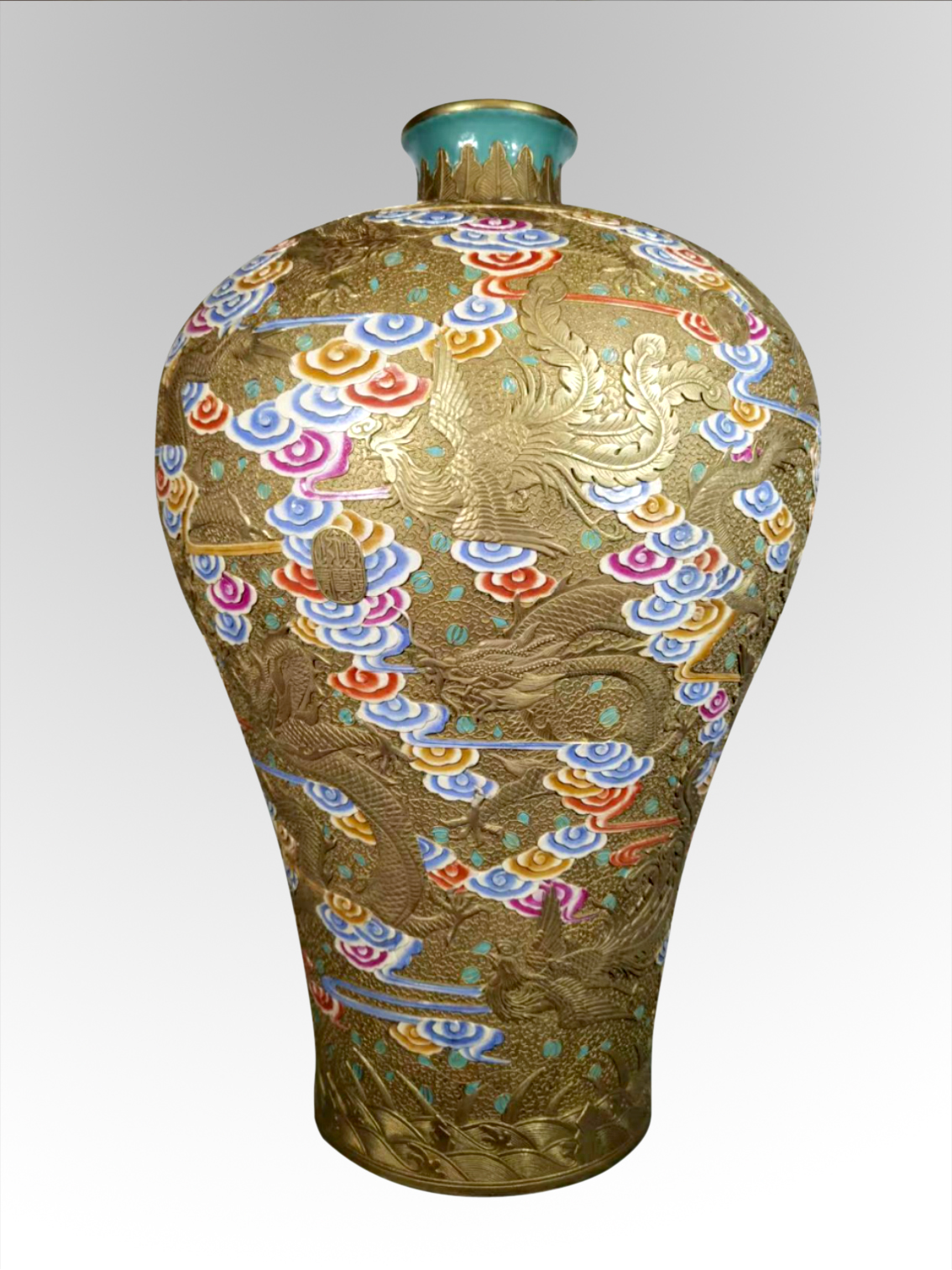
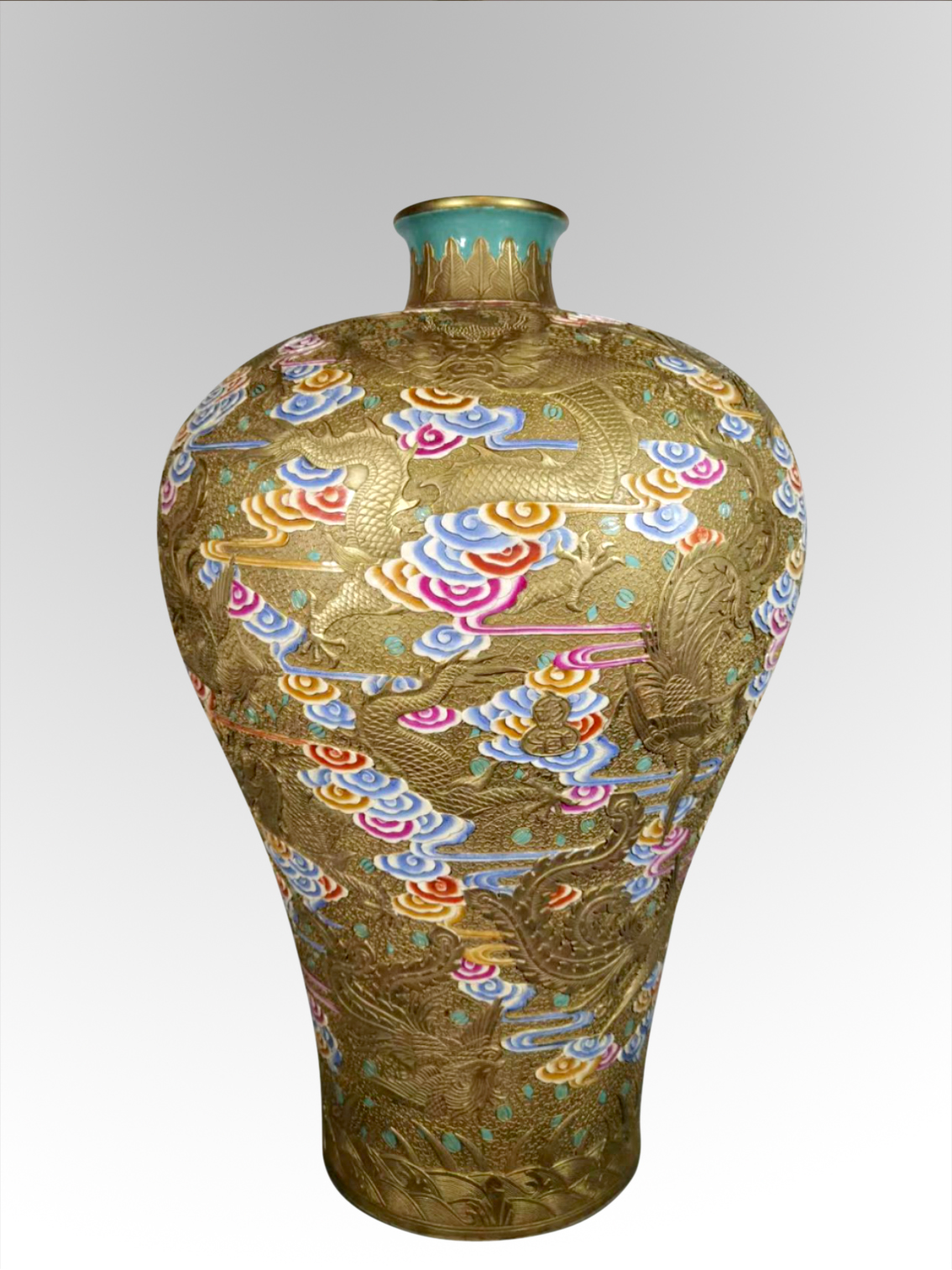
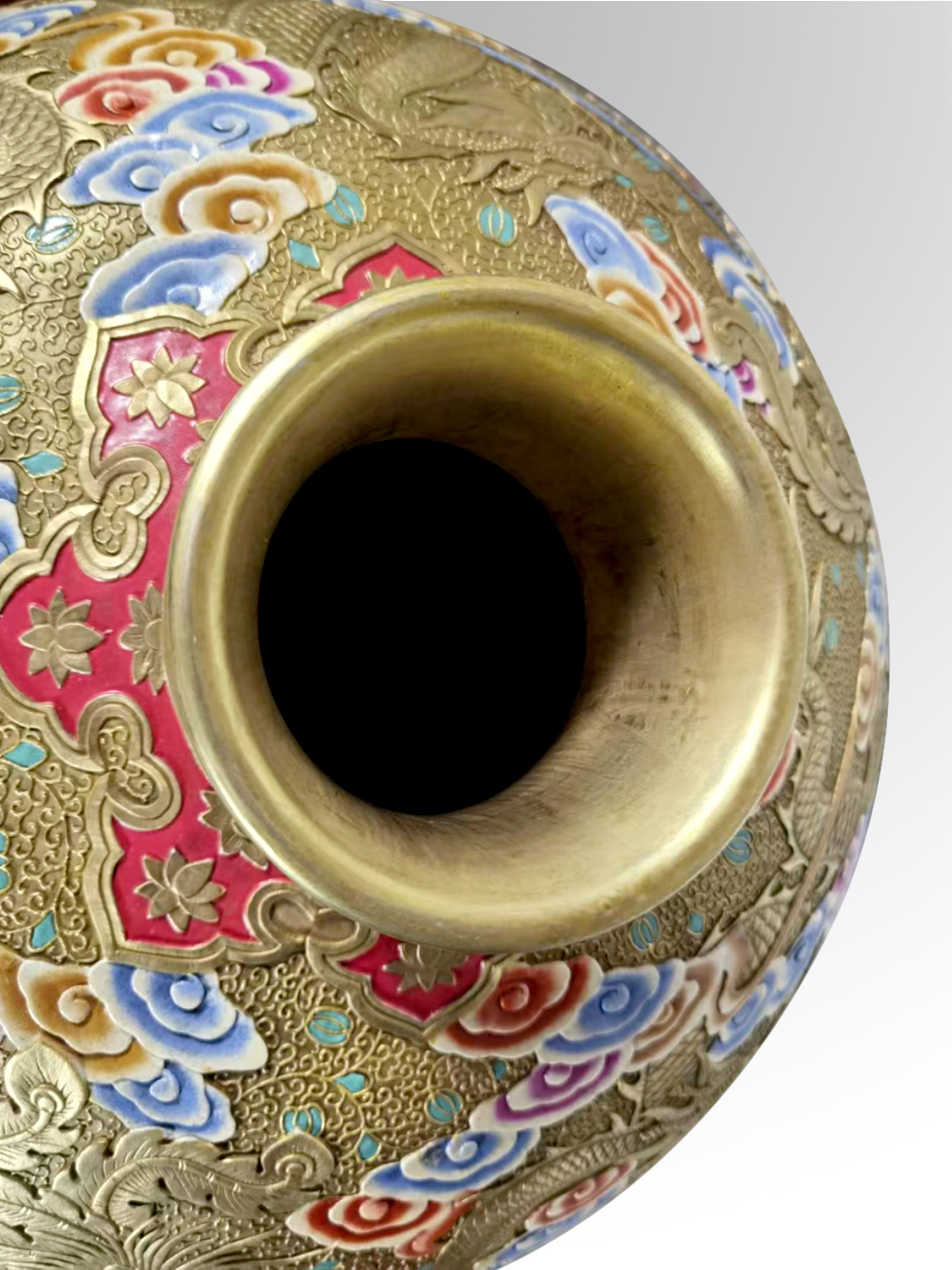
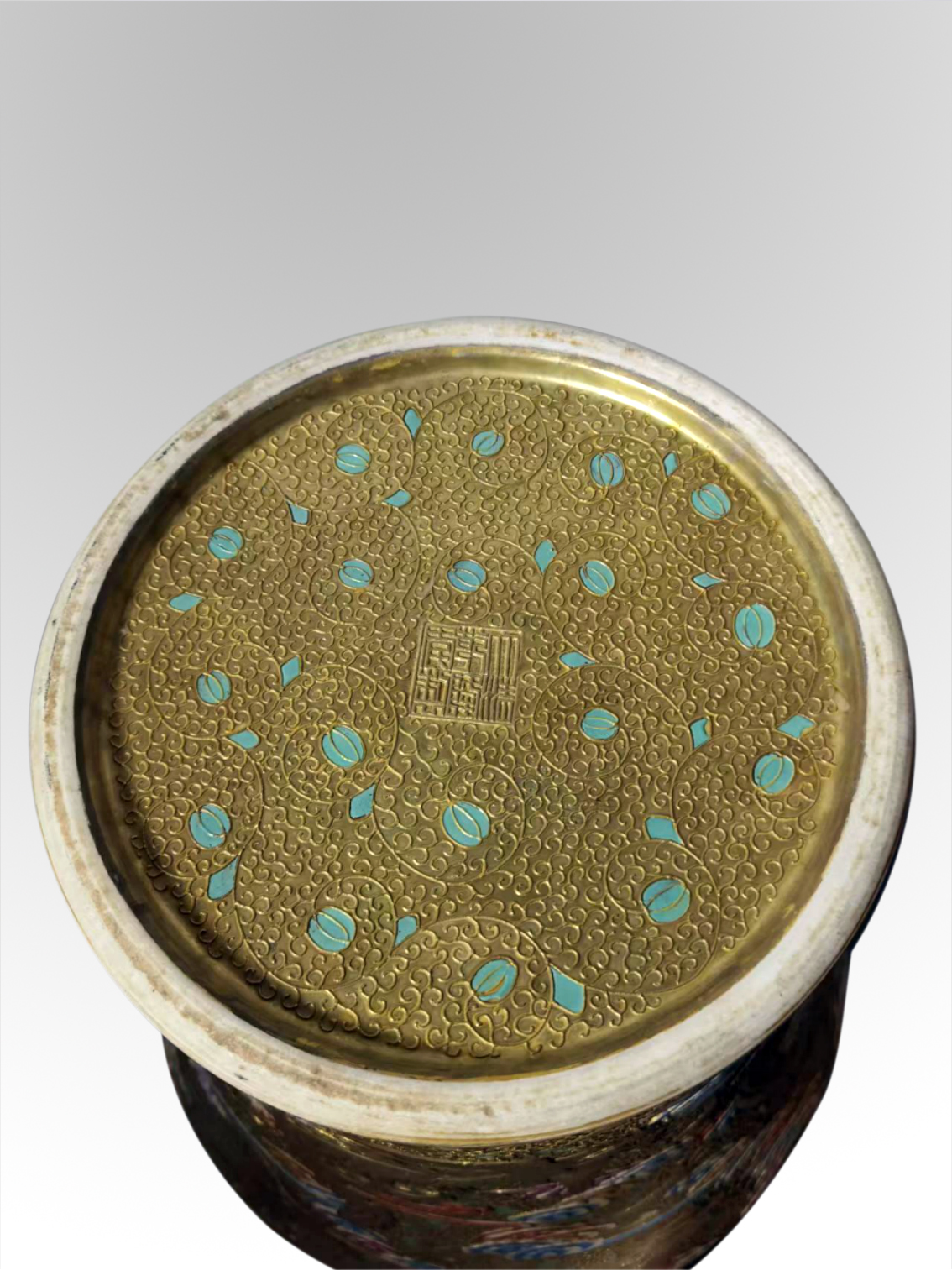
瓷器简介:这对梅瓶为清乾隆时期景德镇御窑厂烧制的官窑瓷,是集雕瓷、描金、珐琅彩工艺于一体的宫廷陈设重器,器物造型承袭经典梅瓶制式,瓶身丰肩敛腹、线条圆润饱满,口沿处施松石绿釉,与通体的金地形成雅致对比,底足饰松石绿釉点纹,中心落乾隆官窑款识,款识规整,瓶身以金地雕瓷为基底,满工雕琢细密的锦地纹,纹理繁复却不失规整,为主体纹饰做衬;其上浮雕龙凤纹,龙身矫健、鳞爪分明,凤鸟羽翼华美、姿态灵动,龙凤翱翔于粉彩祥云纹之间,祥云以粉、蓝、红、黄等色彩晕染,层次丰富、色彩鲜妍,与金地雕瓷的金属质感相互映衬,营造出富丽堂皇的视觉效果。工艺上,这件梅瓶融合雕瓷、描金、珐琅彩、刻花等多种复杂技法:雕瓷需精准把控深浅与线条,保证龙凤纹饰的立体感;金地描金采用进口金粉,经多次施釉烧制方成,色泽莹润持久,珐琅彩祥云的绘制则注重色彩的过渡,体现了乾隆官窑瓷“工不厌精、料不厌贵”的制作理念。作为乾隆时期宫廷高端陈设瓷,这件梅瓶以龙凤纹为核心纹饰,寓意“龙凤呈祥、皇权永固”,是清代皇家审美与制瓷技艺的完美结合,具有极高的历史、艺术与收藏价值。
Porcelain Introduction: this pair of Meiping vases is official ware produced by the Jingdezhen Imperial Kiln during the Qianlong period of the Qing Dynasty. They represent a magnificent example of imperial ornamental porcelain that combines carved porcelain, gilt tracing, and enamel painting techniques. The vessels adhere to the classic Meiping form, characterized by full shoulders, a tapered body, and smooth, rounded contours. The rim is coated with a turquoise-green glaze, creating an elegant contrast with the overall gilt ground. The base is adorned with turquoise-green glaze dot patterns and bears the official Qianlong reign mark at the center, executed with precise regularity.
The body serves as a carved porcelain ground entirely covered in gilt, meticulously engraved with a dense and intricate brocade pattern. This complex yet orderly background provides a rich foundation for the main decorative motifs. Above this, dragons and phoenixes are depicted in relief: the dragons are rendered with powerful, sinuous bodies and clearly defined scales and claws, while the phoenixes display splendid plumage and dynamic postures. These mythical creatures soar amidst familie-rose clouds, which are shaded in soft gradients of pink, blue, red, and yellow, creating a vivid, multi-layered effect. The brilliance of the familie-rose clouds complements the metallic sheen of the gilt carved ground, resulting in a magnificently opulent visual presentation.
Technically, these vases integrate multiple sophisticated crafts, including porcelain carving, gilt tracing, enamel painting (Falangcai), and incised decoration. The carving required precise control of depth and line to achieve the three-dimensionality of the dragon and phoenix motifs. The gilt ground was achieved using imported gold powder, applied and fired repeatedly to produce a luminous and durable finish. The painting of the enameled clouds emphasized subtle color transitions, embodying the Qianlong imperial kiln’s
philosophy of “no refinement too great, no material too costly” in porcelain production.
As high-level imperial decorative porcelain from the Qianlong era, these Meiping vases center on the dragon and phoenix motifs, symbolizing the auspicious union of the emperor and empress and the enduring stability of imperial power. They represent the perfect fusion of Qing imperial aesthetics and ceramic craftsmanship, holding exceptional historical, artistic, and collectible value.
收藏统计:这些珍品大多被北京故宫博物院、台北故宫博物院、大英博物馆、法国吉美博物馆等世界顶级博物馆收藏,属于馆藏级的国宝,私人藏家手中的完整器堪称凤毛麟角,此对梅瓶正是这极少数私人藏品之一,2025年4月今成国际集团从国内私人收藏家处购得,其珍贵性不言而喻。
According to collection statistics, large censers integrating over ten complex techniques such as famille-rose, gold tracery, openwork, and porcelain carving were extremely difficult to fire at that time, with an extremely low yield rate. After more than 200 years of historical changes, wars, damages, and overseas dispersion, there are fewer than ten intact surviving pieces worldwide. Most of these treasures are collected by top museums around the world, such as the Palace Museum in Beijing, the Palace Museum in Taipei, the British Museum, and the Musée Guimet in France. They are national treasures of museum collection level, and intact pieces in the hands of private collectors are extremely rare. This pair of plum vases is one of these very few private collections. Purchased by Jincheng International Group from a domestic private collector in April 2025, their preciousness is self-evident.
帝王的专属玩物:珐琅彩瓷是清代皇帝直接授意、亲自参与设计和品鉴的“官窑中的官窑”,其生产完全为满足帝王私欲,不做任何民间流通。这件梅瓶上的龙凤纹,是皇权最直接的视觉符号。
Exclusive Plaything of Emperors: cloisonné enamel wares were "the imperial kiln among imperial kilns" directly authorized by the Qing emperors, who personally participated in their design and appreciation. Their production was solely to satisfy the emperors' personal desires, with no circulation among the people. The dragon and phoenix patterns on this plum vase are the most direct visual symbols of imperial power.
珐琅彩料:全部为进口或御窑厂特制,色彩纯正、稳定,光泽如宝石般璀璨,远非国产粉彩料可比。瓶身的“金地”是用纯度极高的金粉绘制而成。
Enamel Colors: all are imported or specially made by imperial kilns, with pure and stable hues and gem-like luster, far surpassing domestic famille-rose pigments.