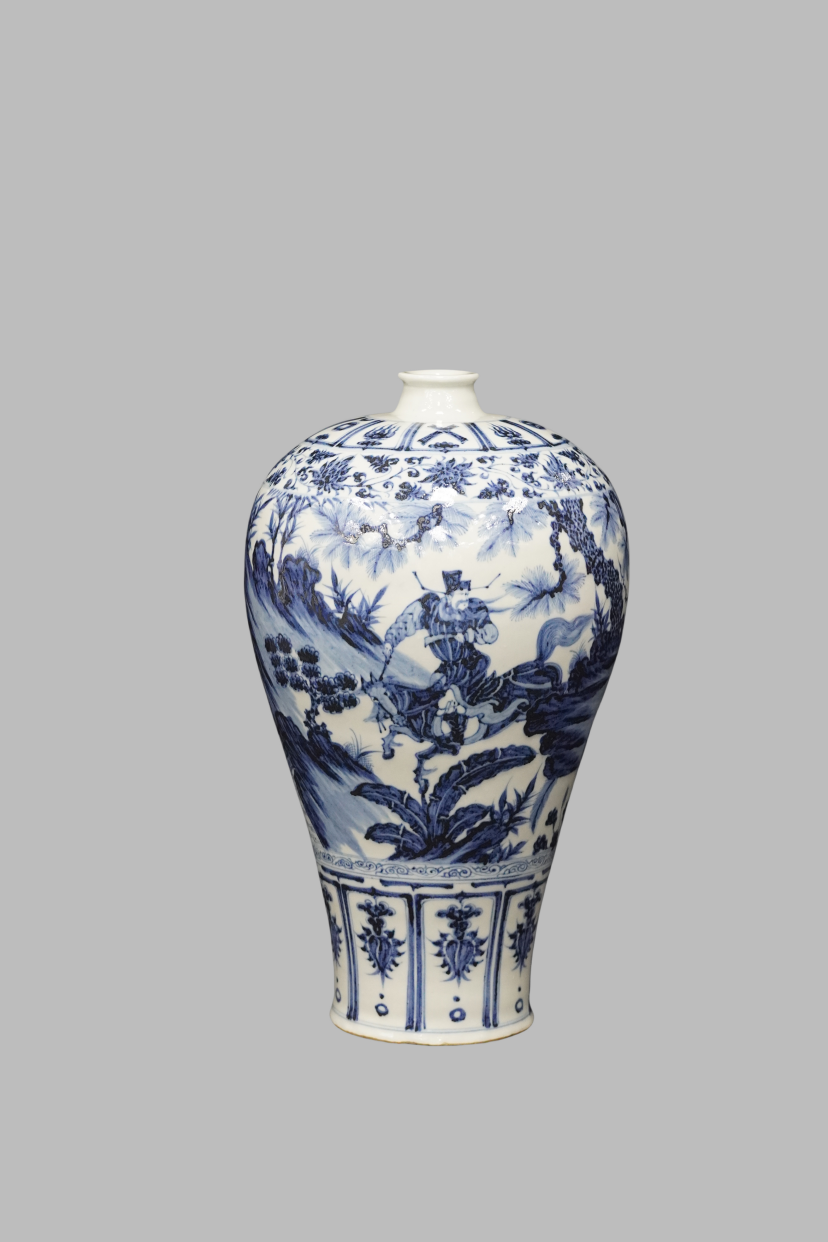
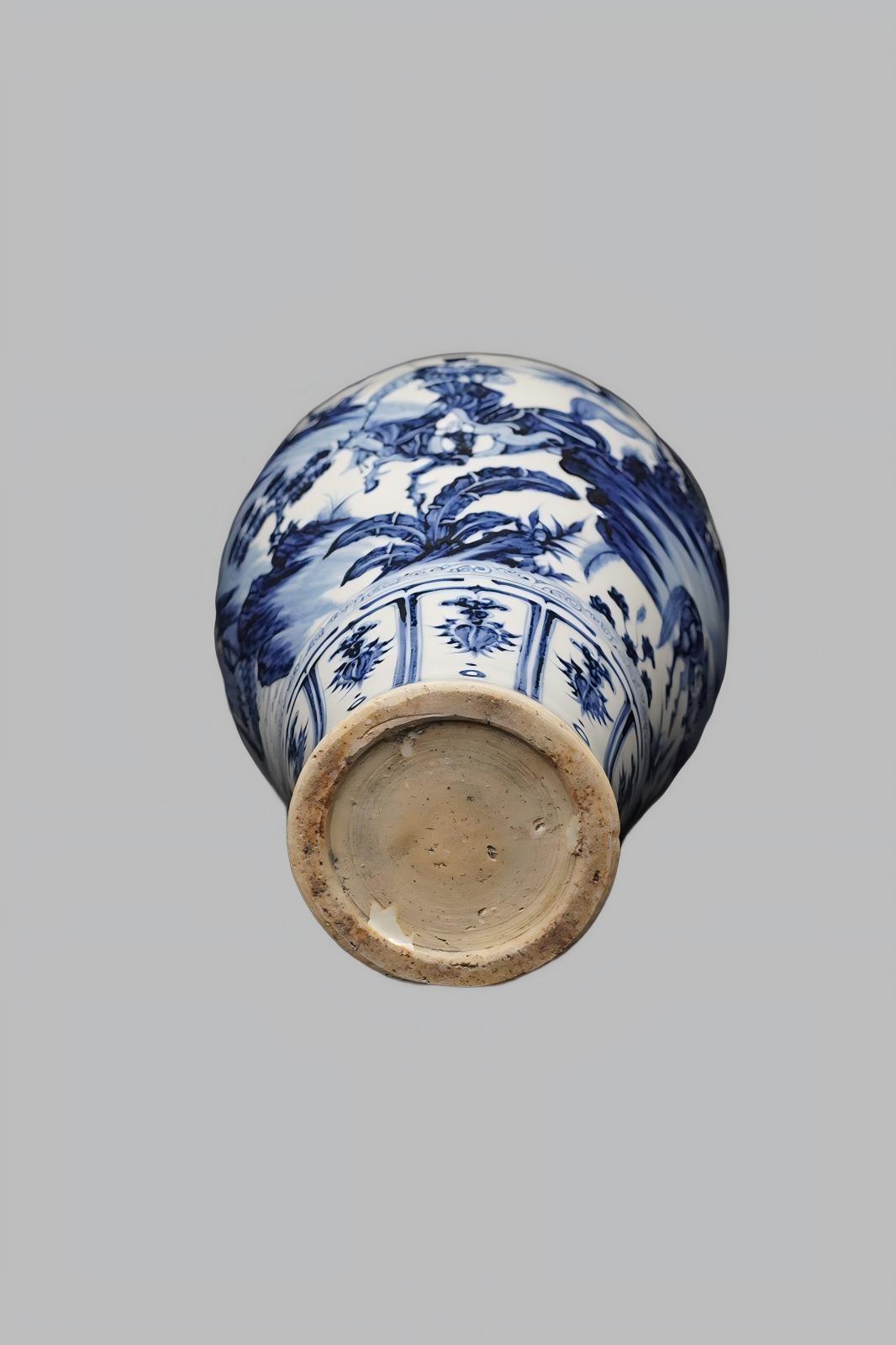
这件瓷器是元代的元青花萧何月下追韩信梅瓶(题材应为 “萧何月下追韩信” 或同类历史故事),是元青花中最顶级的“人物故事类”重器。这类元青花人物故事梅瓶,是全球古陶瓷领域的“顶级珍品。价值核心在于稀缺性,元青花人物故事题材存世量不足10件(含残器),完整器全球仅约5-8件,是“全球稀缺的文化遗产”,将元杂剧的叙事性与青花的写意性结合,人物绘法、纹饰布局均为元代艺术的巅峰体现。这件元青花萧何月下追韩信梅瓶,是"全球仅存的青花孤品”之一,兼具文化、艺术与收藏的顶级价值,是古陶瓷领域的“无价之宝”
This porcelain piece is the Yuan dynasty blue-and-white prunus vase depicting "Xiao He chasing Han Xin by moonlight" (the theme is either "Xiao He chasing Han Xin by moonlight" or similar historical narratives). It stands as the pinnacle of "figure-and-story" masterpieces among Yuan blue-and-white porcelain. Such Yuan blue-and-white prunus vases with figure and story themes are regarded as "top-tier treasures" in the global field of ancient ceramics.
The core of its value lies in its scarcity: fewer than 10 examples of Yuan blue-and-white porcelain featuring figure and story themes survive worldwide (including fragments), with only about 5 to 8 intact pieces. As a "globally rare cultural heritage," it integrates the narrative nature of Yuan zaju (traditional opera) with the freehand brushwork of blue-and-white porcelain. Both the depiction of figures and the layout of patterns represent the culmination of Yuan dynasty art.
As one of the "only surviving blue-and-white solitary pieces" in the world, this vase embodies top-tier cultural, artistic, and collectible value, and is hailed as a "priceless treasure" in the field of ancient ceramics.
器型:经典梅瓶样式(小口、丰肩、敛腹、圈足),符合元代大型陈设瓷的“敦实挺拔”风格;配松竹、山石等背景,是元代“以杂剧入瓷”的典型纹饰;
纹饰:瓶腹绘人物故事纹(如“萧何月下追韩信”),人物神态生动、衣纹流畅,搭配松竹、山石等背景,是元代“以杂剧入瓷”的典型纹饰
Shape: classic plum vase form (narrow mouth, full shoulders, tapering belly, rounded foot), conforming to the "solid and upright" style of large-scale display porcelain in the Yuan dynasty.
Decoration: the belly of the vase is painted with figure story patterns (such as "Xiao He chasing Han Xin under the moon"). The figures have vivid expressions and smooth clothing folds, accompanied by backgrounds like pine, bamboo, and rockery. It is a typical decoration of the Yuan dynasty featuring "drama themes on porcelain."