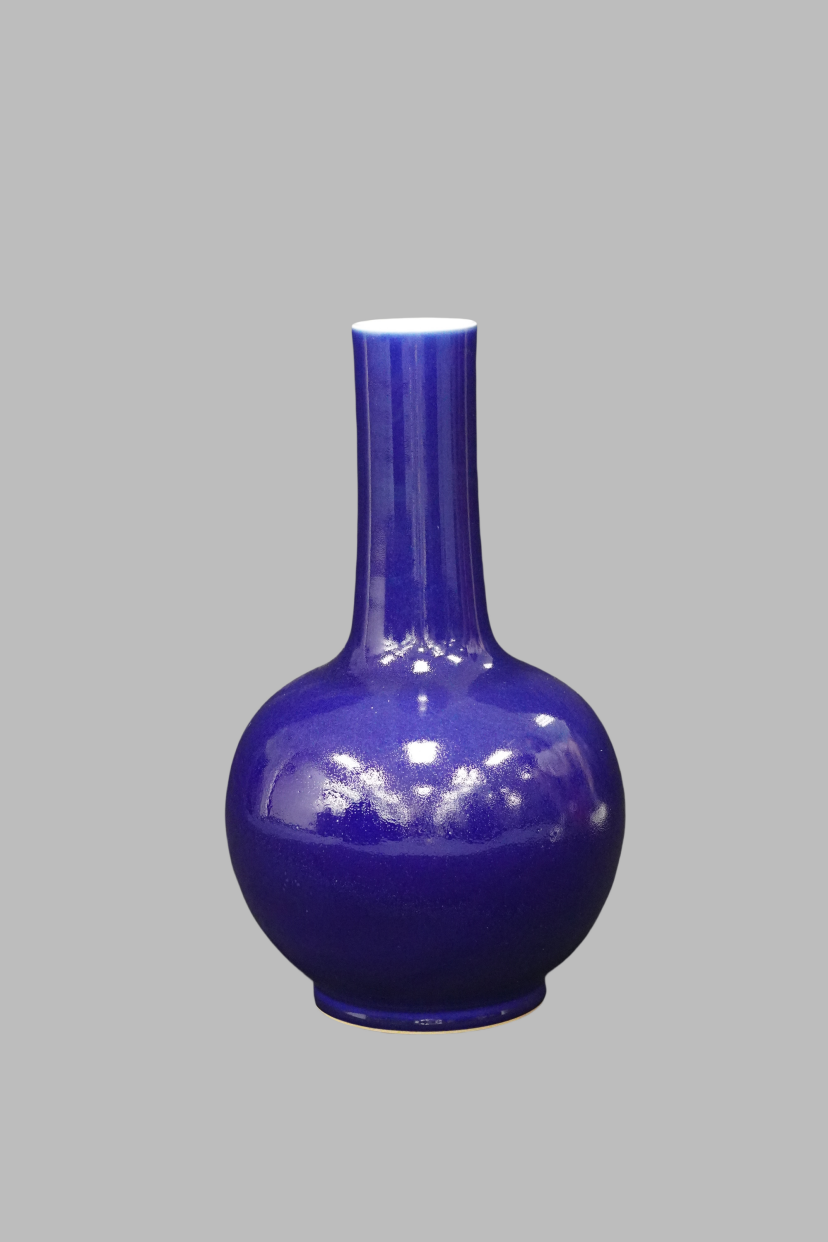

清代的霁蓝釉天球瓶瓶,是清代官窑单色釉瓷中 “釉色极致+器型经典”的代表。是清代单色釉的“硬通货”,兼具“工艺稀缺性+宫廷属性”,收藏价值最高,作为清代"祭蓝釉+天球瓶”的经典组合,是研究清代制瓷工艺与宫廷文化的重要标本。
Qing Dynasty cobalt blue glaze globular vase is a representative of monochromatic glazed porcelain from the Qing Dynasty(1636-1912) imperial kilns, featuring "extreme glaze color and classic shape." It is a "hard currency" among Qing monochromatic glazes, combining "scarcity of craftsmanship + imperial court attributes" with the highest collection value.
As a classic combination of "cobalt blue glaze + globular vase" in the Qing Dynasty, it is an important specimen for studying Qing porcelain-making craftsmanship and imperial court culture.
无彩绘纹饰:通体仅施霁蓝釉,以釉色的深沉莹润、釉面的宝石光泽为核心装饰,暗“天圆地方”的宇宙观(天球瓶腹象征苍天,霁蓝对应天坛祭天用器)隐性寓意:霁蓝釉因 "专用于天坛祭天”得名,暗含"皇权正统、天人合一”的象征,是清代宫廷祭祀与陈设瓷的核心品类。
Decorations: the entire body is only coated with cobalt blue glaze. The deep and smooth glaze color and the gem-like luster of the glaze surface serve as the core decorations, implicitly conforming to the cosmic view of "heaven is round and earth is square" (the belly of the globular vase symbolizes the sky, and cobalt blue corresponds to the ritual vessels used for offering sacrifices to heaven at the Temple of Heaven).Implicit meaning: cobalt blue gets its name from "being exclusively used for sacrifices to heaven at the Temple of Heaven," implying the symbolism of "legitimacy of imperial power and harmony between heaven and humanity." It is a core category of ritual and display porcelain in the Qing imperial court.