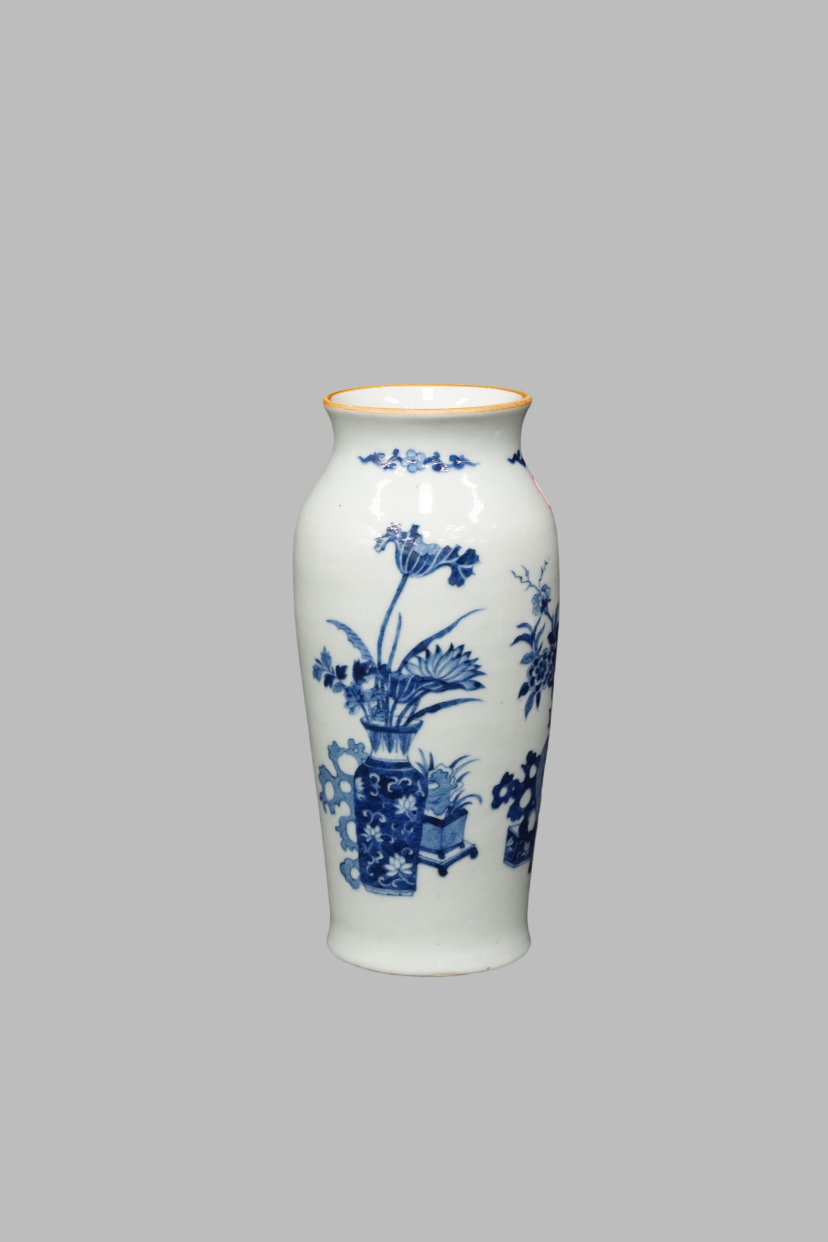
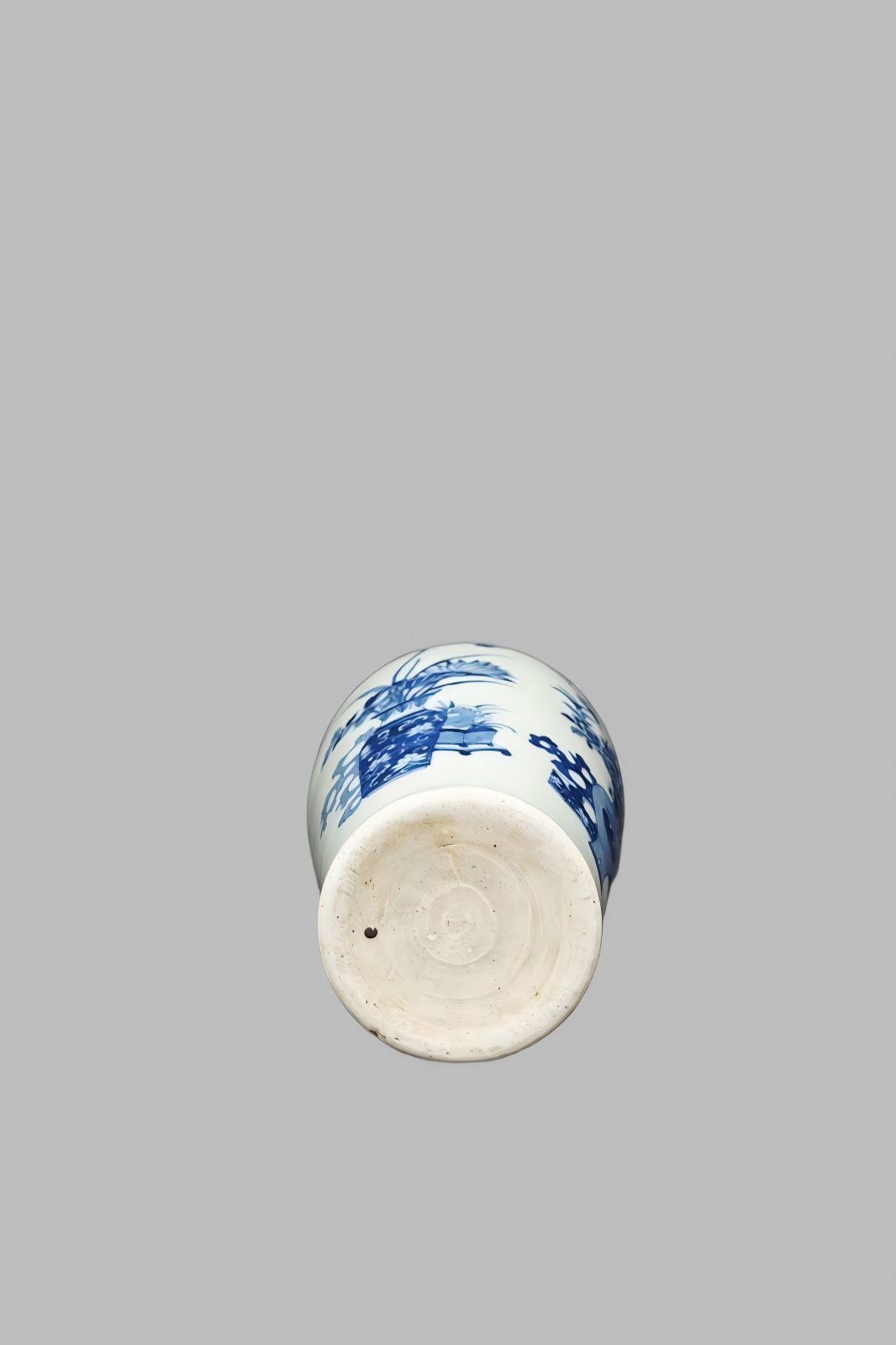
清代的青花博古纹灯笼瓶,是清代青花“文人雅趣+吉祥纹饰”的典型陈设器。是清代青花博古纹器的精品,兼具“文人审美+工艺稀缺性”,收藏价值较高。核心价值:作为"博古纹+灯笼瓶”的组合,是清代文人文化与制瓷工艺结合的实物见证。
Blue and white lantern vase with bogu patterns of the Qing Dynasty is a typical display vessel of Qing blue and white porcelain featuring "literati elegance + auspicious decorations."
As an exquisite work of Qing blue and white porcelain with bogu patterns, it combines "literati aesthetics + scarcity of craftsmanship" and holds high collection value.
Core value: as a combination of "bogu patterns + lantern vase," it is a physical witness to the integration of literati culture and porcelain-making craftsmanship in the Qing Dynasty.
主纹饰:瓶身绘青花博古纹-中心为“瓶插荷花”(荷花寓意“清廉高洁”),旁配盆景、灵芝等清供器物,背景饰折枝花卉,整体构图如“文人书案陈设”,暗含"清雅脱俗、文运亨通”的寓意。辅助纹饰:口沿饰小朵云纹,既勾勒器型轮廓,又添“吉祥连绵” 的祝福,与主纹的文人气质呼应。
Main decoration: the vase is painted with blue and white bogu patterns — at the center is a "lotus flower inserted in a vase" (the lotus symbolizes "integrity and purity"). Flanked by scholar's objects for offerings such as bonsai and ganoderma lucidum, with sprig flowers as the background. The overall composition resembles "decorations on a literati's desk," implicitly embodying the implications of "elegance and transcendence, smooth literary fortune."
Auxiliary decorations: small cloud patterns adorn the mouth rim, which not only outline the vessel's shape but also convey the blessing of "continuous auspiciousness," echoing the literati temperament of the main decoration.