
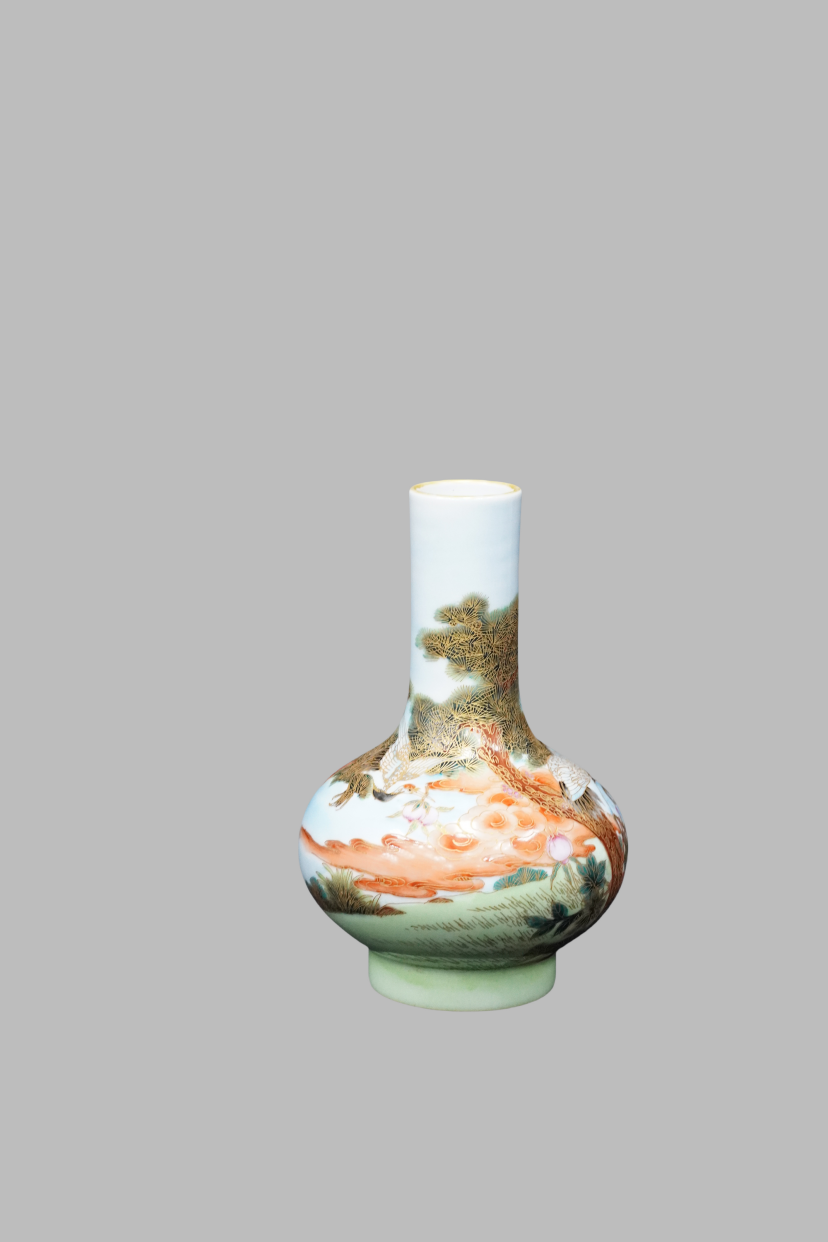
清代乾隆时期的粉彩金松鹤延年纹胆瓶,是清代宫廷陈设瓷中"吉祥题材 + 华贵工
艺” 的代表,釉色细腻、金彩与粉彩融合自然,是工艺巅峰。是清代宫廷彩瓷精品,兼具"珐琅彩/粉彩描金工艺+皇家吉祥寓意”,收藏价值极高。作为“松鹤延年纹胆瓶”是清代宫廷文化与制瓷工艺结合的实物见证。
Famille rose gallbladder vase with gilded pine, crane and longevity patterns from the Qianlong reign of the Qing Dynasty is a representative of Qing imperial display porcelain featuring "auspicious themes + luxurious craftsmanship." With its delicate glaze and natural integration of gold color and famille rose, it represents the pinnacle of craftsmanship.
As an exquisite work of Qing imperial colored porcelain, it combines "cloisonné enamel / famille rose with gilding craftsmanship + imperial auspicious implications" and holds extremely high collection value.
As a "gallbladder vase with pine, crane and longevity patterns," it is a physical witness to the integration of Qing imperial court culture and porcelain-making craftsmanship.
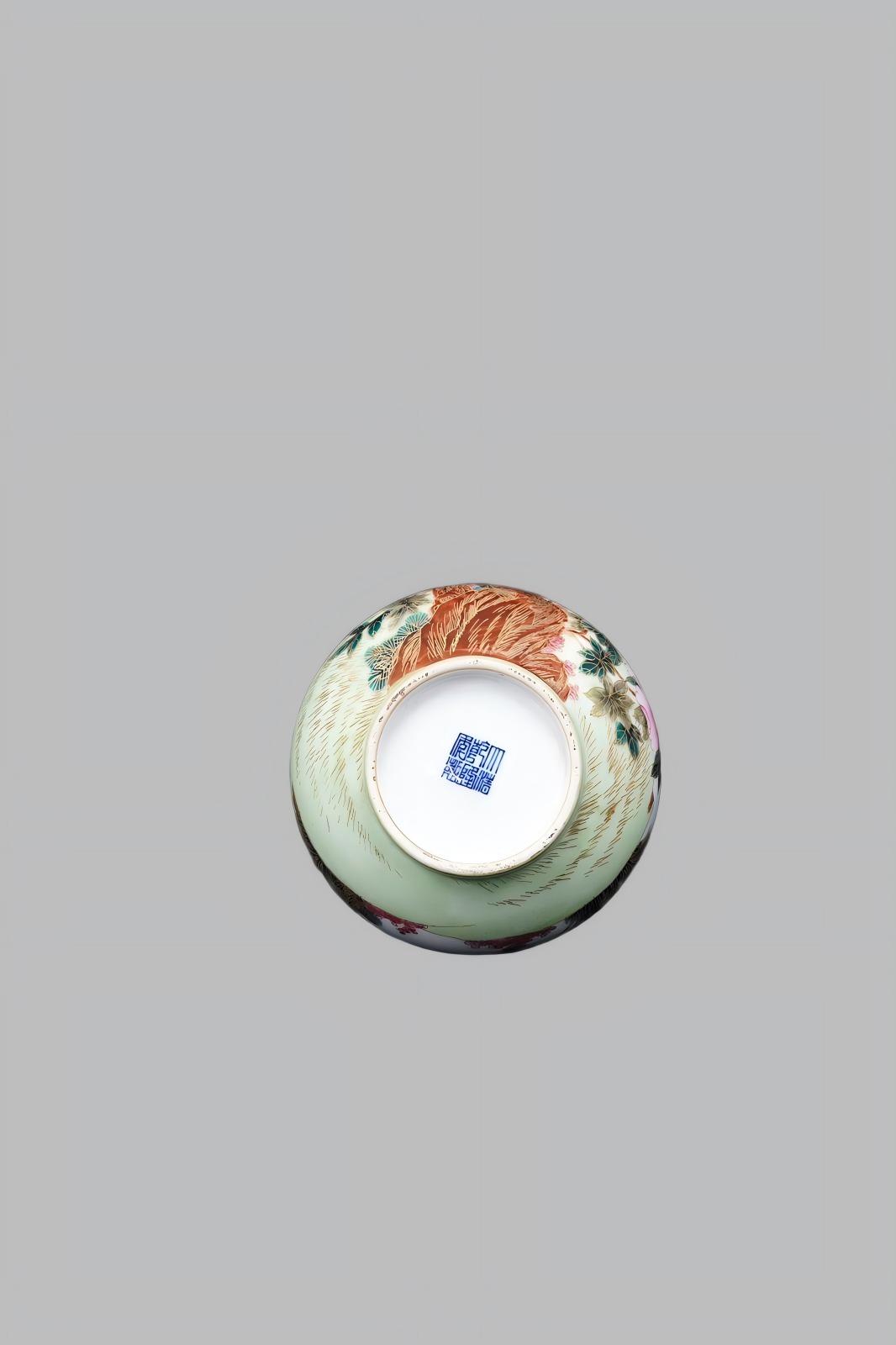
主纹饰:瓶身绘青松、仙鹤、祥云、寿桃一一 松象征“长寿常青”,鹤是“祥瑞之鸟”,寿桃寓意"福寿绵长”,整体组合是“松鹤延年、福寿双全”的经典祝福,是清代万寿节(皇帝生日)常用纹饰。辅助纹饰:底部饰淡绿釉,与主纹的清雅色调呼应,暗含"生机盎然”的寓意。
Main decoration: the vase is painted with green pines, cranes, auspicious clouds, and peach of immortality — pines symbolize "longevity and evergreen," cranes are "auspicious birds," and peach of immortality implies "enduring blessings and longevity." The overall combination conveys the classic blessing of "pine and crane for longevity, double blessings of fortune and longevity," and was a common decoration used during the Wanshou Festival (the emperor's birthday) in the Qing Dynasty.
Auxiliary decorations: the base is glazed in light green, echoing the elegant color tone of the main decoration and implicitly embodying the meaning of "vitality and prosperity."